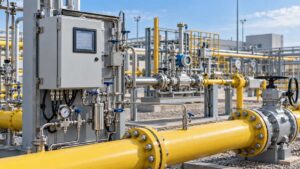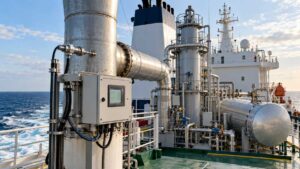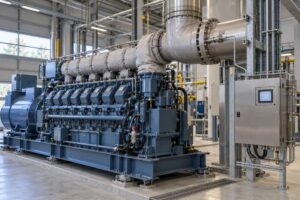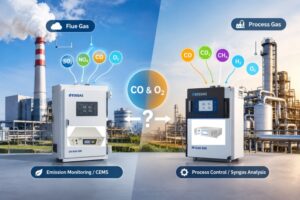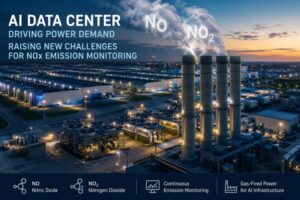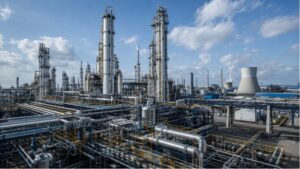




Flue gas analyzers are specialized instruments designed to continuously measure and monitor gas emissions from industrial processes, capturing critical components like SO₂, NOx, CO, CO₂, and O₂ in real time. Power plants, cement factories, steel mills, and waste-to-energy facilities rely on them to meet environmental regulations, optimize combustion efficiency, and maintain workplace safety. These analyzers convert complex gas mixtures into actionable data, allowing engineers to adjust processes quickly, detect leaks, and ensure compliance with strict emission limits. Their ability to provide precise readings under harsh conditions makes them indispensable for industries aiming to reduce pollutants while sustaining operational performance.
Ultimately, a flue gas analyzer is not just a measurement tool; it serves as the cornerstone of emission compliance, process optimization, and plant safety, giving operators real-time insight to control emissions, improve efficiency, and protect workers and the environment.
What Gases Can Flue Gas Analyzers Accurately Measure?
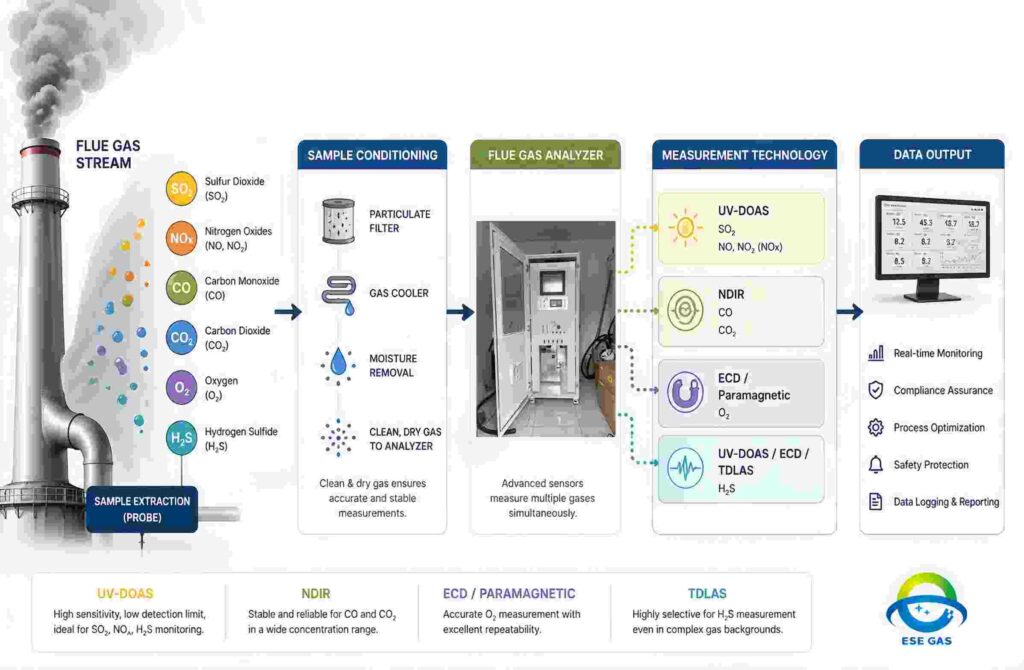
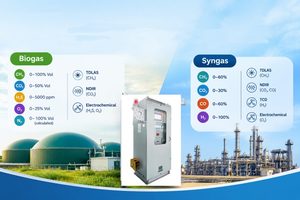
Modern flue gas analyzers handle multiple gas components in one system, turning complex exhaust streams into clear, real-time data. A typical configuration measures SO₂, NO, NO₂ (NOx), CO, CO₂, and O₂ simultaneously, giving operators a full picture of combustion performance and emission levels. This multi-gas setup has become standard in industrial plants because it reduces system complexity while improving monitoring efficiency. By combining technologies like UV-DOAS for SO₂ and NOx, NDIR for CO and CO₂, and ECD or paramagnetic sensors for O₂, one analyzer can cover most regulatory and process needs. Some advanced systems can even extend measurement to gases like H₂S, depending on configuration and application.
H₂S can also be measured, but the technology choice depends heavily on the gas background and process conditions. UV-DOAS can detect H₂S in emission monitoring, though interference from SO₂ may affect accuracy, so concentration levels must be verified in advance. ECD sensors are generally not recommended for flue gas applications because multiple gases can cause strong cross-interference, leading to unreliable readings. TDLAS offers a more selective option, delivering stable and real-time H₂S measurement in demanding environments, especially where high accuracy is required. In practice, selecting the right method depends on whether the focus is compliance monitoring, process control, or safety.
In ultra-low emission scenarios, such as 0–20 ppm ranges, measuring all gases in one unit can reduce accuracy. Weak signals, spectral overlap, and process fluctuations can introduce errors and instability. To maintain precision, engineers often separate measurements by technology: one UV-DOAS analyzer focuses on SO₂ and NOx, one NDIR unit handles CO and CO₂, and one ECD or paramagnetic analyzer measures O₂. This approach improves signal strength, reduces cross-interference, and ensures long-term stability under strict emission limits. It may look more complex, but it delivers more reliable data where it matters most.
A multi-gas analyzer is powerful, but it is not a one-size-fits-all solution. Performance depends on measurement range, gas composition, and process conditions. High-accuracy applications require careful system design rather than simple integration. ESEGAS recommends selecting flue gas analyzers based on emission levels—Standard, Low, or Ultra-Low—to match real operating conditions. This tailored approach ensures stable performance, accurate readings, and long-term compliance without unnecessary complexity.
How Do Flue Gas Analyzers Transform Emission Into Reliable Data?
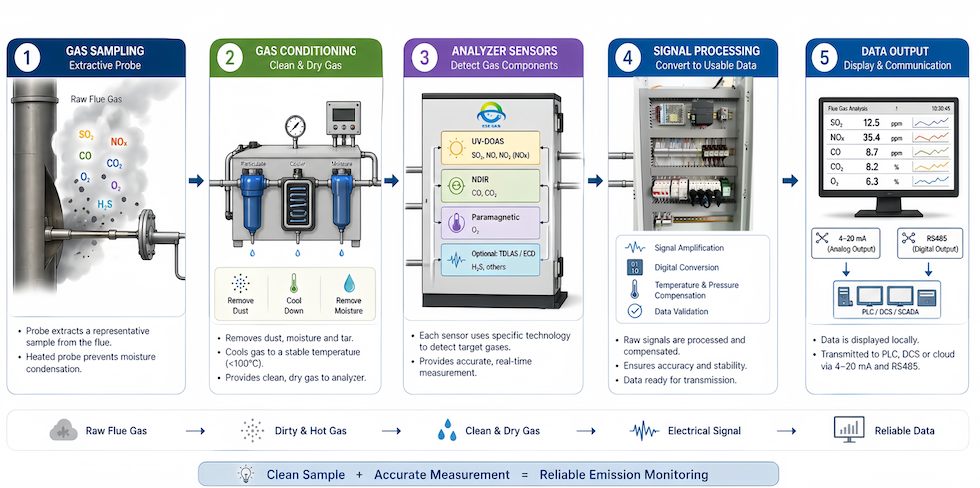
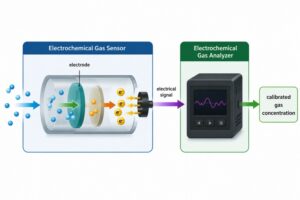
Flue gas analyzers convert industrial exhaust into precise, actionable readings through a carefully structured process. First, the system extracts gas samples using an extractive setup, drawing representative flow from the stack or duct. Next, the gas passes through a conditioning stage, removing dust, moisture, and other contaminants to protect sensitive sensors. The cleaned gas then reaches the analyzer’s sensor module, where technologies like UV-DOAS, NDIR, or ECD detect each target component based on optical or electrochemical responses. Finally, the analyzer translates these physical or chemical changes into electrical signals, which are processed into readable concentrations and transmitted to control systems or data loggers. This sequence ensures that plant operators receive accurate, real-time insight for combustion optimization, emissions tracking, and regulatory compliance.
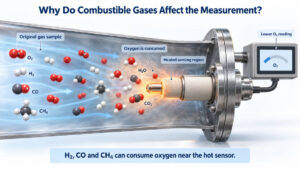
Proper gas conditioning is critical to reliable measurements because temperature swings, high humidity, and particulate matter can distort sensor readings. Without a clean and dry gas stream, even the most advanced analyzer can report false concentrations, drift, or unstable outputs. Dust can scatter light in optical sensors, moisture can alter infrared absorption, and temperature fluctuations can affect electronic stability. Conditioning units remove water vapor, filter particulates, and maintain optimal sample temperature, providing a consistent environment for the analyzer to operate accurately. By prioritizing gas quality before measurement, facilities ensure that readings reflect true emissions, strengthening process control, compliance reporting, and confidence in decision-making.
How Should Flue Gas Analyzers Be Installed and Integrated Into Your System?
Installing a flue gas analyzer is straightforward but requires attention to critical details. The sample gas temperature should remain below 100°C to avoid damaging sensors and ensure measurement accuracy. The analyzer must receive a clean and dry gas stream, free from dust, moisture, and condensate, to prevent drift and interference. Finally, the device needs proper connection to your plant’s control system, whether a PLC, DCS, or data logger, for seamless data acquisition and real-time monitoring. Following these requirements ensures that the analyzer operates reliably, delivers accurate readings, and integrates smoothly into your industrial process.
Modern flue gas analyzers support both analog and digital communication to match diverse industrial setups. The standard 4–20 mA output enables direct connection to control panels and existing monitoring systems. Meanwhile, RS485 digital communication allows precise, long-distance data transfer to PLCs or centralized servers, supporting complex automation and logging requirements. This dual communication capability ensures flexible integration, quick response for control adjustments, and secure transmission of critical emission data.
Operators can choose between a standalone analyzer and a complete system that includes gas conditioning units. Standalone analyzers are suitable when the gas is already clean and dry, or for short-term monitoring projects. Complete systems provide integrated dust filters, moisture removal, and temperature control, guaranteeing stable readings under challenging industrial conditions. Choosing the right configuration depends on your plant’s gas composition, process conditions, and required measurement reliability. ESEGAS recommends customizing the setup based on operational needs and emission targets to ensure consistent performance and long-term compliance.
Why Should You Choose ESEGAS Flue Gas Analyzers?
Technical Advantages
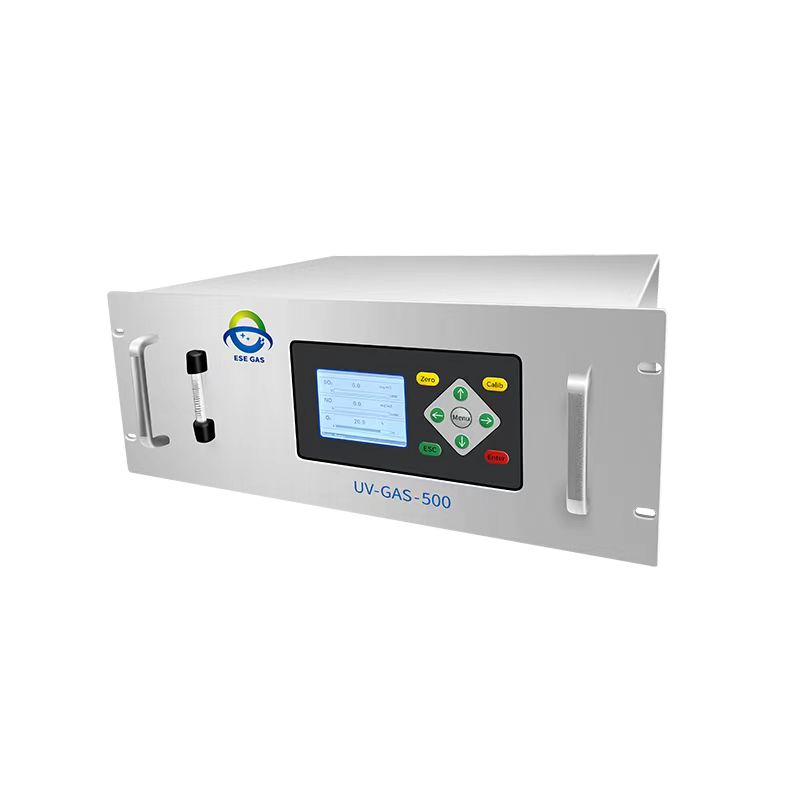
ESEGAS flue gas analyzers combine UV-DOAS and NDIR technologies to deliver accurate multi-gas measurement across different concentration ranges. UV-DOAS handles SO₂ and NOx with high sensitivity, while NDIR ensures stable detection of CO and CO₂, creating a balanced and reliable solution. This hybrid design supports ultra-low emission monitoring, reaching ppm-level detection without sacrificing stability. Advanced optical paths, temperature control, and signal processing reduce drift and maintain long-term consistency, even in harsh industrial environments. The system can measure up to five gases in one unit, while also allowing flexible configuration for higher precision when needed.
Key Performance Comparison
| Feature | ESEGAS Flue Gas Analyzers | Conventional Single-Technology Analyzers |
| Measurement Technology | UV-DOAS + NDIR, (ECD, Paramagnetic, TDLAS) Optional | Single technology (UV-DOAS or NDIR or electrochemical or TDLAS) |
| Gas Coverage | SO₂, NOx, CO, CO₂, O₂ and H2S (expandable) | Limited gas combinations |
| Low ppm Capability | Strong performance in ultra-low emissions | Reduced accuracy at low range |
| Stability & Drift | Low drift, long-term stability | Higher drift over time |
| Interference Resistance | High (technology-specific optimization) | More cross-interference risks |
| Flexibility | Modular and customizable | Fixed configuration |
This comparison highlights a key advantage: ESEGAS does not rely on one method but selects the best technology for each gas, improving both accuracy and reliability.
Engineering Support
ESEGAS provides customized system design based on real process conditions, including gas composition, temperature, and emission limits. Engineers tailor each solution to match plant requirements, ensuring proper sampling, conditioning, and analyzer configuration. OEM services support integration into existing systems or branded solutions, offering flexibility for different industries. Fast delivery, typically within 1–2 weeks after order confirmation, helps projects move forward without unnecessary delays. This combination of technical expertise and responsiveness ensures that customers receive a system that works from day one.
After-Sales Service
ESEGAS supports users beyond installation with practical and accessible after-sales service. Operation and maintenance video guides help teams understand daily use, calibration, and troubleshooting without guesswork. Technical support teams provide remote assistance, helping diagnose issues quickly and reduce downtime. This hands-on support approach keeps analyzers running smoothly and ensures consistent measurement quality over time.
Conclusion
Flue gas analyzers go far beyond simple measurement devices; they serve as essential tools for regulatory compliance, process optimization, and plant safety. Industrial combustion systems generate gases like CO, CO₂, NOx, and SO₂, and continuous monitoring helps operators control emissions and meet strict environmental standards. At the same time, real-time data allows engineers to fine-tune combustion, reduce fuel consumption, and improve overall efficiency. When emissions drift or abnormal values appear, the analyzer acts as an early warning system, helping teams respond quickly and avoid safety risks or production losses. In practice, it becomes the “control center” of emission management, linking environmental responsibility with operational performance.
ESEGAS flue gas analyzers act as the “eyes” of your emission system, delivering clear, stable, and reliable data that supports compliance, improves efficiency, and enhances operational safety. Contact us!
FAQs:
Q1: How many gases can a flue gas analyzer measure?
A typical flue gas analyzer can measure around five key gases: SO₂, NOx (NO and NO₂), CO, CO₂, and O₂. These gases are the primary indicators of combustion efficiency and air pollution, and they are widely monitored in industrial emission systems.
Q2: Which technology is best for low ppm measurement?
UV-DOAS is the preferred technology for low ppm measurement because it offers high sensitivity and strong resistance to cross-gas interference. It performs especially well in ultra-low emission monitoring where accuracy and stability are critical.
Q3: Do I need a gas conditioning system?
Yes, you need a gas conditioning system if the sample gas is not clean and dry. Moisture, dust, and temperature fluctuations can affect measurement accuracy, so proper conditioning ensures stable and reliable readings.
Q4: Can I buy the flue gas analyzer separately?
Yes, you can purchase the analyzer as a standalone unit. However, for most industrial applications, integrating it with a complete sampling and conditioning system is recommended to ensure accurate and long-term performance.
Q5: What output signals are supported?
Most flue gas analyzers support standard industrial outputs, including 4–20 mA analog signals and RS485 digital communication. These outputs allow easy integration with PLC, DCS, and data acquisition systems.