



Wet flue gas is where CEMS projects quietly go wrong. If your sample cools even a little on its way to the analyzer, water condenses, acidic components dissolve, crystals start forming, and what you thought was a “measurement” becomes a bias you can’t easily explain during acceptance testing or an audit. The worst part is that the numbers may still look stable—just consistently low—until compliance risk, maintenance emergencies, or unexplained drift forces a shutdown. Hot-wet CEMS was adopted in many plants precisely to remove this class of failure by keeping the sample above its dew point from extraction to analysis.

Hot-wet (hot extractive) CEMS keeps the sample gas heated throughout the sampling path to avoid condensation, which reduces losses of water-soluble/reactive gases (e.g., SO₂) and lowers corrosion and plugging risk. Cold-dry CEMS relies on cooling/condensing to remove moisture and deliver a dry-basis sample, improving some analyzer stability but often introducing condensate handling complexity and potential absorption losses.
If you already know “hot-wet is better,” the practical questions are: better for what exactly, why it fails less often, and when cold-dry can still be the right engineering choice. The comparison below follows the same logic EPCs, O&M teams, and environmental managers use when selecting a CEMS architecture.
What’s the fundamental technical difference between hot-wet and cold-dry CEMS sample conditioning?
When a CEMS repeatedly alarms, the root cause is usually not the analyzer—it’s the sample conditioning chain. If conditioning is complex, it creates more failure points; if it cools the gas, it creates chemistry you didn’t budget for. That’s why the “pre-treatment philosophy” matters more than people expect.
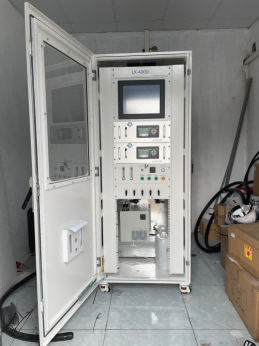
- Hot-wet CEMS: Heated extraction + heated sample line. The gas stays above dew point, so no condensate is intentionally generated. The analyzer must tolerate high-temperature measurement, commonly in the ~100–200 °C range depending on design.
- Cold-dry CEMS: Heated extraction + condensation. The system uses multi-stage condensers and associated components such as condensate pumps, drain valves, water traps/storage, and moisture reporting to deliver a dry-basis sample to a room-temperature analyzer.
Why does hot-wet CEMS usually deliver higher reliability and easier maintenance?
In CEMS, “reliability” is often just a measure of how many parts can fail between the stack and the analyzer. If your design requires condensers, drains, level control, and continuous water separation, you’ll spend your life troubleshooting leaks, blockages, and calibration instability. Removing entire subsystems is often the most effective reliability upgrade.
- Hot-wet advantage (simpler flow path): By eliminating condensers and drain hardware, hot-wet systems avoid many common pre-treatment failures, so the fault rate and maintenance workload drop sharply.
- Cold-dry burden (more components): Cold-dry systems typically require multiple condensers + liquid-handling accessories, which increases:
- failure points (pump/valve issues, leaks, sensor drift),
- operator workload (draining, cleaning, verifying moisture removal),
- recovery time after upsets (condensate carryover, re-stabilization).
Why is SO₂ loss typically much lower in hot-wet CEMS?
Few things are as frustrating as a “stable” SO₂ reading that is stable for the wrong reason. If condensate forms, SO₂ can dissolve into the water phase, and the gas-phase concentration delivered to the analyzer drops. That is a systematic negative bias—exactly the kind that creates disputes during performance checks.

- Hot-wet CEMS: By measuring at elevated temperature and avoiding condensate generation, it reduces condensate absorption of SO₂, so SO₂ loss is low and the reported concentration is generally closer to the true stack gas.
- Cold-dry CEMS: Because condensation is part of the design, it cannot avoid condensate contacting the sample, which can absorb SO₂ and drive higher SO₂ loss, especially during load swings, low-temperature stacks, or high moisture events.
Which system is better at preventing plugging—and why do crystals matter so much?
Plugging rarely starts as a “big blockage.” It starts as a thin layer of deposits from temperature gradients and phase change. Once crystals appear, they snowball into flow instability, pump overload, and analyzer drift. If you’ve ever chased intermittent low-flow alarms, you’ve seen this movie.
- Hot-wet CEMS (strong anti-plugging): With no condensation, there’s far less chance for crystalline precipitation, so the system is less prone to crystal-related blockage.
- Cold-dry CEMS (higher plugging risk): Condensation can trigger crystal formation/precipitation in cold spots and separators, making system blockage more likely, particularly where salts or reaction products are present.
Which architecture resists corrosion better over the long run?
Corrosion is not only a materials problem; it’s a phase problem. Acid gases are far more aggressive when they meet liquid water. If your conditioning intentionally creates liquid water, you must also engineer everything downstream to survive acidic condensate—continuously.
- Hot-wet CEMS: Because no condensate is produced, there is no persistent acidic liquid phase, so corrosion risk is lower and tubing/valves tend to age more slowly.
- Cold-dry CEMS: Continuous condensation can generate large amounts of corrosive acidic liquid, which accelerates system corrosion and speeds up line and component aging unless materials and maintenance are exceptional.
Do hot-wet systems demand “special analyzers,” and is that a real drawback?
If the analyzer can’t tolerate the sample conditions, every other advantage becomes irrelevant. Hot-wet does impose a clear requirement: the measurement section must be designed for elevated temperatures. But what looks like a drawback is often the price of avoiding the much larger complexity of condensation management.
- Hot-wet CEMS: Requires analyzers and sample interfaces that can operate with high-temperature gas, commonly ~100–200 °C at the measurement boundary.
- Cold-dry CEMS: Uses ambient/room-temperature analyzers, which can be simpler in some configurations—but only after you’ve successfully implemented the full condensation, separation, and moisture-control chain.
How do pre-treatment requirements differ when dust load and moisture fluctuate?
Most stacks don’t behave like steady lab gases. When dust spikes, temperature drops, or humidity increases, conditioning has to remain stable—or the analyzer will “see” the conditioning problem rather than the emissions. Systems that require more conditioning steps are generally more sensitive to process upsets.
- Hot-wet CEMS: Lower pre-treatment demand—often no dewatering is needed to measure, and the heated path can be designed to reduce dust interference without relying on cooling.
- Cold-dry CEMS: Higher pre-treatment demand—typically needs thorough dust removal + cooling + dewatering, and must keep condensers and separators working correctly across fluctuations.
What about sampling pumps—why do hot-wet systems often run more reliably?
Sampling is where many CEMS “mystery instabilities” begin. Mechanical pumps can degrade in corrosive environments, and they hate carrying liquids. If your architecture makes liquid formation likely, your pump choice becomes both more constrained and more failure-prone.
- Hot-wet CEMS: Often uses an ejector/jet pump concept with no mechanical moving parts, which typically improves reliability in harsh sampling conditions.
- Cold-dry CEMS: Often uses a mechanical pump (e.g., diaphragm pump); exposure to corrosive conditions and the broader conditioning chain can correlate with higher failure rates and corrosion sensitivity.
Wet-basis vs dry-basis data: which is “better” for compliance reporting?
Data basis is not just a math preference—it changes how you interpret results, how you normalize to reference oxygen, and how you compare with regulatory limits and third-party tests. Choosing the wrong basis (or converting inconsistently) can create reporting disputes even if the analyzer is accurate.
- Hot-wet CEMS: Produces wet-basis data directly—often closer to the physical stack gas condition and avoids some moisture-removal artifacts.
- Cold-dry CEMS: Produces dry-basis data by design—useful when limits, internal KPIs, or historical datasets are dry-based, but it depends on correct moisture removal and consistent conversionpractices.
So when should you choose hot-wet, and when does cold-dry still make sense?
Choosing the wrong architecture is expensive because it locks in maintenance style, spare parts philosophy, and the kinds of failure you’ll fight for years. The safest selection logic is to match architecture to the most difficult part of your measurement—usually moisture, water-soluble gases, and corrosion.
Practical selection guidance
- Hot-wet CEMS is typically the better choice when:
- flue gas is high humidity, near saturation, or prone to dew point crossing,
- target gases include water-soluble/reactive components (SO₂, HCl, HF, NH₃) where condensate loss is unacceptable,
- you want fewer pre-treatment components, lower fault rate, and simpler O&M,
- plugging/corrosion history exists and you need higher data availability.
- Cold-dry CEMS can still be reasonable when:
- the application prioritizes a dry-basis standard and moisture handling is well-controlled,
- target components are less sensitive to condensate absorption (depending on the gas list and local method),
- you have strong maintenance capability for condensers, drains, and liquid-handling hardware,
- site conditions make elevated-temperature analyzer interfaces impractical.
| Metric | Hot-Wet CEMS | Cold-Dry CEMS |
| Pre-treatment | Heated extraction + fully heated sample path (heat-traced throughout) | Heated extraction + condensation (cooling/dehumidification) |
| Reliability / Maintainability | Eliminates complex condensation pre-treatment equipment and draining devices. The flue gas can be analyzed through a simpler flow path, greatly reducing pre-treatment failure probability. Low maintenance workload; easy to operate. | Requires multi-stage condensers, peristaltic pump, drain valves, water tank, gas–liquid separator, humidity alarms, and other condensation-related pre-treatment components. More complex, higher failure probability, higher maintenance workload; harder to operate. |
| SO₂ loss | Low; high-temperature measurement avoids SO₂ absorption by condensate, resulting in higher SO₂ measurement accuracy. | High; ambient-temperature measurement cannot avoid SO₂ absorption by condensate during pre-treatment. |
| Anti-plugging | No crystal precipitation; no crystallization plugging issues. | Condensation can cause crystal precipitation, which may easily lead to system plugging. |
| Anti-corrosion | No condensate formation; no acidic liquid generated; less likely to cause system corrosion. | Continuously generates corrosive acidic condensate; system is prone to corrosion and pipelines age faster. |
| Analyzer requirements | Must support high-temperature measurement, typically ~100–200 °C. | Ambient/room-temperature analyzer. |
| Pre-treatment system demand | Low; measurement possible without dewatering; strong resistance to dust interference. | High; requires thorough dust removal, cooling, and dewatering. |
| Sampling pump | Ejector/jet pump (no mechanical moving parts), high reliability. | Mechanical pump (e.g., diaphragm pump); higher failure rate and easier to corrode. |
| Measurement data basis | Wet-basis data | Dry-basis data |
| Applicable conditions | Suitable for the vast majority of application scenarios. | Suitable when condensate has minimal impact on sample gas concentration. |
Conclusion
Hot-wet CEMS has become the “better choice” in many real plants because it attacks the main root cause of CEMS bias and downtime: condensation. By using heated extraction and a fully heated sampling path, it reduces SO₂ loss, minimizes crystal plugging, lowers acidic condensate corrosion, and simplifies the pre-treatment chain—often translating directly into higher reliability and easier maintenance. Cold-dry CEMS can still be appropriate where dry-basis reporting is central and the site can reliably operate the full condensation and dewatering package, but it carries inherent risks tied to condensate generation and management. If your stack is wet, variable, or chemically aggressive, hot-wet is usually the architecture that keeps the measurement closest to the true flue gas—without turning sample conditioning into the system’s weakest link.