


Industry Update
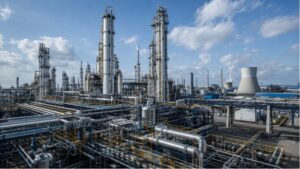
Carbon capture in cement manufacturing is entering a new stage. In Fujairah, UAE, Holcim and 44.01 have developed a project that captures CO₂ from cement production and sends it for underground mineralisation. The project was launched as a pilot to demonstrate permanent CO₂ storage from the cement industry. More recently, the system has moved toward continuous operation, with a design capacity of approximately 4–4.5 tonnes of captured CO₂ per day.
This development matters because cement plants are among the hardest industrial facilities to decarbonize. A large share of cement-sector CO₂ emissions comes directly from the calcination of limestone, rather than only from fuel combustion. As carbon capture projects move into continuous operation, gas analysis becomes an important part of the process—not simply an environmental reporting tool.
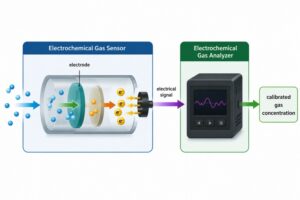
ESEGAS develops carbon capture gas analysis systems for demanding industrial applications, including cement production and emission monitoring. Its cement-plant solutions cover multiple measurement technologies, including NDIR, Electrochemical, UV-DOAS, FTIR, and TDLAS. ESEGAS also provides CEMS configurations for gases such as CO₂, CO, SO₂, NOₓ, HCl, HF and O₂.
For ESEGAS, this is also where gas analysis moves beyond compliance and becomes part of the broader carbon-management infrastructure.