



Desulfurization towers are expected to do two difficult things at once: keep sulfur-related emissions under control and maintain stable operating efficiency under harsh, wet, and corrosive conditions. When gas composition changes faster than operators can respond, even a well-designed system can suffer from reduced sulfur removal efficiency, unnecessary chemical consumption, corrosion risk, and compliance pressure. At ESEGAS, we see this challenge clearly in industrial flue gas treatment, which is why precise and responsive gas monitoring has become essential rather than optional.
Electrochemical gas analyzers improve monitoring efficiency in desulfurization towers by providing sensitive, fast-response measurement of key gases such as sulfur dioxide, hydrogen sulfide, and oxygen. In flue gas desulfurization applications, this data helps operators optimize process control, support emissions compliance, reduce maintenance risk, and improve overall tower performance. For facilities that need compact and reliable monitoring solutions, an electrochemical SO2 analyzer is often a practical and effective choice.
That answer is straightforward, but the real value lies in understanding why electrochemical monitoring works so well in this environment and how it should be applied. In our experience at ESEGAS, the performance of a desulfurization system is not determined by equipment size alone. It depends heavily on whether operators can see process changes early, interpret gas trends correctly, and act before small deviations become costly operational problems.
Why Is Gas Monitoring So Important Inside a Desulfurization Tower?
In many desulfurization systems, the biggest risk is not a total equipment failure but a gradual loss of control. Emissions may drift, absorbent usage may increase, or corrosive conditions may intensify long before the problem becomes obvious. Without reliable gas data, operators are often forced to react late, which can raise operating costs and reduce system confidence. At ESEGAS, we believe effective gas monitoring is one of the most direct ways to make desulfurization towers more stable, efficient, and predictable.
Detailed gas monitoring matters because it supports several critical goals at once:
- Emission compliance
Sulfur-bearing gases must be controlled consistently. Measuring gas concentration before, within, or after treatment helps verify whether the tower is performing as expected. - Process optimization
Real-time concentration data helps operators adjust reagent feed, airflow conditions, and operating strategy more accurately. - Equipment protection
Poorly controlled gas chemistry can accelerate corrosion, damage downstream equipment, and increase maintenance frequency. - Operational safety
In applications involving toxic or reactive gases, continuous monitoring supports safer plant operation and faster response to abnormal conditions. - Cost control
When gas values are measured accurately, plants can avoid overfeeding chemicals, reduce waste, and improve overall process efficiency.
How Does an Electrochemical Gas Analyzer Work in Desulfurization Applications?
Many facilities know they need gas measurement, but they hesitate when choosing a sensing principle because desulfurization conditions are demanding. Moisture, acidic components, and fluctuating gas loads can make any weak monitoring setup unreliable. This is exactly why analyzer selection matters. At ESEGAS, we recommend electrochemical technology in applications where sensitivity, response speed, and focused gas measurement are especially important.
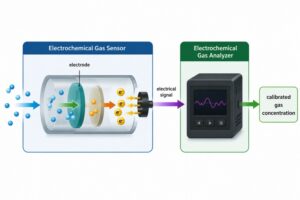
An electrochemical gas analyzer works by allowing the target gas to interact with an internal sensor cell, where a chemical reaction generates an electrical signal proportional to gas concentration. That signal is then processed and displayed as a readable concentration value.
In desulfurization applications, this approach offers several practical advantages:
- High sensitivity for low-concentration monitoring
This is especially valuable when precise sulfur-related gas tracking is required. - Fast response to concentration changes
Operators can react more quickly to changing tower conditions. - Compact design
Electrochemical systems are often suitable where installation space is limited. - Targeted gas analysis
A dedicated SO2 analyzer can provide focused sulfur dioxide measurement for process verification and emissions control.
At ESEGAS, we see electrochemical sensing not as a one-size-fits-all answer, but as a strong solution when the application requires responsive and dependable measurement of specific gases in industrial process environments.
Which Gases Can Electrochemical Analyzers Measure in a Desulfurization Tower?
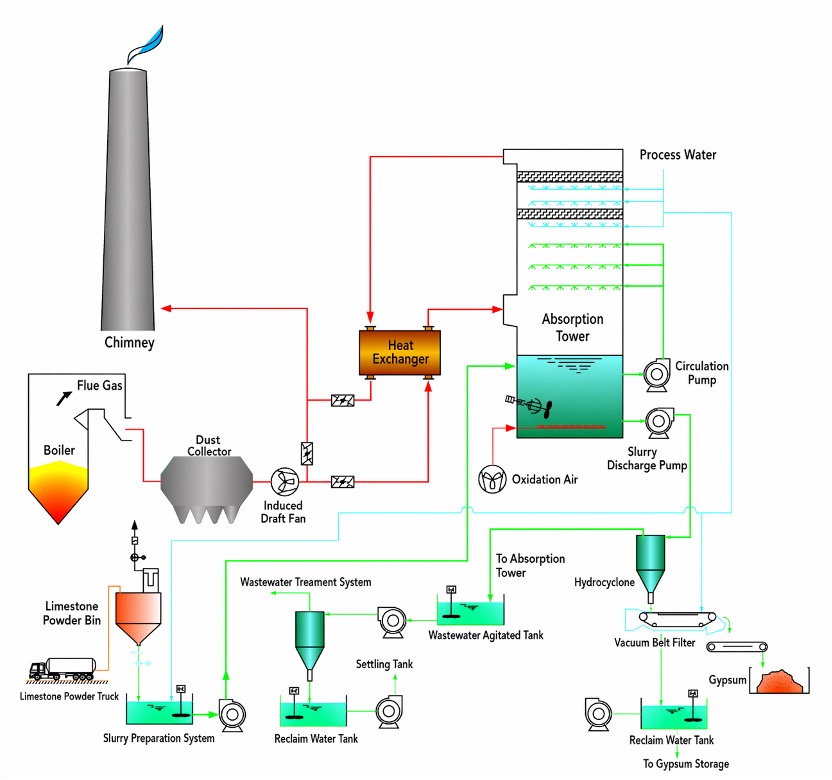
A desulfurization tower may look like a single treatment unit, but from a monitoring perspective it is a dynamic chemical environment. If operators only follow one variable, they can miss the interactions that actually determine treatment quality. That is why we often advise customers to think in terms of gas relationships, not just single-point readings. A well-selected analyzer strategy gives a clearer picture of what is happening inside the system.
Below are some of the most important gases that can be monitored in desulfurization-related applications:
| Gas | Why It Matters in Desulfurization | Monitoring Value |
| SO2 | Primary sulfur dioxide target in flue gas treatment | Verifies removal performance and supports emissions control |
| H2S | May be present in some sulfur-related industrial processes | Helps identify toxic gas risk and process instability |
| O2 | Indicates combustion and oxidation conditions | Supports process balance and operational adjustment |
| CO | Can reflect incomplete combustion in connected systems | Helps evaluate upstream process conditions |
| NO / NO2 | Relevant in broader emissions monitoring strategies | Supports integrated air pollution control planning |
Among these gases, sulfur dioxide is often the central concern. A reliable SO2 analyzer allows operators to track whether the desulfurization process is actually delivering the expected reduction in sulfur emissions. At ESEGAS, we often find that better SO2 visibility leads directly to better process decisions.
What Are the Main Advantages of Electrochemical Gas Analyzers Over Other Monitoring Methods?
Many plants compare several sensing methods before making a decision, and that is the right approach. The challenge is that some technologies offer excellent performance in certain conditions but may be unnecessarily complex or less cost-effective for targeted gas measurement. When customers come to ESEGAS, they are usually not just looking for a specification sheet. They want a practical balance of sensitivity, installation simplicity, maintenance needs, and long-term value.
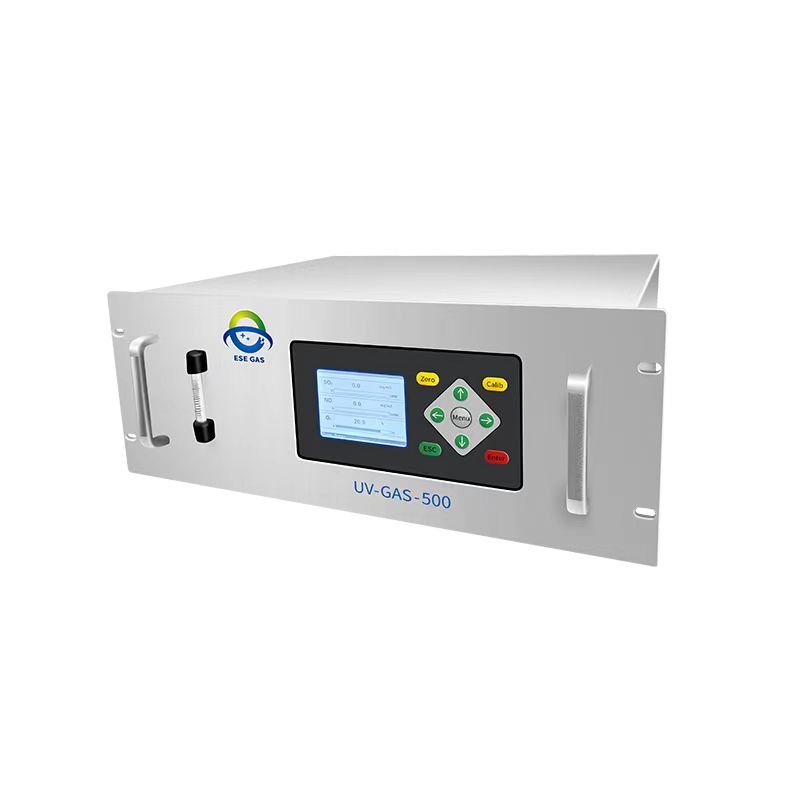
Electrochemical gas analyzers stand out in desulfurization applications for several reasons:
- Strong sensitivity
They are well suited for measuring low-level target gases with good precision. - Quick response
Rapid signal change supports faster process correction. - Compact structure
This helps in installations where system footprint matters. - Cost-effective targeted monitoring
For specific gases such as sulfur dioxide, a dedicated SO2 analyzer can be a highly efficient choice. - Useful for process control and compliance support
They help bridge the gap between laboratory-style precision and practical industrial field use.
A simple comparison is helpful:
| Technology | Typical Strength | Typical Limitation |
| Electrochemical | High sensitivity, compact size, targeted gas detection | Sensor management is important in harsh environments |
| Infrared | Strong for some gas types and continuous systems | May be less ideal for certain low-level targeted measurements |
| Zirconia | Effective for oxygen measurement | Limited to specific gas measurement tasks |
| Paramagnetic | Accurate oxygen analysis | Not intended for broad sulfur gas detection |
At ESEGAS, we choose technology based on application reality. For many desulfurization projects, electrochemical measurement provides a practical path to accurate sulfur gas monitoring without unnecessary system complexity.
What Challenges Should Be Considered When Installing an Electrochemical Gas Analyzer in a Desulfurization Tower?
A good analyzer can still underperform if the installation environment is ignored. This is one of the most common issues we see in industrial gas analysis. Desulfurization towers are not gentle operating environments. Moisture, acidic components, contamination, and temperature variation can all reduce sensor effectiveness if the system is not configured properly. That is why successful deployment depends on more than the analyzer alone.
At ESEGAS, we recommend paying close attention to the following factors:
- Sample gas pretreatment
Wet and contaminated gas streams often need conditioning before they reach the sensor. - Installation location
The analyzer should be placed where the sample is representative and accessible for service. - Temperature and pressure stability
Process fluctuations can affect reading consistency if not considered in system design. - Cross-sensitivity management
Some gases may interfere with measurement, so application matching is important. - Calibration and sensor lifecycle planning
Electrochemical sensors require routine verification to maintain dependable performance. - Corrosion resistance
Materials used in the sampling path should be suitable for sulfur-related and humid environments.
A properly installed SO2 analyzer is not just a measurement tool. It becomes a reliable control input that operators can trust during daily plant operation.
How Can the Right Analyzer Configuration Improve Desulfurization Performance?
Plants often assume that once gas measurement is in place, optimization will happen automatically. In reality, poor configuration can leave valuable process information unused. The real benefit comes when analyzer design matches process goals, sampling conditions, and control strategy. At ESEGAS, we focus not only on supplying analyzers but also on helping customers build a monitoring setup that supports better operational decisions.
The right configuration can improve desulfurization performance in several ways:
- Single-gas or multi-gas selection
Some applications need only a focused SO2 analyzer, while others benefit from monitoring SO2 together with O2 or H2S. - Fixed online monitoring
Continuous installed systems support real-time process adjustment and long-term trend tracking. - System integration
When analyzer data is connected to plant control systems, operators can respond faster and with greater confidence. - More efficient reagent use
Better gas feedback can help avoid underdosing or overdosing absorbents. - Improved operating stability
Reliable gas trends make it easier to maintain consistent tower performance under variable load conditions.
In our view at ESEGAS, configuration is where measurement becomes value. A properly matched analyzer system does more than report gas concentration; it supports smarter operation across the entire desulfurization process.
Why Do Industrial Operators Choose ESEGAS for Desulfurization Gas Monitoring?
Choosing a gas analysis partner is rarely just about buying hardware. Operators need confidence that the solution fits the process, survives the environment, and delivers usable data over time. In desulfurization applications, where sulfur gases, moisture, and operating variability can create persistent challenges, that confidence matters. At ESEGAS, we work from the perspective that reliable monitoring begins with understanding the real industrial problem behind the measurement requirement.
Industrial operators choose ESEGAS because we focus on what the application truly demands:
- We understand the monitoring needs of sulfur-related industrial processes.
- We provide analyzer solutions designed for practical field use.
- We help customers evaluate gas type, site condition, and measurement objective together.
- We support the selection of a suitable SO2 analyzer solution for accurate sulfur dioxide monitoring.
- We aim to improve not only measurement accuracy but also process stability, efficiency, and confidence.
Rather than treating gas analysis as an isolated instrument function, we approach it as part of a larger emissions and process control strategy.
Conclusion
Electrochemical gas analyzers play an important role in improving desulfurization tower monitoring, especially when plants need sensitive, responsive, and application-focused measurement of sulfur-related gases. In our experience at ESEGAS, a well-chosen electrochemical SO2 analyzer can help operators strengthen emissions control, improve process visibility, reduce unnecessary operating costs, and maintain more stable desulfurization performance.
For desulfurization systems that require reliable sulfur dioxide monitoring under demanding industrial conditions, electrochemical analysis is not only a practical option but often a highly effective one. At ESEGAS, we are committed to delivering gas analysis solutions that help our customers achieve safer, smarter, and more efficient process control.