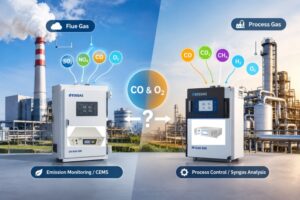



A carbon monoxide problem rarely starts with an alarm. More often, it starts with incomplete combustion, unstable process conditions, rising emissions, or a gradual loss of efficiency that goes unnoticed until it becomes costly. That is why we see many industrial users struggle not with the idea of CO monitoring itself, but with choosing a solution that can deliver stable, accurate, long-term results in real operating conditions. At ESEGAS, we address this challenge by offering CO analyzer solutions designed to help customers monitor carbon monoxide with confidence across demanding industrial applications. (Gas Analyzer Manufacturers)
A CO analyzer is an instrument used to measure carbon monoxide concentration in process gas, flue gas, or emission gas. At ESEGAS, we provide both TDLAS and NDIR CO analyzer solutions, with measurement ranges from ppm to percentage levels, to support safer operation, better combustion control, improved energy efficiency, and emissions compliance. (Gas Analyzer Manufacturers)
That direct answer is useful, but it only covers the surface. In practice, the right CO analyzer depends on more than the gas being measured. The measurement range, installation method, application environment, maintenance expectations, and required accuracy all influence whether a solution will perform well over time. That is exactly why we offer more than one technical route at ESEGAS, including the ESE-LASER-710 online TDL CO analyzer and the IR-GAS-600 NDIR model, so customers can match the analyzer to the application rather than forcing the application to fit a single instrument. (Gas Analyzer Manufacturers)
What Is a CO Analyzer?
Many users begin with a simple goal: measure carbon monoxide and keep operations under control. But once a project starts, the real question becomes more specific. Do you need continuous online monitoring, a broad measurement range, or a configuration that can handle a harsh industrial environment? A CO analyzer is not just a detector that tells you whether carbon monoxide is present. It is an analytical instrument used to quantify CO concentration accurately enough to support process decisions, emissions management, and safety strategies.
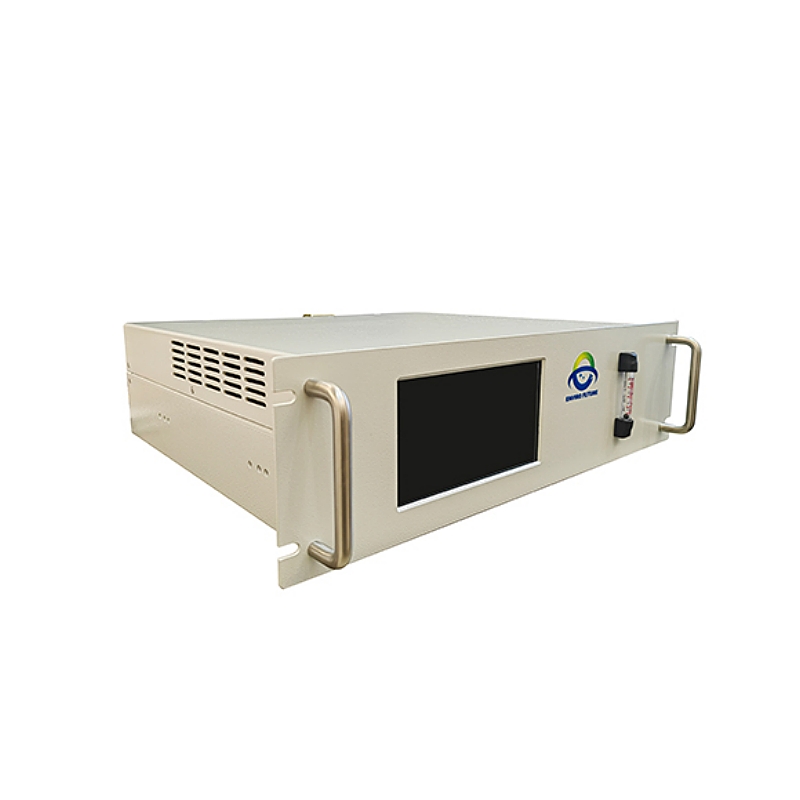
At ESEGAS, we define a CO analyzer as a system built to measure carbon monoxide in industrial and process-related gas streams. Depending on the application, we can support measurements from ppm to percent levels of carbon monoxide. We also support different system forms, including portable and online models, as well as extractive and in-situ installation methods. This flexibility matters because a cement line, a coking process, and an ammonia production facility do not place the same demands on an analyzer. (Gas Analyzer Manufacturers)
How Does a CO Analyzer Work?
A common frustration in industrial gas analysis is that two analyzers may both claim to measure CO, yet deliver very different performance in the field. The reason is straightforward: the underlying measurement technology changes the analyzer’s sensitivity, maintenance profile, installation complexity, and long-term suitability. For that reason, understanding the working principle is not a technical luxury. It is part of making the right purchasing decision.
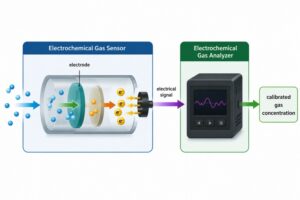
At ESEGAS, we provide two main CO measurement approaches on this product line. The first is the ESE-LASER-710 Online TDL CO Analyzer, which uses tunable diode laser absorption spectroscopy, or TDLAS. The second is the IR-GAS-600, which uses non-dispersive infrared, or NDIR, technology. According to our product information, TDLAS offers very high sensitivity and accuracy, making it a strong choice for advanced online CO measurement. NDIR also offers excellent sensitivity and accuracy, while serving as a practical solution for many industrial monitoring tasks. Our product page also notes that electrochemical technology exists as a lower-precision alternative for applications where very high accuracy is not required, though our featured CO solutions here are TDLAS and NDIR. (Gas Analyzer Manufacturers)
Here is a practical comparison:
| Technology | Typical Strength | Main Limitation | Best-Fit Direction |
| TDLAS | Very high sensitivity and accuracy | Higher purchase and maintenance cost; regular calibration needed | High-performance online monitoring |
| NDIR | Strong sensitivity and accuracy with broad industrial usability | Requires additional sample line setup | Industrial process and emission monitoring |
| Electrochemical | Lower cost and simpler maintenance entry point | Lower precision and drift over time | Basic applications with moderate accuracy needs |
This comparison reflects the logic behind our offering at ESEGAS: there is no single “best” CO analyzer for every plant, but there is a best-fit analyzer for each operating requirement. (Gas Analyzer Manufacturers)
Why Is Accurate CO Monitoring So Important in Industrial Applications?
It is easy to assume that any CO reading is good enough as long as the analyzer is operating. In reality, inaccurate CO data can lead to poor combustion adjustments, unstable process control, compliance risk, and delayed responses to hazardous conditions. When CO is a key operating indicator, measurement quality directly affects operational decisions.
Our product information highlights several reasons why CO analysis matters. First, carbon monoxide is toxic, which makes reliable monitoring important for health and workplace safety. Second, CO measurement supports combustion process optimization by helping operators adjust fuel-to-air balance, improve combustion efficiency, and reduce unnecessary energy consumption. Third, CO analysis helps industrial facilities manage emissions and work toward compliance with standards. At ESEGAS, we also emphasize the broader value of gas analysis: helping customers improve performance, save energy, and reduce emissions through more informed process control. (Gas Analyzer Manufacturers)
In practical terms, accurate CO monitoring can help customers:
- identify incomplete combustion earlier,
- improve combustion efficiency,
- reduce wasted fuel,
- support emissions control strategies,
- strengthen worker and plant safety,
- maintain more stable production performance. (Gas Analyzer Manufacturers)
Which Industries Commonly Use a CO Analyzer?
Many buyers know they need a CO analyzer, but they are less certain about whether their industry requires a specialized configuration. That concern is valid. CO monitoring in a metallurgical process may involve very different conditions from those in a power plant or coking application. The analyzer should fit the process environment, not just the gas name on the specification sheet.
According to our ESEGAS product page, CO analyzers are widely used in the metallurgical industry, coking industry, power industry, cement industry, and ammonia production. In these sectors, CO monitoring can support both emissions measurement and process optimization. Producers use CO data not only to satisfy emissions requirements, but also to maximize output, improve efficiency, and optimize combustion performance while reducing energy consumption and emissions. (Gas Analyzer Manufacturers)
A simple way to view this is:
| Industry | Why CO Monitoring Matters | ESEGAS Matching Logic |
| Metallurgical | Process control and safety | Select by gas conditions and measurement demands |
| Coking | Combustion and gas process management | Choose technology based on installation and accuracy needs |
| Power | Emissions and efficiency optimization | Online monitoring is often important |
| Cement | Flue gas and combustion performance | Durable industrial configuration matters |
| Ammonia production | Process gas monitoring and control | Measurement range and system design are critical |
At ESEGAS, we use this application-based approach to recommend the right analyzer structure, not just a generic instrument. (Gas Analyzer Manufacturers)
What Should You Consider When Choosing a CO Analyzer?
A CO analyzer may look suitable on paper and still underperform in real use if the selection criteria are too narrow. We often see buyers focus only on the target gas, while overlooking range, installation style, interface, service support, and adaptation to the actual environment. That is where many avoidable problems begin.
When choosing a CO analyzer, we recommend evaluating the following points carefully. The first is measurement range. At ESEGAS, our instruments can support carbon monoxide measurement from ppm to percent levels, depending on the application. The second is installation method. We support portable and online models, along with extractive and in-situ installation methods, which allows customers to match the analyzer to the process layout and measurement objective. The third is accuracy and reliability, which remain essential for meaningful long-term monitoring. We also place strong emphasis on ease of use, including intuitive menus and LCD displays, because field usability affects daily operation more than many buyers expect. Finally, customization and technical support matter. Our product information states that we provide a wide range of customizations and prompt, reliable support from our technical team to help ensure successful operation. (Gas Analyzer Manufacturers)
A strong selection process usually includes these questions:
- What CO range do we actually need to measure?
- Is online monitoring required, or is a different format more suitable?
- Does the site favor extractive or in-situ installation?
- How much maintenance complexity can the plant support?
- Is higher-end TDLAS performance necessary, or is NDIR the better balance?
- Will the supplier support customization and long-term operation? (Gas Analyzer Manufacturers)
Why Choose ESEGAS for CO Gas Analysis?
Many industrial customers are not just buying an analyzer. They are trying to solve a plant-level problem involving accuracy, installation conditions, maintenance expectations, and process improvement targets. A supplier should therefore provide more than a product name. The supplier should provide a solution path.
At ESEGAS, we support CO gas analysis with both TDLAS and NDIR options. On this product line, that includes the ESE-LASER-710 Online TDL CO Analyzer and the IR-GAS-600 NDIR CO analyzer. We can configure systems across a wide measurement range from ppm to %, and we support portable or online models as well as extractive and in-situ installation methods. We also emphasize usability, customization, and responsive technical support so that customers can implement a CO monitoring solution that fits their environment instead of compromising around a standard configuration. Our goal is not only to measure CO, but to help customers optimize processes, improve performance, save energy, and reduce emissions through dependable gas analysis. (Gas Analyzer Manufacturers)
Conclusion
A CO analyzer is more than a measurement device. It is a key tool for safer operations, better combustion control, improved efficiency, and stronger emissions management. The right solution depends on your process conditions, required accuracy, measurement range, and installation method. At ESEGAS, we address these different needs with both TDLAS and NDIR CO analyzer solutions, including the ESE-LASER-710 and IR-GAS-600, so our customers can choose a configuration that truly matches their application rather than settling for a one-size-fits-all approach. (Gas Analyzer Manufacturers)