



Accurate measurement of greenhouse gases such as CO₂, CH₄, and CO sits at the core of carbon reporting. Companies rely on these numbers to meet regulatory duties, manage carbon costs, and prove real progress toward sustainability targets. In emissions trading systems like the EU ETS or California Cap-and-Trade, small data errors can translate into large financial exposure. Overreporting inflates compliance costs. Underreporting risks penalties, audits, and reputational damage. As a result, emissions data must be defensible, traceable, and consistent over time.
Several gas measurement technologies exist, but NDIR gas analyzers remain a workhorse for carbon monitoring. They measure gas concentration through infrared absorption, offering stable performance and low drift. This makes them well suited for continuous monitoring in industrial environments. Ultimately, accuracy shapes emissions baselines, credit calculations, and market trust. Reliable data supports fair trading, confident audits, and credible climate claims.
With that foundational understanding of why accurate greenhouse gas quantification matters, we can now explore how NDIR gas analyzer accuracy directly affects regulatory compliance and audit confidence in emissions reporting.
Impact 1: How Does NDIR Gas Analyzer Accuracy Affect Regulatory Compliance and Audit Confidence?
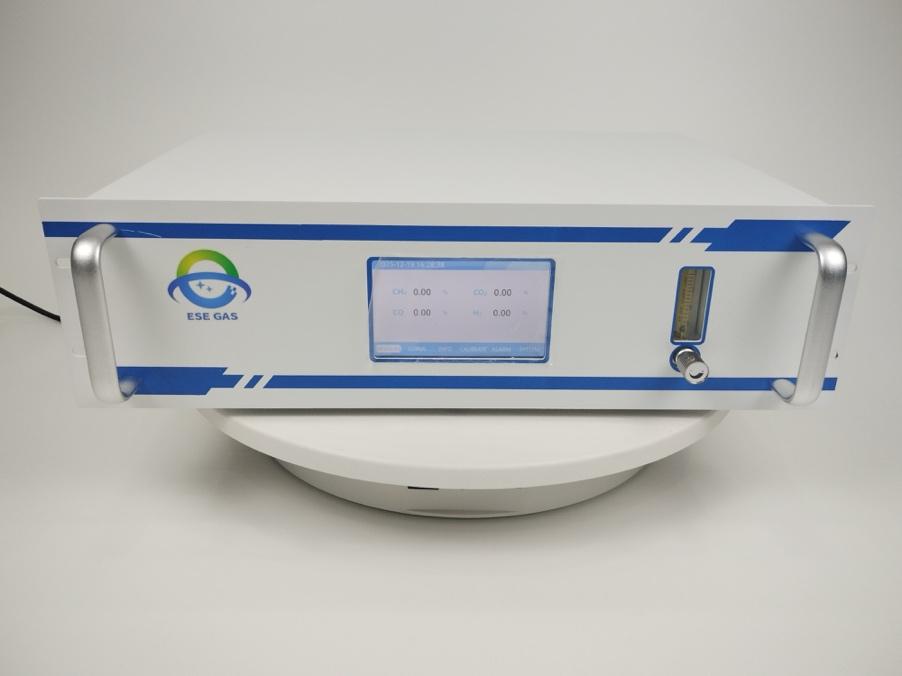
Accurate gas readings are not optional when regulators evaluate carbon reports. Environmental agencies require quantified greenhouse gas (GHG) figures to fall within narrow error margins before approving carbon inventories. If a reported CO₂ or CH₄ value drifts too far from the true level, authorities may flag the data as non-compliant, triggering audits or even financial penalties. Inaccurate emissions numbers can also damage corporate credibility and invite deeper scrutiny.
More importantly, high measurement accuracy simplifies third-party verification. Auditors and verifiers use independent checks to confirm emissions data before certification or ETS allocation. When an NDIR gas analyzer delivers stable, precise outputs with minimal post-measurement correction, it shortens audit cycles and strengthens confidence in reported figures. This reduces the time and cost associated with compliance documentation and builds trust with regulators and stakeholders alike. Accurate measurement thus becomes both a technical requirement and a strategic asset in emissions reporting.
Impact 2: How Does NDIR Gas Analyzer Accuracy Influence Financial Outcomes in Emissions Trading?
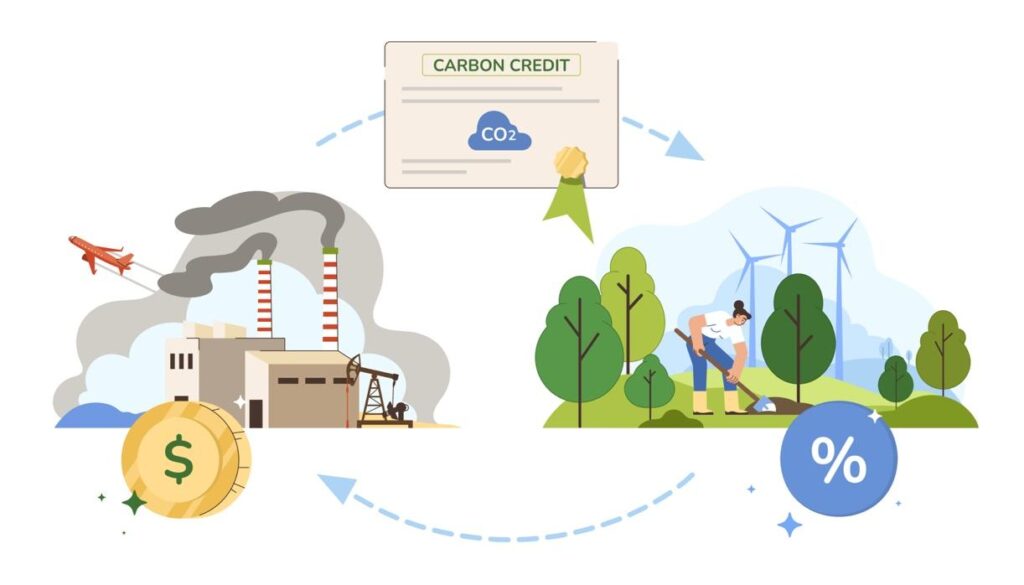
Precise emissions data directly affects how carbon credits and allowances are valued in emissions trading schemes. When a facility reports accurate CO₂ and CH₄ figures, traders can price its tradable carbon assets fairly. Conversely, over-reporting emissions inflates baseline levels, giving an entity more credits than it deserves. Under-reporting creates shortfalls that force companies to buy extra permits, increasing compliance costs and disrupting market balance.
Moreover, market confidence relies on transparent and high-quality emissions data. Investors and counterparties apply risk adjustments when emissions numbers carry large uncertainty. Accurate measurement reduces perceived risk, lowers risk premiums, and attracts deeper market participation.
In short, measurement accuracy feeds into credit supply, pricing integrity, and investor trust. Poor data can distort market signals, while robust NDIR gas analyzer outputs help stabilize carbon pricing and enhance trading efficiency by aligning reported emissions with economic and environmental reality.
Impact 3: How Does NDIR Gas Analyzer Accuracy Affect Internal Emissions Baselines and Operational Decisions?
Accurate emissions baselines are the backbone of any internal GHG reduction strategy. When an NDIR gas analyzer delivers consistent gas concentration data, companies can build reliable historical emission profiles. In contrast, skewed readings distort those baselines, making it hard to judge whether year-over-year reductions are real or measurement artifacts. Faulty baselines can lead to misplaced confidence or unnecessary corrective actions, undermining internal climate goals.
Moreover, precise gas data directly informs operational decisions and investment choices. For example, when process engineers see reliable CO₂ and CH₄ trends, they can target the highest-emitting units for mitigation upgrades or process optimization. These data-driven decisions boost return on investment (ROI) by prioritizing interventions that yield the largest emission cuts per dollar spent.
Thus, NDIR gas analyzer accuracy supports both trend integrity and smart capital allocation, helping organizations make informed sustainability choices that align with long-term decarbonization goals.
Impact 4: How Does NDIR Gas Analyzer Accuracy Affect Systematic Error Propagation in Large Emission Datasets?
When emissions monitoring runs continuously, even small measurement errors can build up into large data distortions. In hourly or daily records, a tiny bias in an NDIR gas analyzer can repeat across thousands of data points. Over weeks or months, these small biases amplify, making long-term emission estimates less trustworthy and trend lines harder to interpret. In other words, a slight systematic error today can skew reported totals next quarter or next year.
To manage this, long-term monitoring networks apply calibration and correction techniques to NDIR data. For example, studies deploying hundreds of low-cost NDIR CO₂ sensors over 19–25 months found that accuracy typically stayed within 8–12 ppm after careful calibration, drift correction, and data filtering. However, these sensors still needed ongoing processing to maintain reliable long-term trends.
Thus, filtering algorithms, drift compensation, and periodic calibration are crucial for trend fidelity. Without them, aggregated datasets can mislead decision-makers and undermine carbon reporting credibility.
Impact 5: How Does NDIR Gas Analyzer Accuracy Compare Across Technologies and Calibration Standards?
When professionals benchmark measurement technologies, they often compare NDIR gas analyzers with high-precision methods like Tunable Diode Laser Absorption Spectroscopy (TDLAS) or Cavity Ring-Down Spectroscopy (CRDS). These laser-based techniques excel in sensitivity and selectivity because they target narrow absorption lines of specific gases. As a result, they typically offer lower detection limits and less drift than broadband NDIR systems, but they come with higher cost and complexity. TDLAS is especially useful for low-concentration trace gas monitoring and fast response applications, while CRDS achieves ultra-high sensitivity using long effective optical paths.
Despite these differences, field calibration can significantly improve NDIR performance. Research shows that when NDIR analyzers are calibrated against research-grade instruments under controlled conditions and corrected for environmental factors, root mean squared error (RMSE) and drift metrics can shrink markedly. This process enhances cross-technology data consistency and bolsters confidence in long-term emissions datasets. Effective calibration bridges the gap between inexpensive NDIR systems and high-end laser spectroscopy, offering a practical balance of performance and cost for many industrial carbon reporting needs.
Impact 6: How Does NDIR Gas Analyzer Accuracy Strengthen Reporting Transparency and Stakeholder Communication?
Clear, trustworthy emissions data matters deeply to investors, regulators, and the public. Carbon disclosure sits at the heart of ESG reporting frameworks, and high quality metrics help stakeholders evaluate a company’s climate performance. When emissions figures include well defined uncertainty bounds and transparent calculation methods, audiences can interpret results with confidence. In many jurisdictions and markets, regulators now require companies to disclose not just totals, but also how they calculate those figures and which standards they follow. This boosts comparability and transparency across firms.
Moreover, credible emissions reporting enhances the quality of a company’s sustainability disclosure and communication. Investors increasingly use carbon performance data to inform capital allocation, risk assessment, and engagement strategies. Inconsistent or opaque emissions data can undermine investor trust and raise the cost of capital. By contrast, accurate data from NDIR gas analyzers supports clearer communication, helps avoid “greenwashing” allegations, and demonstrates genuine commitment to environmental goals. Ultimately, measurement accuracy becomes a foundation for responsible ESG narratives and stronger stakeholder relationships.
Impact 7: How Does NDIR Gas Analyzer Accuracy Improve Operational Efficiency and Cut Long Term Costs?
Accurate gas measurements save time and money from the outset. When an NDIR gas analyzer produces precise results on the first measurement, teams avoid repeat testing and data re work. This reduction in re measurement directly lowers labor hours and shortens audit cycles. It also reduces the risk of costly data revisions that can trigger regulatory penalties or require additional reporting rounds.
In addition, quality NDIR analyzers with automated baseline correction and stable optical components minimize routine calibration needs. These systems adjust for drift and environmental changes in real time, which decreases dependency on external calibration gases or frequent technician visits. Over the equipment lifecycle, this means fewer service interruptions, less consumable expense, and longer intervals between maintenance events.
Moreover, reliable long term performance supports continuous compliance reporting, reducing disruptive downtime. Companies benefit not only from lower operational overhead but also from improved uptime and confidence that measurement systems support efficiency goals without sacrificing data quality. This combination of reduced audit costs and streamlined maintenance strengthens both operational effectiveness and financial sustainability.
Conclusion
To wrap up, measurement accuracy sits at the heart of credible carbon reporting and emissions trading. Accurate data from NDIR gas analyzers shapes critical outcomes across regulatory compliance, financial valuation in carbon markets, and internal performance tracking. When emissions figures are precise and defensible, organizations avoid costly re work, reduce audit risks, and strengthen stakeholder trust. In today’s regulatory landscape, data quality is not just a technical requirement but a strategic advantage in meeting climate goals and investor expectations.
Looking ahead, businesses should design measurement strategies that prioritize accuracy, certification, calibration, and independent verification. Choose instruments with clear performance specifications, build regular calibration cycles into operational plans, and document uncertainty transparently. These steps ensure data integrity and reduce compliance or reporting surprises. If you’re ready to improve your emissions measurement accuracy and strengthen carbon reporting confidence, explore advanced NDIR gas analyzer solutions at ESEGAS Technology.
FAQs:
1. Why is NDIR gas analyzer accuracy critical for carbon reporting?
A: Accurate NDIR gas analyzer readings ensure greenhouse gas (GHG) measurements fall within acceptable uncertainty ranges. When emissions figures are precise, regulators and third party auditors can confidently validate carbon inventories and avoid compliance penalties or re evaluations. Inaccurate data can undermine reporting credibility and lead to costly audits or adjustments.
2. How does NDIR gas analyzer accuracy affect carbon trading prices?
A: Carbon pricing relies on reported emission baselines. Overestimated emissions inflate tradable credits, while underestimates force extra purchases. Precise NDIR data supports fair credit allocation and prevents pricing distortions in emissions trading systems. This strengthens market integrity and reduces financial risk.
3. Can inaccurate NDIR data distort long term emission trends?
Yes. Small systematic errors in continuous NDIR measurements can accumulate over time, skewing long term emission baselines and trend analyses. Without calibration and data filtering, aggregated datasets may misrepresent true emissions, affecting internal targets.
4. Do calibration and field validation improve NDIR accuracy?
Absolutely. Field comparison and calibration against research grade instruments reduce measurement errors and account for environmental influences like temperature and pressure, leading to more reliable data for reporting and trading.
5. How can organizations maintain long term NDIR accuracy?
To maintain NDIR accuracy, companies should implement regular calibration cycles, automated baseline correction, environmental compensation, and rigorous data quality controls. These practices reduce drift, minimize repeat testing, and lower long term measurement costs.
6. How do NDIR gas analyzers compare to higher precision methods?
High precision techniques like Tunable Diode Laser Absorption Spectroscopy (TDLAS) or Cavity Ring Down Spectroscopy (CRDS) offer lower detection limits and less drift than standard NDIR. However, NDIR systems balance performance with lower cost and simpler operation, especially when properly calibrated against reference instruments.