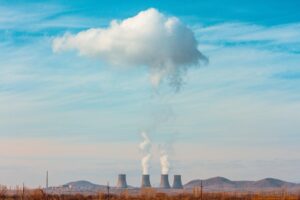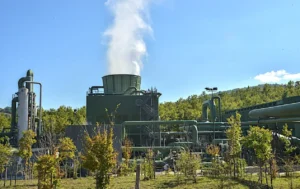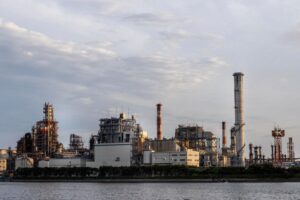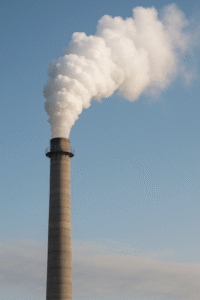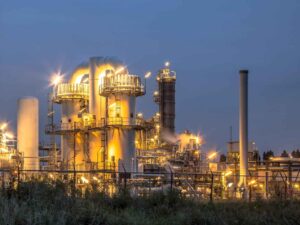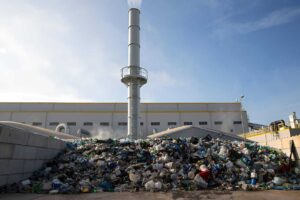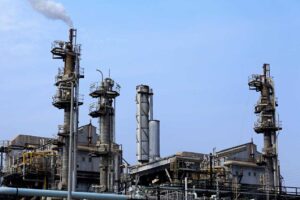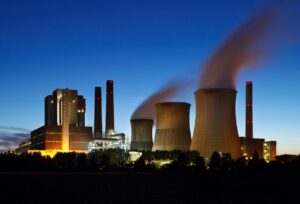




Power plants and heavy industrial facilities must track air pollution around the clock to meet strict environmental laws. Today, regulators in the U.S., Europe, India, and many other regions require continuous measurement of gases like NOₓ, SO₂, CO, and particulate matter rather than occasional testing. These systems provide the data authorities use to check compliance with limits and emissions permits. Real-time emissions monitoring also delivers tangible operational value. CEMS (continuous emission monitoring system) gives plant operators live data on stack performance and emissions trends, which helps reduce fuel waste, fine-tune combustion, and prevent unexpected equipment issues before they become costly. This shift from periodic manual sampling to automated, minute-by-minute reporting improves both compliance and plant efficiency.
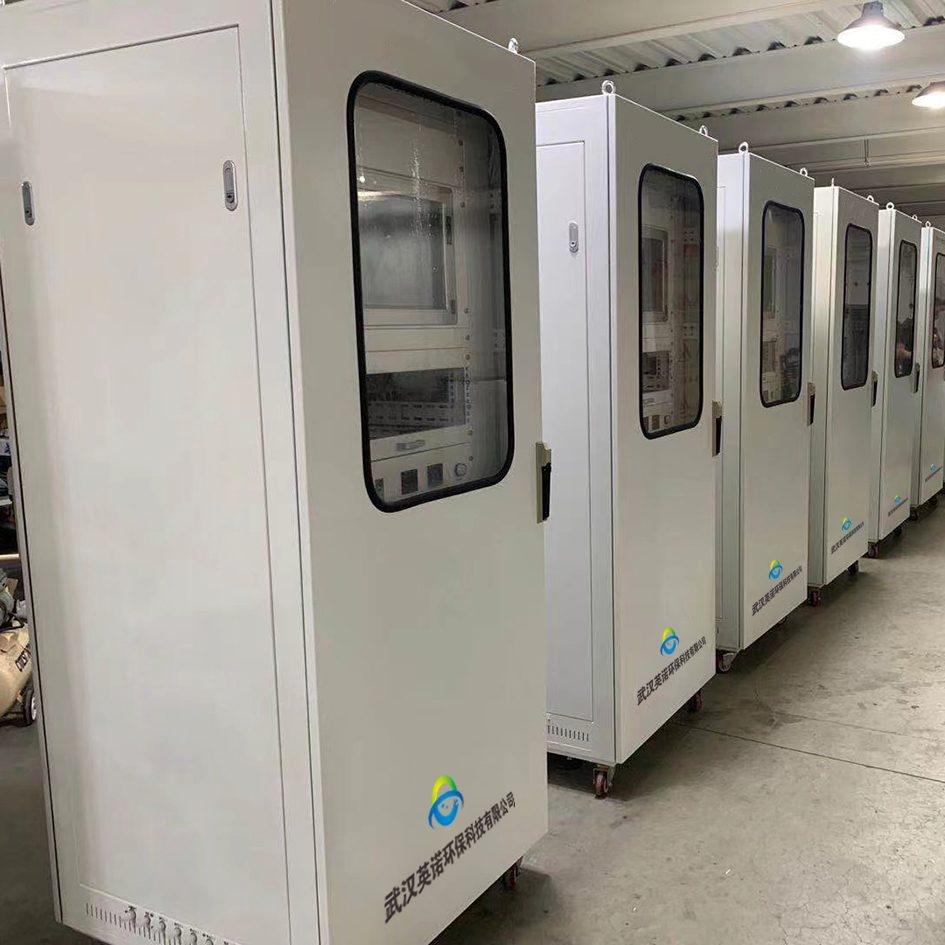
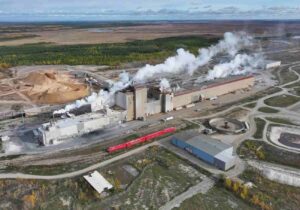
(ESEGAS CEMS manufacture plant)
Buyers researching continuous emission monitoring system suppliers are typically trying to answer a few key questions before they commit to a solution:
- Which suppliers have a proven record of meeting stringent regulations and reporting requirements?
- What technical features and certifications matter most for reliable monitoring and accurate data?
- How do overall costs and long-term support from each supplier compare over the system lifecycle?
Understanding these points helps environmental managers and procurement teams choose a supplier that not only delivers compliant monitoring hardware but also offers dependable service and value.
What Is a Continuous Emission Monitoring System and Why Do Continuous Emission Monitoring System Suppliers Matter?
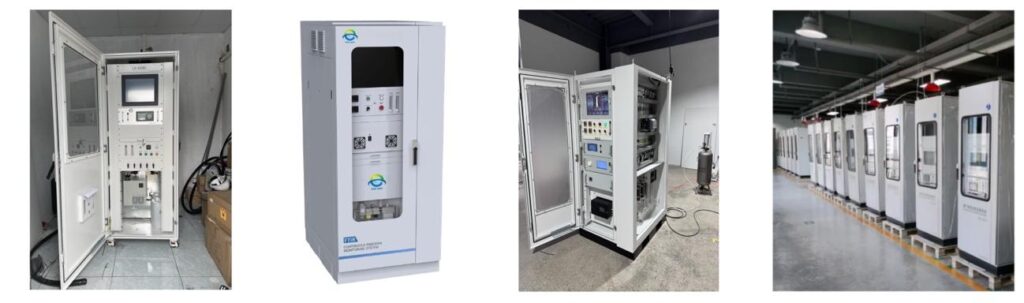
(ESEGAS CEMS, FTIR CEMS, Mercury CEMS, VOC CEMS)
A Continuous Emission Monitoring System (CEMS) is an integrated setup that tracks air pollutants from industrial stacks or ducts without stopping operations. It draws and analyzes gas continuously so facilities can show regulators real-time emission data and operate within legal limits. A typical CEMS includes a sampling probe, conditioning equipment, gas analyzers, and a data acquisition system for logging and reporting results.
At the heart of a CEMS is the sampling and conditioning subsystem. A probe captures flue gas from a stack. The sample then flows through conditioning tools that remove moisture and protect analyzers. From there, gas analyzers measure pollutant concentrations like SO₂, NOx, CO, and oxygen. Finally, a data acquisition and handling system (DAHS) records and stores readings for automated compliance reports and performance insights.
CEMS technologies mainly fall into two categories. Extractive systems draw a sample out of the stack, condition it, and send it to analyzers. These are flexible and widely used across heavy industry. In-situ systems, by contrast, place analyzers directly in the gas stream to measure pollutants on site without gas transport. Each method offers trade-offs in speed, maintenance, and environmental challenges.
Another important distinction is between multi-pollutant and single-pollutant analyzers. Multi-pollutant solutions measure several gases with one integrated platform, reducing hardware and reporting complexity. Single-pollutant analyzers focus on one specific gas with high precision, often where regulatory limits are tight.
Understanding what a CEMS does and how its technologies differ helps buyers compare Continuous Emission Monitoring System suppliers more intelligently. In the next section, we’ll explore how to evaluate these suppliers based on performance, compliance, and service criteria.
What Key Criteria Should You Use to Evaluate Continuous Emission Monitoring System Suppliers?

When buyers compare Continuous Emission Monitoring System suppliers for power plants and heavy industry, they look beyond basic price and product listings. The right supplier must deliver reliable measurement performance, proven regulatory compliance, strong service, and long-term support. Below are the core criteria procurement teams and environmental managers should use to assess potential vendors.
1. Technical Capability & Measurement Accuracy
Top suppliers offer systems with wide dynamic ranges, low detection limits, and sound calibration protocols. These technical strengths ensure systems generate trustworthy emissions data and stay accurate over time. Good CEMS hardware measures multiple gases (e.g., SO₂, NOx, CO, O₂, PM) accurately under varying conditions and supports automated calibration checks to meet regulatory QA/QC rules. Accurate, traceable data is essential for compliance reporting and operational decision-making.
2. Regulatory Compliance & Certifications
Reputable suppliers build solutions that align with global and regional regulatory standards. Look for products and services that can help you meet performance specifications and quality assurance requirements from bodies like the U.S. EPA, the UK MCERTS programme, or the EU’s Industrial Emissions Directive (IED). Certified equipment and documented test procedures reduce compliance risk and reflect a supplier’s understanding of legal obligations.
3. Industry Expertise & Track Record
Experience matters. Suppliers with a track record in power generation, cement, steel, or refinery applications are more likely to understand complex flue gas conditions and integration challenges. Case studies showing successful installations at similar facilities give you confidence that the supplier can deliver results that meet both regulatory and operational targets.
4. Installation & Integration Support
A good supplier doesn’t just ship equipment; they support installation and integration. On-site commissioning ensures the CEMS functions correctly within your plant control system (e.g., DCS/PLC), and effective sampling system design keeps instruments reliable even in high-temperature or dust-laden flue gas. Proper start-up support reduces early life issues and accelerates compliance readiness.
5. Service & Lifecycle Support
Emission monitoring is a long-term commitment. Choose suppliers that offer preventive maintenance plans, calibration gas supply, training, and responsive technical support. A partner that provides 24/7 support and remote diagnostics helps you minimize downtime and maintain data quality.
6. Total Cost of Ownership (CapEx + OpEx)
Don’t focus solely on upfront costs. Evaluate how each supplier’s system impacts long-term expenses, including routine calibration, component replacement, and service visits. A slightly higher initial investment may pay off in lower operating costs and improved uptime over the system lifecycle.
Understanding these decision-focused criteria helps you filter providers who can offer not just compliant systems but dependable performance and service through the life of your CEMS. In the next section, we’ll look at some leading names in the market who meet these standards.
Which Continuous Emission Monitoring System Suppliers Lead the Market for Power Plants and Heavy Industry?
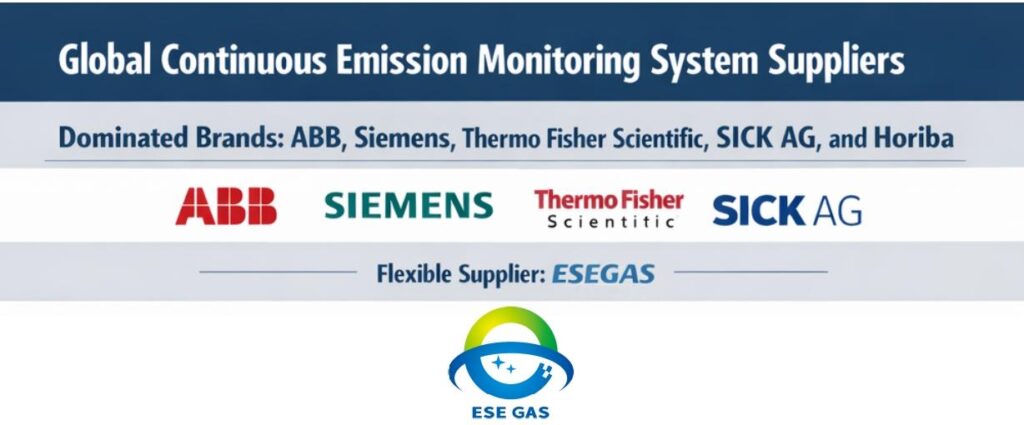
When procurement teams evaluate Continuous Emission Monitoring System suppliers for large industrial facilities, they often benchmark both global leaders and flexible solution partners. Understanding key players helps buyers compare technology, service depth, and industry experience.
Global Brand Leaders with Broad CEMS Portfolios
Several well-established global manufacturers offer comprehensive continuous emission monitoring solutions trusted by power plants and heavy industry worldwide. Companies such as Siemens AG, SICK AG, ABB Ltd., Thermo Fisher Scientific Inc., and HORIBA Ltd. consistently appear in market analyses of top CEMS suppliers. These firms provide certified systems that support multi-pollutant measurements, advanced data handling, and regulatory reporting across diverse industrial applications.
- Siemens AG & SICK AG delivers modular CEMS solutions with integrated analyzers and data management tools. Their systems help streamline compliance reporting and improve plant performance.
- ABB Ltd. focuses on robust extractive analyzers and advanced sensor technologies that maintain accuracy in harsh flue gas environments.
- Thermo Fisher Scientific offers highly configurable solutions designed to meet strict EPA standards and support a wide range of pollutants.
- HORIBA Ltd. combines long experience in gas analysis with reliable CEMS platforms suitable for continuous industrial monitoring.
These established brands typically deliver strong global service networks, proven technology roadmaps, and compliance documentation, making them a frequent choice for large, regulated installations. In addition to major brands, numerous regional and specialized vendors serve industry segments that need tailored solutions or competitive pricing. For example, some manufacturers focus on niche markets such as advanced optical measurement, laser-based sensing, or specific pollutant detection.
Enviro Solutions Technology — ESEGAS: A Flexible Supplier Option
Among flexible suppliers, Enviro Solutions Technology (ESEGAS) stands out as a partner that blends customization with quality. ESEGAS offers tailored Continuous Emission Monitoring System solutions designed around specific plant needs, including OEM/ODM options for unique monitoring challenges. Their product range spans from basic extractive CEMS to integrated multi-component systems with advanced data acquisition and reporting. ESEGAS supports varied price bands to suit different project scales while maintaining high performance and compliance readiness.
By comparing broad-scope brands with adaptable partners like ESEGAS, buyers can find suppliers that best balance technology, service, and cost for their specific industrial context.
Conclusion
Choosing the right Continuous Emission Monitoring System supplier is more than a one-time purchase. A CEMS isn’t just hardware; it becomes part of your facility’s compliance strategy and operational fabric. With stricter air quality laws worldwide driving growth in monitoring needs, accurate and reliable emissions tracking is essential for legal compliance and environmental responsibility. Continuous monitoring systems produce real-time pollutant data that regulators use to verify compliance and determine exceedances under programs like U.S. EPA’s performance specifications and quality assurance requirements.
For procurement teams considering partners like ESEGAS and other top providers, start with a clear scope of your regulatory and plant requirements. Ask suppliers for case studies demonstrating compliance success in similar facilities. Evaluate their service infrastructure, support plans, and ability to tailor systems to your emissions profile and stack conditions. Align selection criteria with your long-term operational goals and regulatory risk tolerance. By treating supplier selection as a strategic, not transactional decision, you position your plant for stability, compliance, and better performance long after installation.
FAQs:
1.Why do power plants and heavy industry need CEMS?
Power plants and heavy industrial facilities use CEMS to track emissions in real time, meet environmental permits, and comply with regulations like EPA performance standards or local air quality laws. Continuous data helps avoid regulatory fines and supports operational optimization.
2.What pollutants can CEMS measure?
CEMS can measure gases such as sulfur dioxide (SO₂), nitrogen oxides (NOx), carbon monoxide (CO), carbon dioxide (CO₂), oxygen (O₂), and other regulated compounds depending on the analyzer configuration required for compliance reporting.
3.How do Continuous Emission Monitoring System suppliers differ in technology?
Suppliers offer extractive CEMS that draw gas samples through analyzers or in-situ systems that measure directly in the stack. There are also multi-pollutant systems for combined gas analysis and single-pollutant analyzers for specific emissions monitoring needs.
4.How do I choose between global CEMS brands and customized suppliers?
Global brands often offer broad product portfolios and global support networks. Tailored suppliers focus on custom solutions, flexible configurations, and OEM/ODM services to meet unique plant needs. Compare technical support, service options, and total cost of ownership.
5.What ongoing service should I expect from Continuous Emission Monitoring System suppliers?
Good suppliers offer calibration services, preventive maintenance plans, spare part support, and responsive technical help. Ongoing service ensures data quality, system uptime, and long-term regulatory compliance.