


Biomethane analyzer rarely fail because “methane isn’t there”—they fail because the methane data is slow, noisy, or not credible enough to drive decisions. When CH₄ readings lag behind process changes, operators over-correct, waste product gas, miss abnormal events, and end up troubleshooting the plant instead of running it. The result is a familiar loop: unstable upgrading performance, uncertain product quality, and too much manual verification. A methane analyzer that can deliver fast, stable, and fit-for-purpose CH₄ measurement is what turns a biomethane line from “running” into “controlled.”
ESEGAS IR-GAS-600 is a methane (CH₄) analyzer platform that provides two measurement paths—IR (infrared) for direct CH₄ measurement in process gases such as syngas/natural gas applications, and TDLAS for highly selective trace-level CH₄ monitoring. In its TDLAS configuration, the product page lists a 0–5000 ppb range, ≤5 ppb detection limit, ≤60 s T90 response, 1 s refresh rate, and specified accuracy/repeatability/drift metrics to support stable continuous monitoring. (Gas Analyzer Manufacturers)
How do IR and TDLAS versions of IR-GAS-600 fit different biomethane analyzer needs?
When a plant team says “we need CH₄ measurement,” they often mean one of two very different problems—and mixing them up is expensive.
If you choose a trace instrument for a bulk-measurement job (or the reverse), you’ll either overpay for sensitivity you don’t use or you’ll end up blind right where the process needs visibility most. That mismatch shows up as unnecessary recalibration, confusing trends, or data that can’t be trusted during transients (startups, load swings, media change-outs).
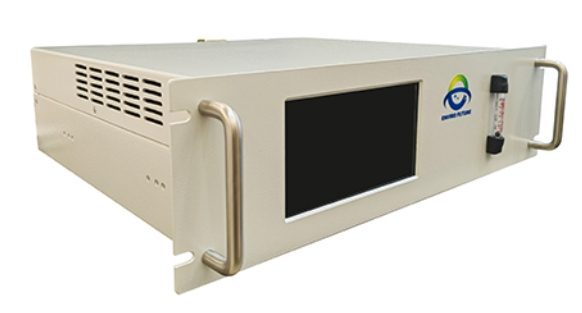
How IR-GAS-600 positions the options:
- IR (Infrared) route: ESEGAS presents IR technology as designed for direct methane measurementin syngas and natural gas measurement applications—i.e., process environments where CH₄ is part of the core gas matrix and you need robust process-grade monitoring. (Gas Analyzer Manufacturers)
- TDLAS (Tunable Diode Laser Absorption Spectroscopy) route: ESEGAS frames TDLAS CH₄ as an innovative technology for medical uses and atmospheric trace pollution monitoring, emphasizing selectivity and trace performance; the methane product page lists trace specs (ppb range, low detection limit, response time). (Gas Analyzer Manufacturers)
Biomethane takeaway (practical mapping):
- If your goal is process control / CH₄ recovery trending (bulk CH₄ behavior), the IR approach is typically the starting point.
- If your goal is trace-level CH₄ surveillance (e.g., background monitoring, enclosure monitoring, leak-sensitive zones, or ultra-low concentration tasks), TDLAS is the fit.
What do the TDLAS performance specs actually buy you on a biomethane analyzer site?
Specs only matter when they change outcomes. In trace CH₄ work, the most common failure mode is “we saw it too late” (or never saw it).
When the analyzer can’t resolve small changes or drifts too much, you stop trusting the trend and fall back to manual checks—exactly when you need continuous monitoring the most. That’s how abnormal events slip through: minor releases, slow leaks, or early warning signals that could have been caught before they became a maintenance issue.

- Range: 0–5000 ppb → targets trace CH₄ behavior where ppm/% instruments don’t give meaningful resolution. (Gas Analyzer Manufacturers)
- Detection limit: ≤5 ppb → helps reveal “near-background” methane changes instead of flattening them into noise. (Gas Analyzer Manufacturers)
- Response: T90 ≤60 s and refresh: 1 s → supports faster recognition of events and more actionable trending during transients. (Gas Analyzer Manufacturers)
- Accuracy / repeatability / drift metrics (as listed on the page) → supports longer continuous runs with fewer “is this real or drift?” debates. (Gas Analyzer Manufacturers)
If your biomethane operation includes areas where trace methane visibility is part of safety, environmental monitoring, or early abnormal detection, those are the specs that usually decide whether the analyzer becomes a trusted instrument—or a “nice chart” no one acts on.
Where do teams typically install CH₄ measurement around upgrading and product handling?
A methane analyzer only helps if the reading corresponds to a decision point. biomethane analyzer sites usually have a few repeatable “control moments” where better CH₄ visibility lowers loss and stabilizes operations.
When CH₄ measurement is placed too far from the point where the process changes, you get delayed feedback and you end up tuning the plant by feel. That creates oscillations: you chase yesterday’s process instead of controlling today’s.
Typical CH₄ measurement placement patterns (kept CH₄-centric and product-oriented):
- Feed/Raw gas trending
- Goal: understand CH₄ baseline and fluctuations that will propagate through upgrading.
- Key upgrading step before/after
- Goal: verify CH₄ response to process adjustments and detect step changes quickly.
- Product gas verification point
- Goal: confirm CH₄ level stability before compression, storage, or transfer.
Where IR-GAS-600 fits: ESEGAS positions IR-GAS-600 across process gas, syngas composition, and NDIR gas analyzer contexts (CH₄ alongside other components in some configurations), which aligns with the reality that CH₄ measurement often lives inside broader process-monitoring architectures. (Gas Analyzer Manufacturers)
How does IR-GAS-600 connect to biomethane quality control without drifting into “generic compliance talk”?
Biomethane quality discussions can get broad fast. To keep this anchored: CH₄ is the commercial and operational anchor variable—it affects energy content behavior and signals whether the upgrading line is behaving. Even if your site uses separate analyzers for impurities, CH₄ trend stability is the backbone for “is the system under control?”
Without credible CH₄ data, you can’t confidently separate “process issue” from “measurement issue,” and troubleshooting becomes a guessing game. That burns time, increases venting risk during interventions, and makes performance reporting harder than it needs to be.
How teams use CH₄ analysis (specifically) for quality control:
- Trend stability checks: “Is CH₄ stable after changes?” (process confidence)
- Recovery awareness: “Did CH₄ slip increase after media change-out / wash cycle / load swing?” (loss prevention)
- Handover confidence: “Is the product stream behaving consistently at the point of use or transfer?” (operational assurance)
ESEGAS also publishes application-style content describing where their methane analyzer solutions are used, including biogas/landfill & waste-to-energy contexts—useful if you want your IR-GAS-600 deployment to match typical CH₄ monitoring workflows in renewable gas operations. (Gas Analyzer Manufacturers)
What should procurement and engineering ask for first?
Most selection delays happen because the first conversation starts with brand/model and only later circles back to measurement intent. Flip that order and the configuration choice becomes obvious.
When requirements aren’t defined up front (range, response, stability), you end up comparing instruments by brochure language—then discovering on-site that the analyzer isn’t tuned for your real CH₄ behavior. That’s the fastest way to create “instrument fatigue” where teams stop believing analyzers altogether.
For IR-GAS-600, the fastest “minimum viable requirement set” looks like:
- CH₄ concentration regime: do you need process/bulk CH₄ (IR context) or trace ppb CH₄ (TDLAS page specs)? (Gas Analyzer Manufacturers)
- Dynamic behavior: do you need the ≤60 s T90 response and 1 s refresh characteristics (trace spec set)? (Gas Analyzer Manufacturers)
- Data credibility needs: are drift/repeatability specs critical because you run long continuous campaigns? (Gas Analyzer Manufacturers)
- Application framing: process gas / syngas / industrial monitoring vs trace monitoring contexts that ESEGAS explicitly references for the platform family. (Gas Analyzer Manufacturers)
This keeps the conversation grounded in what IR-GAS-600 actually offers, instead of turning into a generic analyzer comparison.
What “applications” should you mention in the article without leaving the IR-GAS-600 lane?
You asked to stay focused on ESEGAS products, so here are the applications ESEGAS itself highlights around this platform and methane measurement—without inventing use cases.
If the application list becomes too broad, the reader walks away with “it can do everything,” which is the same as believing it can do nothing well. A better approach is to stick to the application families that ESEGAS repeatedly connects to IR-GAS-600.
Applications explicitly associated with IR-GAS-600 and methane measurement in ESEGAS materials:
- Syngas / gasification atmospheres: IR-GAS-600 configurations are presented for simultaneous measurement of gases including CH₄ (alongside CO/CO₂, with optional H₂ via TCD in some descriptions). (Gas Analyzer Manufacturers)
- Industrial monitoring / process gas analysis: ESEGAS positions IR-GAS-600 as a process gas analyzer family for multiple gases, including methane, across industrial monitoring contexts. (Gas Analyzer Manufacturers)
- Trace/ppb-level monitoring: ESEGAS markets the trace analyzer use case and describes ppb-level detection and multi-gas monitoring for industrial monitoring. (Gas Analyzer Manufacturers)
- Medical and atmospheric trace monitoring (TDLAS CH₄): specifically stated as target areas for the TDLAS methane measurement approach. (Gas Analyzer Manufacturers)
For a biomethane-oriented article, you can mention biomethane as the “why,” but keep the application language aligned to these platform-anchored families: process gas CH₄ measurement and trace CH₄ monitoring.
How do you write about “biomethane analyzer” while still centering IR-GAS-600?
A “biomethane analyzer” is often understood as a full quality station (CH₄ plus CO₂, O₂, H₂S, H₂O, etc.). Your request is to center the ESEGAS methane product page, so the clean way to do this is:
Position IR-GAS-600 as the CH₄ measurement core inside a biomethane analysis architecture—rather than claiming it replaces every impurity instrument.
When you overclaim one instrument as the entire biomethane QC solution, you invite objections from experienced readers (because they know biomethane specs include multiple impurities). But when you clearly state “this is the CH₄ backbone,” it reads credible and engineering-friendly.
A practical phrasing pattern:
- “In biomethane upgrading, CH₄ is the primary performance signal and commercial anchor. IR-GAS-600 provides the CH₄ measurement layer—either for process-grade CH₄ trending (IR) or trace-level CH₄ surveillance (TDLAS)—so operators can stabilize the line and verify behavior at key points.” (Gas Analyzer Manufacturers)
Conclusion
ESEGAS IR-GAS-600 is best described as a methane measurement platform that lets you choose the right CH₄ approach for the job: IR for direct methane measurement in process-gas contexts ESEGAS highlights (including syngas/natural gas applications), and TDLAS when you need trace-level selectivity and sensitivity—with the methane product page specifying trace performance such as 0–5000 ppb range, ≤5 ppb detection limit, ≤60 s T90 response, and 1 s refresh. (Gas Analyzer Manufacturers)