



Mercury emissions are invisible but dangerous—how can industries ensure compliance and safety without real-time control? Hg CEMS provides the solution that turns invisible risks into actionable data.
Mercury Continuous Emissions Monitoring Systems (Hg CEMS) are critical tools that enable industries to meet environmental regulations, reduce emissions, and safeguard public health by continuously tracking mercury levels in flue gases.

While the benefits of emission monitoring are widely recognized, the specific application of Hg CEMS for mercury detection reveals a deeper layer of industrial accountability, technical innovation, and environmental responsibility. Let’s explore how this specialized technology is shaping the future of emissions control.
What is a Mercury CEMS and how does it work?
When mercury becomes airborne through industrial combustion processes, it poses significant environmental and health risks. Detecting it in real time requires more than just periodic sampling—it demands advanced continuous systems. That’s where Hg CEMS comes in.
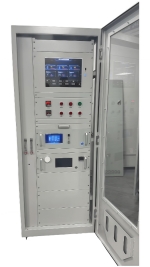
A Mercury Continuous Emissions Monitoring System is a high-precision setup designed to continuously measure and report mercury concentrations in stack emissions. These systems are typically installed in power plants, waste incinerators, and other combustion-based facilities where mercury is a byproduct.
The core of Hg CEMS includes several key components: a sampling probe that extracts flue gas directly from the stack, a sample conditioning unit (often heated to prevent condensation), and a mercury analyzer. Technologies used include Cold Vapor Atomic Fluorescence Spectroscopy (CVAFS) and Cold Vapor Atomic Absorption Spectroscopy (CVAAS), both providing accurate and sensitive detection of elemental mercury (Hg⁰).
Advanced systems integrate with Data Acquisition and Handling Systems (DAHS) to ensure regulatory compliance and remote monitoring capabilities. The result is a continuous stream of real-time data that supports immediate response to exceedances, process optimization, and long-term trend analysis.
Why is continuous mercury monitoring critical in industrial settings?
Industrial mercury emissions are not only a legal concern—they’re a public health and environmental crisis. Without real-time data, industries are left blind to their emission behavior, risking penalties and environmental damage.
Continuous mercury monitoring via Hg CEMS is essential for compliance with stringent regulations such as the U.S. EPA’s Mercury and Air Toxics Standards (MATS) and the EU’s Industrial Emissions Directive (IED). These laws mandate continuous, accurate reporting of mercury emissions, especially in sectors known for high-volume combustion.
But the benefits go beyond compliance. Hg CEMS enables facility operators to detect emission trends, implement corrective actions in real time, and optimize fuel and reagent usage. This not only reduces emissions but also enhances operational efficiency.
Moreover, mercury’s toxic effects on neurological development, especially in children, make its control a moral imperative. By ensuring that emissions stay within safe limits, Hg CEMS systems directly contribute to better environmental stewardship and public health outcomes.
Which industries most benefit from Mercury CEMS?
Not all industries emit mercury at the same levels, but those that do must manage it with precision. The stakes are high, and Hg CEMS offers a way to meet them with confidence.
Industries that rely on combustion or thermal processes are the primary users of Hg CEMS, including coal-fired power plants, cement kilns, waste-to-energy facilities, metal smelters, and chlor-alkali production.
In coal-fired power plants, mercury is naturally present in coal and released during combustion. In waste incineration, mercury comes from disposed products like batteries and fluorescent lamps. Similarly, cement plants burn various fuels and raw materials that can release mercury.
Each of these sectors faces increasing scrutiny from regulatory bodies, and Hg CEMS provides a dependable way to monitor, document, and control mercury emissions. More than a monitoring tool, it has become a competitive necessity—facilities with reliable emissions data are better positioned for permits, audits, and public trust.
What are the key components of a Mercury CEMS?
Behind the scenes of every Hg CEMS is a complex integration of technology engineered for precision. But what exactly makes up these systems?
An effective Hg CEMS consists of five core components:
- Sampling Probe – Located in the flue gas duct, this probe extracts the sample continuously and withstands harsh stack conditions.
- Heated Sample Line – Maintains sample temperature to avoid mercury condensation, preserving measurement integrity.
- Sample Conditioning System – Filters out particulate matter and removes moisture, ensuring only relevant gas components reach the analyzer.
- Mercury Analyzer – The heart of the system, typically using CVAFS or CVAAS technology to detect mercury levels with high sensitivity.
- Data Acquisition and Handling System (DAHS) – Captures, stores, and transmits data, often directly to environmental authorities in real time.
Many systems also include calibration units for automated quality assurance/quality control (QA/QC) procedures, such as daily zero/span checks and periodic relative accuracy tests. Together, these components ensure that Hg CEMS delivers reliable, continuous, and regulation-ready data.
How does Mercury CEMS support environmental compliance and reporting?
Compliance in today’s regulatory landscape is more than a requirement—it’s a reputational cornerstone. So how does Hg CEMS help industries stay ahead?
By continuously tracking mercury concentrations, Hg CEMS ensures that industries can meet emission limits, report accurately to authorities, and pass audits with confidence. Data is logged in real time and automatically transmitted to environmental databases, minimizing human error and delay.
Regulations like the U.S. EPA’s 40 CFR Part 75 and Part 60 require not just monitoring but verified, traceable records. Hg CEMS systems are designed with these standards in mind, often including built-in diagnostics and audit trails that simplify reporting and verification.
In addition, Hg CEMS aids long-term environmental planning. Facilities can analyze historical data to identify trends, forecast maintenance needs, and support sustainability initiatives. This data-centric approach empowers industries to not only comply but lead in their environmental strategies.
Conclusion
Hg CEMS represents more than compliance—it’s a commitment to responsible operations, environmental safety, and technological excellence. As regulations tighten and environmental awareness grows, continuous mercury monitoring will remain a key pillar of sustainable industrial emissions management.