



Field gas measurement is rarely “clean.” You’re often dealing with hot, humid stacks, corrosive acid gases, and concentrations that swing with load changes—yet you still need answers fast. When results arrive late or only cover a few target gases, compliance checks drag on, troubleshooting becomes guesswork, and you can miss short-lived emission spikes entirely. At ESEGAS, we built our solution around a simple goal: bring reliable, multi-component analysis to the point of Portable FTIR Gas Analyzer measurement, so decisions can happen in real time instead of after the fact.
A Portable FTIR Gas Analyzer uses infrared absorption across a broad spectral range to identify and quantify multiple gases simultaneously from a single measurement. Because each gas has a unique spectral “fingerprint,” FTIR-based analysis can detect and separate overlapping components—making it especially valuable for complex exhaust, process vents, and on-site diagnostics.
If you already know that FTIR can measure more than one gas, the next question is what makes it practical in real environments—and which applications truly benefit from taking the instrument to the source. Below, we’ll walk through how the technology works, what a field-ready system needs to include, and where a Portable FTIR Gas Analyzer can create the biggest operational and compliance impact.
What Is the Core Principle Behind a Portable FTIR Gas Analyzer—and Why Can It Measure Many Gases at Once?
When the gas matrix is complex, single-gas or narrow-band approaches can leave blind spots. You may “see” one compound clearly while others overlap, interfere, or drift with moisture and temperature. The risk isn’t just missing a species—it’s mis-quantifying the one you think you’re measuring, which can cascade into wrong conclusions and costly corrective actions. That’s why the foundation of our Portable FTIR Gas Analyzer is built around full-spectrum information, not one or two wavelengths.
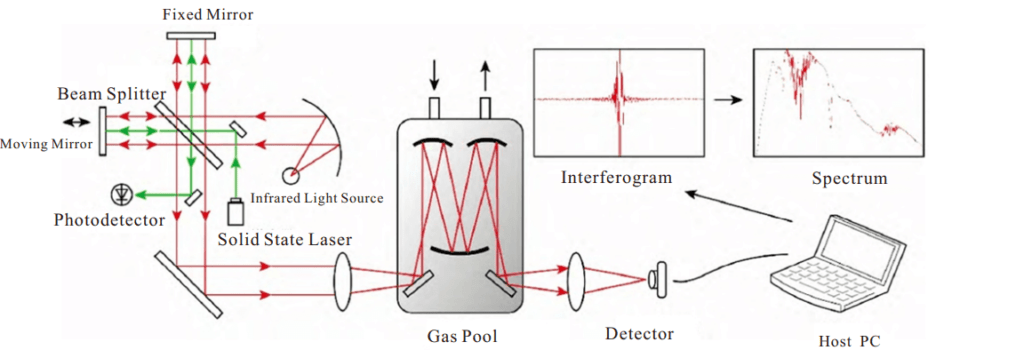
At the heart of FTIR (Fourier Transform Infrared) measurement is a straightforward physical fact: many gases absorb infrared light at specific wavelengths associated with molecular vibrations. FTIR instruments measure how much light is absorbed across a wide range of wavelengths and then use that pattern to determine what gases are present and at what concentrations.
In practical terms, an FTIR system includes:
- An infrared source that emits broadband IR energy.
- An interferometer that modulates the IR signal in a way that encodes spectral information.
- A gas cell (measurement chamber) where the sample interacts with the IR beam.
- A detector that records the modulated signal.
- Fourier transformation + spectral fitting algorithms that convert the measured signal into an IR spectrum and quantify each target gas using reference spectra.
Because each compound has its own absorption fingerprint, a Portable FTIR Gas Analyzer can perform multi-component identification and quantification from a single scan—which is exactly what field teams need when emissions or process streams are changing minute to minute.
What Makes a “Portable” FTIR System Truly Field-Ready?
A lab-grade principle doesn’t automatically become a reliable on-site solution. In the field, the biggest source of error often isn’t the physics—it’s the sample. Condensation, adsorption losses, particulate loading, and corrosive gases can distort results long before the gas reaches the measurement cell. If your sampling path alters the sample, the best analyzer in the world won’t save the data.
That’s why we frame our ESEGAS design as a complete on-site measurement system: a Portable FTIR Gas Analyzer paired with a sampling probe and field-oriented handling strategy. In a field-ready configuration, you’re not only choosing an analyzer—you’re choosing how the gas is extracted, transported, conditioned (if needed), and presented to the optics in a stable, repeatable way.
Key elements that determine real-world performance include:
- Sampling probe suitability for stack or duct insertion, including resistance to heat, moisture, and particulates.
- Materials compatibility across the sampling path to reduce adsorption and corrosion in the presence of acid gases.
- Moisture management that prevents condensation (a major cause of bias, especially for soluble gases).
- Particle filtration strategy appropriate to the loading of the source.
- Operational ergonomics, because field work demands speed: fast setup, quick point-to-point 이동 (moving), and stable readings without lengthy warm-up rituals.
When teams say they need “portable,” what they usually mean is “I can deploy it quickly and trust the results.” Our focus is ensuring portability doesn’t come at the cost of sample integrity.
Why Are Hot, Humid, and Corrosive Gas Streams a Perfect Fit for FTIR—And What Challenges Must Be Managed?
The gas streams that matter most—combustion exhaust, industrial stacks, acid gas vents—are often the hardest to measure. High humidity can dominate the spectrum, acid gases can attack sampling components, and temperature swings can shift conditions during a test window. If measurement techniques are fragile, the field becomes a struggle of constant maintenance, unstable baselines, and questionable numbers.
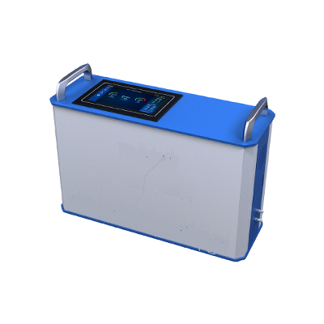
A Portable FTIR Gas Analyzer is especially well-suited here because it leverages a broad spectrum and can model multiple absorbers simultaneously, including water vapor. But that doesn’t mean water and corrosives “don’t matter”—it means we can treat them explicitly, rather than hoping they are negligible.
In real deployments, these are the most important technical realities to address:
- Water vapor as a strong absorber: H₂O has significant IR absorption bands and can influence the baseline. Proper spectral fitting and validated libraries help separate water features from target gases, but stable sampling and temperature control remain essential.
- Condensation risk: If moisture condenses anywhere in the sampling path, soluble gases (like HCl or HF) can be partially lost, and droplets can scatter IR light indirectly through contamination. Preventing condensation is not optional.
- Acid gas compatibility: SO₂, HCl, and HF are common targets in stack testing and process monitoring. Materials selection across the probe and transfer lines is critical to reduce corrosion and prevent adsorption-related lag or bias.
- Particulates and aerosols: Dust can clog filters, foul optics indirectly, and create maintenance overhead. A field plan should define filter changes and cleaning intervals based on source loading.
The takeaway is simple: the best results come from combining the spectral power of FTIR with a sampling approach designed for the specific stream. That’s exactly where a Portable FTIR Gas Analyzer earns its reputation—when conditions are messy and time matters.
Which Gases Can a Portable FTIR Gas Analyzer Measure—and Why Does Expandability Matter?
Environmental and industrial monitoring rarely stands still. Regulatory targets evolve, processes change, and new optimization projects appear. If an analyzer is locked into a short gas list, it can quickly become a bottleneck—even if it performs well on the original scope.
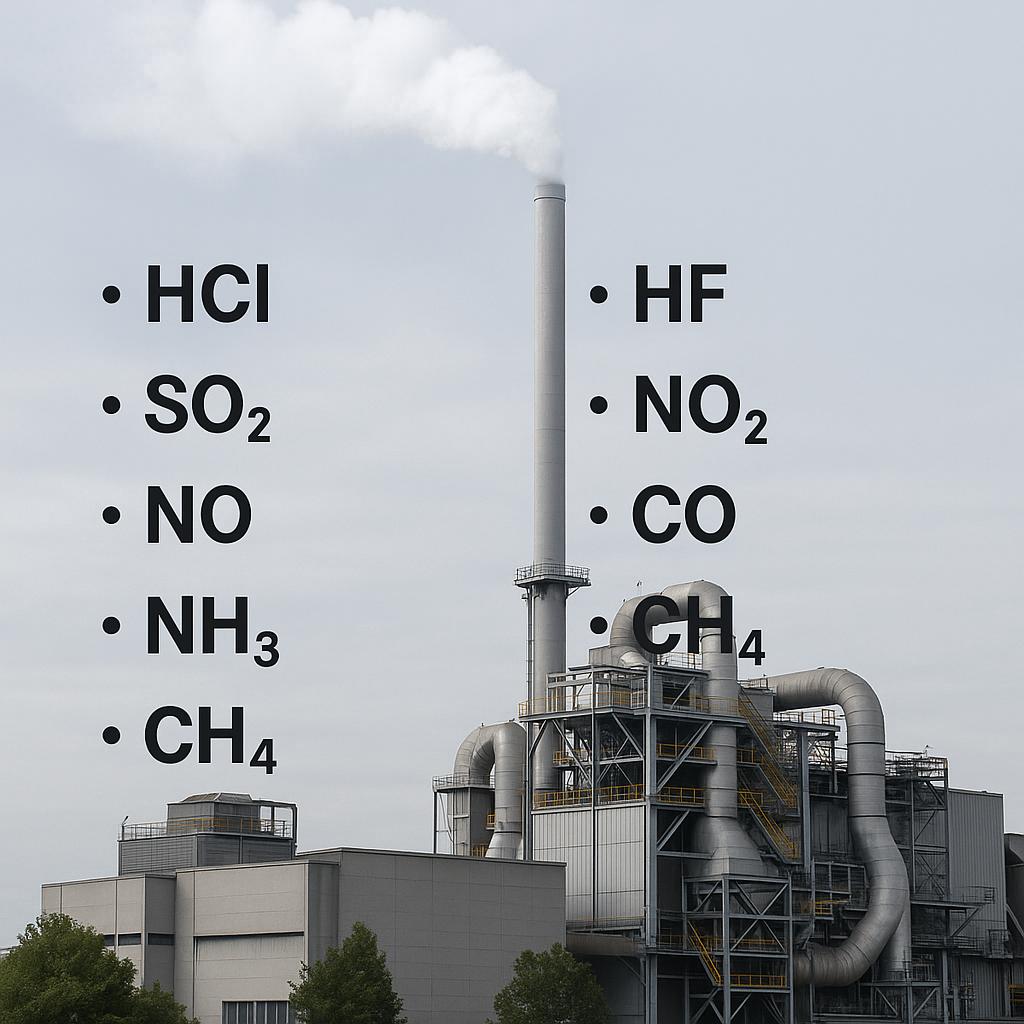
In many emissions and process contexts, the common targets include SO₂, NO, NO₂, CH₄, HCl, HF, CO, CO₂, O₂, and H₂O, with additional species (such as N₂O) often requested depending on greenhouse gas programs or specific industrial chemistry. The strategic advantage of FTIR is that it’s not “one sensor per gas.” Instead, it’s a spectrum-based approach where capability can scale with the right calibration models and reference libraries.
This is where the phrase Portable FTIR Gas Analyzer becomes more than a product label—it’s a practical commitment to versatility. For field teams and plant engineers, expandability means:
- Less need to carry multiple analyzers for different campaigns
- Faster adaptation when project requirements change
- Better continuity in reporting because one platform can serve multiple initiatives
How Is a Portable FTIR Gas Analyzer Used in Stationary Source Emissions Testing?
Emissions testing is often constrained by time and access. You may have a narrow window to test, multiple points to verify, and a requirement to compare performance before and after control devices (e.g., scrubbers or DeNOx systems). If the measurement setup is slow or only captures a subset of gases, the test plan becomes longer and less informative.
A Portable FTIR Gas Analyzer supports emissions testing by enabling on-site multi-gas quantification with quick redeployment from one point to another. This is especially relevant for industries like power generation, cement, waste incineration, and chemical manufacturing—where gas composition can shift rapidly with load, fuel quality, or operating mode.
In a typical field workflow, teams can:
- Confirm stable operation and sampling readiness
- Measure multiple regulated and diagnostic gases in one run (e.g., SO₂ + NOx + CO + HCl/HF where relevant)
- Compare upstream/downstream conditions across abatement systems
- Capture transient conditions during process changes that would be missed by delayed lab methods
In other words, you’re not simply collecting numbers—you’re building a more complete picture of what the process is doing and how controls are performing.
How Does a Portable FTIR Gas Analyzer Improve Greenhouse Gas Monitoring in the Field?
Greenhouse gas (GHG) programs increasingly require measurements across multiple gases and locations—not just CO₂ in one fixed point. Field campaigns may involve verification, research, audits, or site surveys where speed, mobility, and multi-gas context are valuable.
A Portable FTIR Gas Analyzer can contribute by supporting on-site measurements of gases such as CO₂ and CH₄, and, when required, expanding to gases like N₂O. The practical benefit is being able to interpret conditions on the spot: if methane rises while CO₂ stays stable, that suggests a different source mechanism than a fuel shift; if both move together, the story may be combustion-related. Multi-gas context helps field teams avoid false conclusions drawn from a single indicator.
For many organizations, the biggest gain is operational:
- Faster on-site screening to decide where deeper monitoring is needed
- Reduced reliance on shipping samples and waiting for results
- Better alignment between measurement data and现场事件 (on-site events) during the campaign
How Can a Portable FTIR Gas Analyzer Help Troubleshoot Processes and Pinpoint Abnormal Emissions?
Most plants don’t struggle with their “average” emissions—they struggle with the spikes and the unexplained shifts. A control system changes state, a burner drifts, a feedstock batch varies, or a scrubber efficiency drops. When that happens, the ability to measure multiple gases immediately is often the difference between quick correction and a prolonged investigation.
This is one of the most practical reasons to deploy a Portable FTIR Gas Analyzer: it can act as a diagnostic tool, not just a compliance instrument.
Common troubleshooting patterns include:
- Combustion efficiency signals: CO increases, CO₂ patterns change, and CH₄ slip may appear—helping identify incomplete combustion or burner tuning issues.
- NOx behavior during load changes: NO/NO₂ ratios can shift with temperature and oxygen availability, providing insight into combustion zone dynamics and DeNOx performance.
- Acid gas fluctuations: Sudden changes in HCl, HF, or SO₂ may indicate feedstock composition changes or control system issues upstream.
Because you can move the system between sampling points, it becomes easier to isolate whether the issue originates in the process, the control device, or the ducting configuration itself.
What Should You Look for When Selecting and Operating a Portable FTIR Gas Analyzer?
Many projects fail quietly at the selection stage—not because the instrument is “bad,” but because the chosen configuration doesn’t match the measurement reality. The most common mistake is focusing only on a target gas list while underestimating sampling, moisture, and operating workflow.
When evaluating a Portable FTIR Gas Analyzer for real work, we recommend thinking in terms of measurement outcomes:
- Do you need wide dynamic range? Emissions and process gases can span from trace levels to high concentrations depending on the application.
- How fast do readings need to stabilize? For point-by-point surveys and troubleshooting, response time and operational rhythm matter.
- What is the moisture profile? High humidity and condensation risk should drive your sampling strategy.
- Are acid gases in scope? Material compatibility and maintenance planning are essential for HCl/HF/SO₂ environments.
- How will you verify data quality on site? Field routines for zero/span checks or reference verification can protect the integrity of results.
At ESEGAS, we treat these questions as part of the product experience. The analyzer is only one piece of a reliable solution; the real value comes when the system is matched to the stream and the user’s field workflow.
Conclusion
A Portable FTIR Gas Analyzer is powerful because it turns one on-site measurement into a multi-gas answer—fast enough to support compliance testing, process optimization, and real-time troubleshooting. The underlying FTIR principle delivers broad spectral insight, but field success depends on system-level design: sampling integrity, moisture control, materials compatibility, and a workflow that matches real operating conditions.