



Air quality programs and industrial environmental teams often treat carbon monoxide (CO) as “just another number”—until a sudden spike forces an evacuation, a complaint triggers an inspection, or a combustion system drifts into an unsafe, inefficient state. The problem is that CO is invisible, fast-changing, and easy to miss if CO Analyzer monitoring is intermittent or slow. When that happens, you don’t just lose data—you lose the moment that explains why the event occurred.
What makes this worse is that CO rarely appears alone. It travels with changing airflow patterns, fluctuating combustion conditions, and shifting source contributions (traffic, boilers, furnaces, coking, and many other processes). If your monitoring can’t capture short-lived peaks or distinguish stable trends from noise, you end up reacting late and troubleshooting blindly.
At ESEGAS, we focus on turning CO monitoring into something practical: measurements you can trust, time series you can interpret, and events you can respond to before they become incidents. Below, we’ll break down where CO monitoring delivers the most environmental value—and what it takes to make the data truly actionable.
A CO analyzer is a precision instrument that continuously measures carbon monoxide concentration (from low ppm levels up to percentage ranges, depending on the application) to support environmental monitoring, compliance, safety, and combustion optimization. In environmental programs, continuous CO measurement helps capture transient emission events, identify combustion-related pollution patterns, and support timely alarms or operational adjustments. (Gas Analyzer Manufacturers)
If you already know CO matters, the next question is what separates “a reading” from “a reliable monitoring system.” That difference comes down to application context, measurement principle, and how you deploy the instrument in the real world—so we’ll walk through the most common environmental monitoring scenarios one by one.
In urban ambient monitoring, what does CO data actually help you understand?
When citywide monitoring is done on a schedule (or with instruments that respond too slowly), CO becomes a blurred signal—peaks get flattened, and you miss the short, telling episodes that reveal source behavior. That’s exactly when teams start doubting the data, or worse, they stop using it for decisions.
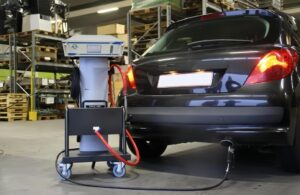
With a properly deployed co analyzer, CO becomes a high-temporal-resolution “combustion fingerprint” that complements pollutants like NOx and PM. It can help you spot rapid shifts tied to traffic intensity, localized combustion sources, or episodic events that don’t show up clearly in daily averages. In practice, we see ambient CO used to:
- Capture short-lived peaks that indicate nearby combustion activity (useful for investigating complaints and localized pollution episodes).
- Interpret multi-pollutant behavior during inversion events or stagnation, where CO can move differently than secondary pollutants.
- Support trend and seasonality analysis (heating seasons, traffic patterns, and special-event impacts).
This is where we often recommend starting with an approach that matches your needs: broad-range stability for routine monitoring, or higher sensitivity for detecting subtle changes. On the ESEGAS side, we support multiple measurement approaches—including NDIR-based configurations (IR-GAS-600 series) and laser-based options (TDLAS) when the application calls for it. (Gas Analyzer Manufacturers)
For industrial parks and fence-line monitoring, how can CO support fast alarms and source screening?
Fence-line monitoring fails when it behaves like a “slow thermometer.” In real environmental disputes—odor complaints, abnormal plumes, transient upsets—the value is in catching the short window where the signature is strongest. If you miss the peak, you lose your best clue.
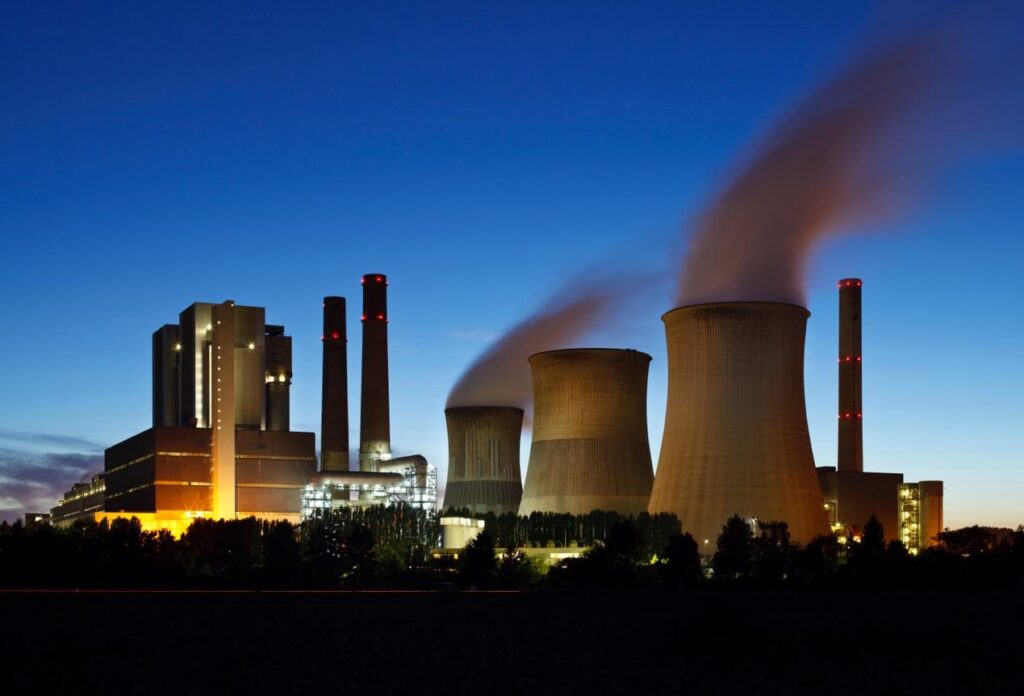
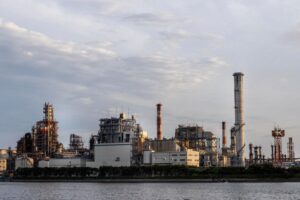
A co analyzer deployed at plant boundaries or in a network across an industrial park can support early warning and rapid screening of emission anomalies. The environmental advantage comes from pairing CO time series with operational context (shift changes, startup/shutdown windows, or specific unit operations). Typical best-use patterns include:
- Event detection: identifying sudden deviations from background that may indicate abnormal combustion, leakage, or process upset.
- Wind-linked screening: correlating CO peaks with wind direction/speed to narrow likely source sectors.
- Threshold strategy: using staged alarms (e.g., “investigate” vs “urgent response”) to avoid alarm fatigue.
In these scenarios, we frequently see teams choosing ESEGAS configurations that can be tailored for different installation methods—extractive or in-situ, and from portable use to online deployment—so the monitoring matches the site’s infrastructure and maintenance realities. (Gas Analyzer Manufacturers)
In flue gas and fixed-source monitoring, why is CO the “early indicator” for combustion problems?
CO is one of the quickest signals of incomplete combustion. When combustion drifts—because of burner fouling, air-fuel imbalance, load swings, or fuel quality changes—CO often rises before other indicators become obvious. If you only discover the issue after efficiency drops or emissions exceed limits, you’re already late.
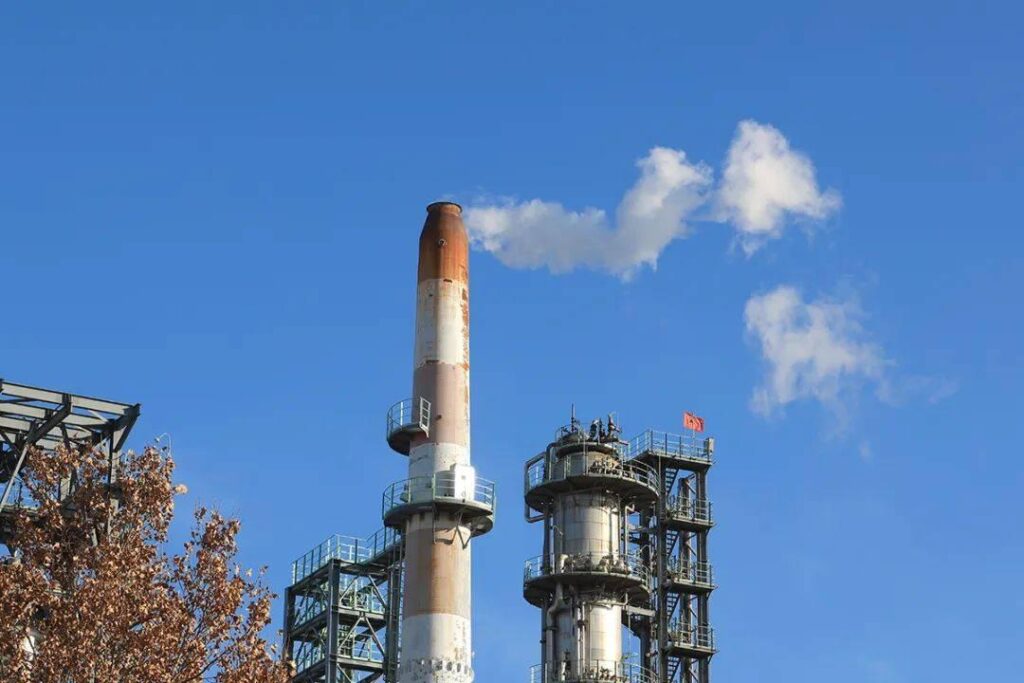
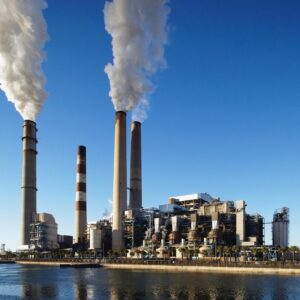
A stable co analyzer in stack or combustion exhaust monitoring helps operators connect environmental performance with operational control. In environmental terms, this is where CO monitoring can support both compliance and resource efficiency:
- Combustion optimization: CO trends can guide air-fuel ratio tuning to reduce waste and avoid high-emission operating zones.
- Operational diagnostics: identifying instability during load changes, startup/shutdown, or maintenance-related drift.
- Emissions reduction by control: by maintaining better combustion conditions, you reduce CO directly and may also reduce other harmful byproducts.
On our product side, the ESEGAS Carbon Monoxide (CO) Analyzer IR-GAS-600 is positioned for industrial monitoring and process/emissions analysis, with measurement ranges configurable from ppm to %depending on the application needs. (Gas Analyzer Manufacturers)
In semi-enclosed environments, how does CO monitoring translate into real safety actions?
In spaces like tunnels, underground parking, boiler rooms, or enclosed industrial areas, the problem isn’t just “what is the concentration”—it’s “how fast can we act.” CO can build quickly under poor ventilation, and delayed detection can turn a manageable situation into an emergency.
A co analyzer used in these environments supports prevention through speed and continuity:
- Timely alarms: identifying rising levels early enough to adjust ventilation or restrict access.
- Exposure risk management: helping safety teams validate whether control measures are working (not just assumed).
- Operational confidence: reducing uncertainty during high-traffic periods or during maintenance events.
It’s also important not to confuse this with household-style alarm devices. In industrial and environmental contexts, you often need quantitative measurements, not just an alarm/no-alarm response—especially when documenting conditions or investigating recurring issues. (Gas Analyzer Manufacturers)
Which CO measurement principle should you choose for environmental monitoring—and why does it matter?
If CO monitoring “looks fine” for a few weeks but drifts, becomes noisy, or starts failing under real conditions, the root cause is often a mismatch between measurement principle and environment. The instrument may be fine—just not for that application.
For environmental monitoring, the most common options you’ll see in practice include NDIR, electrochemical, and laser-based techniques. On the ESEGAS CO product line, we explicitly support both NDIR (IR-GAS-600)and TDLAS (ESE-LASER-710) as selectable approaches, depending on performance needs and budget. (Gas Analyzer Manufacturers)
Here’s a practical, field-oriented comparison you can use:
| Principle | Where it fits best | Strengths | Watch-outs |
| NDIR (e.g., IR-GAS-600) | Many industrial and environmental continuous applications | Strong balance of sensitivity and stability; widely adopted | Often requires sample line setup in extractive systems; periodic calibration considerations (Gas Analyzer Manufacturers) |
| TDLAS (e.g., ESE-LASER-710) | High-performance online measurement needs | Highly sensitive and accurate | Higher cost and maintenance expectations (Gas Analyzer Manufacturers) |
| Electrochemical | Basic monitoring where extreme precision is not required | Lower cost, simple deployment | Drift over time; precision limits; calibration needs can be more frequent (Gas Analyzer Manufacturers) |
If you’re building an environmental monitoring program that must withstand audits, investigations, or long-term trend reporting, this choice becomes foundational. We typically recommend starting from the “environmental duty cycle”: temperature/humidity swings, dust loading, corrosive components, and how often the site can realistically perform maintenance.
Why do some CO monitoring projects run smoothly on paper—but struggle in the field?
Here’s the uncomfortable truth: many failures blamed on “instrument accuracy” are actually caused by the system around the instrument. CO monitoring is especially vulnerable because the gas changes quickly, and your sampling setup can easily distort what reaches the sensor.
When a co analyzer underperforms, these are the most common field culprits we see:
- Condensation and water management: moisture can interfere with sample transport and stability.
- Particulate loading and contamination: dust and aerosols degrade filters and affect flow stability.
- Leaks and dilution: tiny leaks in lines or fittings can produce deceptively “clean” data.
- Temperature swings: causing drift-like behavior or unstable baselines.
- Installation mismatch: in-situ vs extractive selection that doesn’t match the site realities.
This is why we emphasize application tailoring—ESEGAS systems are designed with customization in mind (ranges, configurations, and deployment style), so you’re not forcing a one-size setup into a harsh environment. (Gas Analyzer Manufacturers)
How should you design sampling and pretreatment so CO measurements stay stable over time?
A high-quality co analyzer can still be defeated by a weak sampling design. If your sample is wet, dirty, or unstable, the best electronics in the world won’t fix it. The goal is to deliver a representative, conditioned sample to the measurement cell—consistently.
In environmental and industrial deployments, the core engineering checklist looks like this:
- Sampling point placement: choose a location with representative flow (avoid dead zones, stratification).
- Line integrity: minimize length where possible; use compatible materials; protect against vibration.
- Moisture control: prevent condensation with appropriate heating or cooling strategies (depending on design).
- Filtration strategy: protect the analyzer without clogging so fast that flow collapses.
- Flow control stability: maintain steady flow to reduce signal noise and improve repeatability.
- Maintenance access: design for reality—filters, traps, and fittings must be reachable and serviceable.
This is also where choosing between portable and online setups matters. On the ESEGAS CO analyzer offering, we support configurations spanning portable to online models, and extractive and in-situ installation methods, so you can match the sampling and maintenance approach to your site’s constraints. (Gas Analyzer Manufacturers)
Conclusion
CO monitoring becomes genuinely valuable in environmental programs when it does three things at once: captures fast events, stays stable across real-world conditions, and produces data you can interpret with confidence. Whether you’re working on ambient monitoring, fence-line screening, fixed-source emissions, or semi-enclosed safety applications, a well-chosen and well-deployed co analyzer turns CO from a “nice-to-have metric” into an early-warning and diagnostic signal.
At ESEGAS, we don’t treat CO measurement as an isolated device decision. We align the measurement principle (NDIR or TDLAS), the deployment style (extractive or in-situ), and the measurement range (ppm to %) to your environmental reality—so your monitoring system performs where it matters: on the ground, during real events, over the long run. (Gas Analyzer Manufacturers)