



Syngas can change in minutes—or seconds. When that happens, many plants are still reacting with data that arrives too late to prevent combustion instability, off-spec product gas, wasted fuel, or avoidable alarms. The real problem isn’t just “not knowing” your syngas composition; it’s knowing it after the process has already drifted. At ESEGAS, we built our Syngas for Quick Monitoring approach around one priority: give operators and control systems fast, reliable composition data they can act on before performance drops.
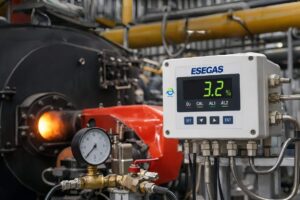
Syngas for quick monitoring means continuously measuring the key syngas components fast enough to support real-time decisions—typically CO, CO₂, CH₄, H₂, O₂ (and in many cases total hydrocarbons/CnHm)—so you can stabilize gasification, protect downstream equipment, and tighten process control. With ESEGAS IR-GAS-600/600P, we combine multi-gas measurement in one platform so plants can respond to syngas shifts immediately, not retrospectively.
If you already agree that speed matters, the next question is practical: what exactly should you measure, how do you keep accuracy in harsh gasification conditions, and when should you use online monitoring versus portable checks? Below, we break down the decisions we see in real projects—and how we design syngas analysis for fast, actionable monitoring.
Why does quick syngas monitoring matter for process control—not just reporting?
When syngas composition drifts, the cost isn’t limited to a chart that looks messy. The real impact is operational: flame stability deteriorates, calorific value fluctuates, carbon conversion shifts, and downstream constraints appear without warning. If the measurement cycle is slow, operators compensate by running conservative setpoints, which often means higher fuel consumption and lower efficiency.
At ESEGAS, we see “quick monitoring” deliver value in three core ways:
- Faster stabilization of combustion and heat value: CO, H₂, CH₄, and CnHm changes alter the energy content and flame behavior. Fast feedback lets you correct air/oxygen and steam ratios sooner.
- Earlier detection of abnormal conditions: Unexpected O₂ readings, sudden CO spikes, or CO₂ shifts can indicate leaks, poor mixing, incomplete conversion, or process upsets before they become outages.
- Better day-to-day repeatability: Stable syngas quality reduces swings in downstream burners, engines, boilers, reformers, or synthesis units—improving overall operating discipline.
This is why we design systems not only to measure accurately, but to deliver results quickly and continuously—so the data is usable for control, not just for records.
Which components should you measure first to make “quick monitoring” actually useful?
A common mistake is to chase “fast” by measuring only one gas. The result is quicker numbers—but quicker misinterpretation. For syngas, you need the right minimum set of variables that explains energy content, reaction progress, and safety.
For most gasification and syngas-use processes, we recommend prioritizing:
- CO: a primary fuel component and a strong indicator of conversion behavior
- H₂: critical for fuel value and reaction balance; often fluctuates with steam ratio and temperature
- CO₂: reflects oxidation/reforming balance and dilution; useful for tracking process direction
- CH₄ and CnHm (total hydrocarbons): important for calorific value and flame characteristics, especially when feedstock variability is high
- O₂: a safety and integrity indicator; unexpected O₂ can imply leaks, air ingress, or abnormal operation
In other words, fast monitoring is only “fast” if it helps you answer operational questions immediately: Is the gas getting richer or leaner? Is dilution increasing? Are we drifting into a risk zone? That is the basis for syngas for quick monitoring that actually improves results.
What makes syngas hard to measure quickly in gasification environments?
Syngas is rarely “clean.” In many plants, it is hot, wet, particulate-laden, and compositionally unstable. Those conditions don’t just challenge sensors—they challenge the entire sampling and conditioning chain.
Typical real-world obstacles include:
- Moisture and condensation risk: water vapor can condense in sampling lines, causing flow instability and measurement drift.
- Dust and fine particulates: contamination can clog filters and damage components if not properly managed.
- Tar and sticky compounds: these can foul lines, valves, and conditioning modules, leading to downtime if the system is not engineered correctly.
- Temperature and pressure fluctuations: fast process changes can affect sample transport and measurement stability.
That’s why, at ESEGAS, we treat “quick monitoring” as an engineered system—not a single instrument choice. The analyzer, sampling method, and conditioning strategy must work together.
How do we achieve fast multi-gas measurement in one platform with ESEGAS IR-GAS-600/600P?
Speed alone is not enough. If an analyzer responds quickly but drifts under harsh conditions, operators stop trusting the data—and control decisions revert back to guesswork. Our approach focuses on fast measurement that remains stable under real plant constraints.
With ESEGAS IR-GAS-600/600P, we support simultaneous multi-component monitoring using a configuration approach that fits syngas realities:
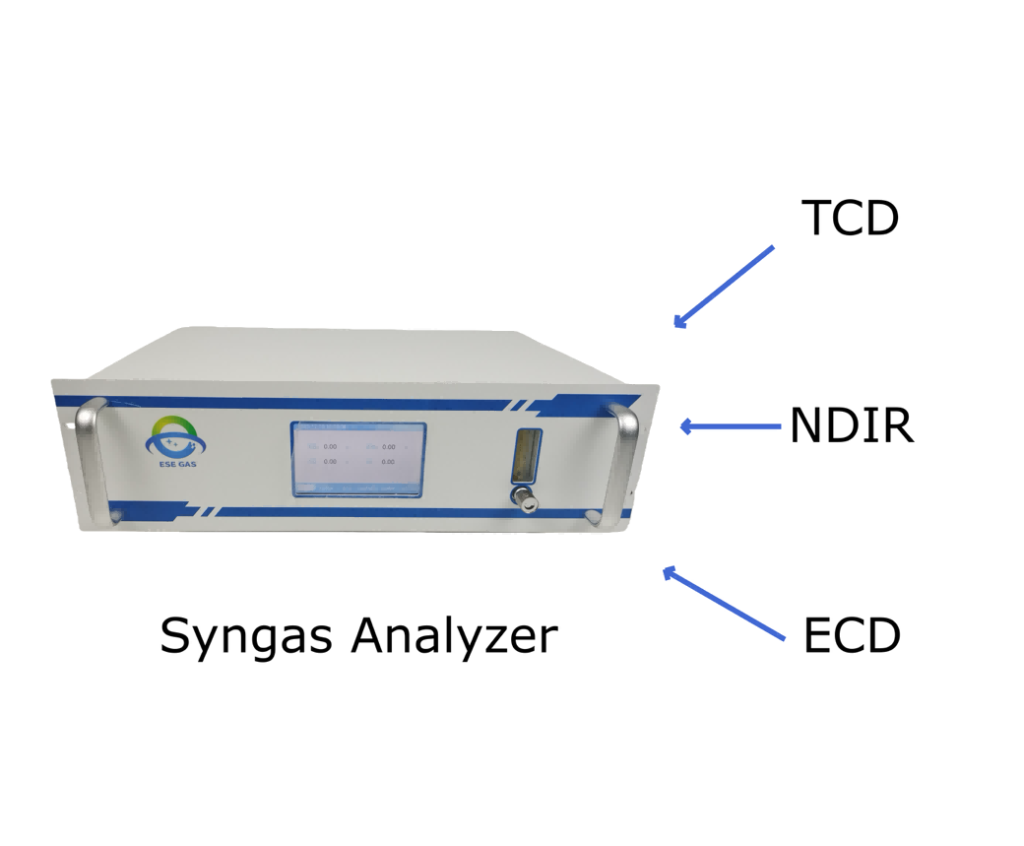
- NDIR measurement for CO/CO₂ (and CH₄, depending on configuration): robust for key infrared-active syngas components and suitable for continuous monitoring.
- TCD measurement for H₂: effective for hydrogen in multi-gas mixtures when properly integrated with the overall measurement strategy.
- O₂ measurement options (e.g., electrochemical or optional paramagnetic, depending on requirement): enabling safety-focused monitoring and leakage detection.
Just as important: we design the system so the output is usable—stable readings, continuous availability, and integration-friendly signals for automation. This is the practical path to syngas for quick monitoring that operators can rely on.
Online vs portable: which is the smarter way to do quick syngas monitoring?
“Quick monitoring” can mean two things: continuous online control or rapid multi-point checks. The best choice depends on whether your priority is closed-loop stability or fast diagnostics across locations.
Here’s how we position it at ESEGAS:
- Online (IR-GAS-600): best for 24/7 monitoring at a critical point—gasifier outlet, cleanup inlet/outlet, burner header, engine feed, or synthesis feed conditioning. If the goal is control and continuous protection, online monitoring is typically the right foundation.
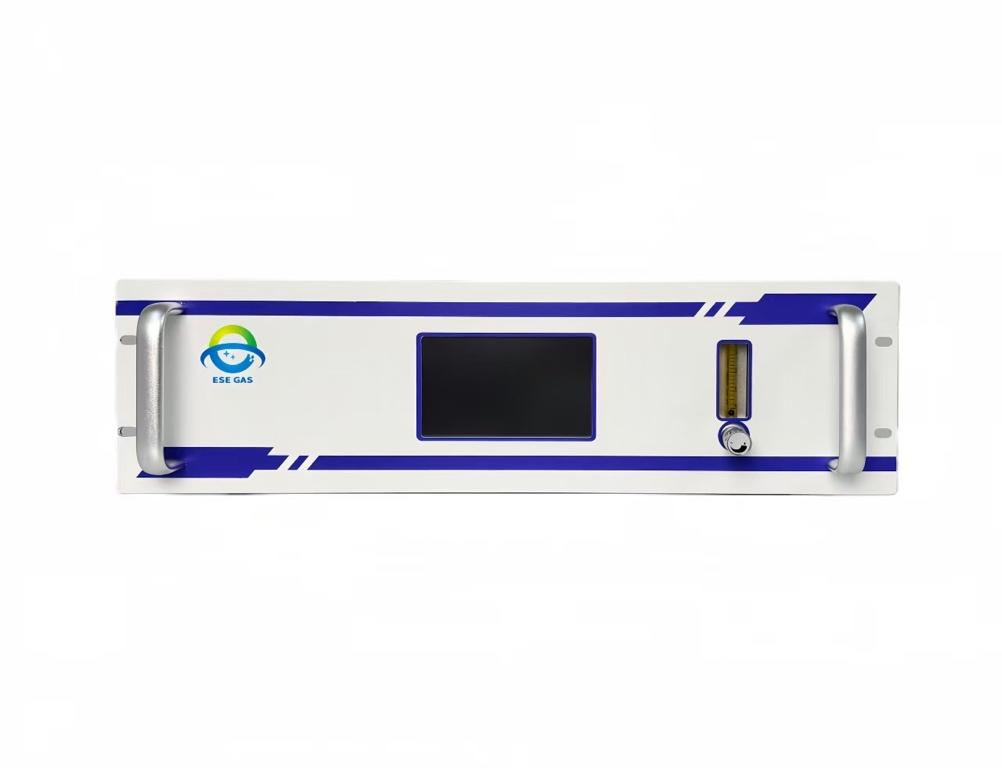
- Portable (IR-GAS-600P): best for commissioning, troubleshooting, periodic verification, and multi-location surveys. It’s also practical when installation space is limited, or when you need rapid confirmation during process adjustments.
Many plants use both: online for stability, portable for verification and faster root-cause analysis during upsets.
How do we keep monitoring fast and reliable when syngas contains moisture, dust, or tar?
If the sample system is not designed for the real gas, “quick monitoring” becomes “frequent maintenance,” and the plant loses both speed and confidence. That’s why we treat gas conditioning as a first-class engineering problem.

A reliable quick-monitoring setup often includes:
- Particle filtration staged for your dust load: protecting the analyzer without creating excessive pressure drop.
- Moisture control strategy: preventing condensation in lines via temperature control and appropriate conditioning.
- Tar/fouling mitigation: using suitable materials, line routing, and conditioning approaches that reduce sticky deposition risks.
- Stable sampling flow and pressure management: because flow instability often looks like “sensor noise” but is actually sample handling.
In short: for harsh syngas, the best investment is not just the analyzer—it is the complete solution that keeps measurement continuous. This is where ESEGAS helps projects move from lab-like expectations to plant-ready uptime.
How do you use quick syngas data in PLC/DCS to improve efficiency?
Data becomes value only when it changes decisions. When syngas for quick monitoring is connected to automation, it can tighten control loops and reduce the time spent operating “wide” for safety.
Common integration patterns we support include:
- Control optimization: using CO/H₂/CH₄ trends to adjust oxygen/air and steam ratios faster, keeping energy output stable.
- Safety and integrity alarms: using O₂ for air ingress detection and abnormal condition alerts.
- Performance KPIs: trending CO₂ and fuel components to track conversion efficiency and identify drift before it becomes a trip.
For integration, plants often require practical outputs like 4–20 mA and/or RS485/Modbus, so results can be used immediately in PLC/DCS logic—not trapped in a local display.
What’s the practical difference between an online syngas analyzer and GC for quick monitoring?
Gas chromatography (GC) is excellent for detailed composition, but it is not always the best tool for real-time response. In many applications, GC cycle times and operational overhead make it more suitable for periodic validation rather than fast process correction.
In practical terms:
- GC: great detail, but often slower cycles, higher complexity, and more maintenance-sensitive operation for continuous harsh-duty use.
- Online syngas analyzer: designed for continuous measurement and quicker response, with simpler integration for control.
A strong strategy we often see is: use online monitoring to stabilize the process, and use GC as a periodic reference or audit tool. That pairing gives both speed and verification without forcing control decisions to wait.
Conclusion
Quick syngas monitoring is not a luxury feature—it is a control advantage. When you can measure CO, CO₂, CH₄, H₂, O₂ (and hydrocarbons) fast and continuously, you reduce drift time, stabilize combustion, improve efficiency, and identify abnormal conditions sooner. At ESEGAS, we design syngas for quick monitoringaround real gasification constraints: multi-gas measurement in one platform (IR-GAS-600/600P), integration-ready outputs, and system-level reliability through proper sampling and conditioning. If you want to stabilize your syngas process with faster, actionable data, we’re ready to help you define the right components, configuration, and deployment approach for your plant.