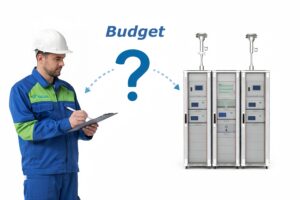



Budgeting for a CAAQMS (Continuous Ambient Air Quality Monitoring System) often starts with simple questions. Buyers want to know the total project cost, compare high-end and low-cost systems, and avoid hidden expenses. This is common for government agencies, EPC contractors, and EHS managers.
A CAAQMS is not just one device. It is a fully integrated system with analyzers, sampling units, data systems, and shelters. These components work together to deliver continuous, multi-parameter monitoring. This structure makes budgeting more complex. Costs extend beyond equipment to include installation, calibration, and ongoing maintenance. Focusing only on price often leads to poor decisions.
So instead of asking “How much does it cost?”, a better question is “What drives the total investment?”
What Does a Continuous Ambient Air Quality Monitoring System Actually Include in Its Total Cost?
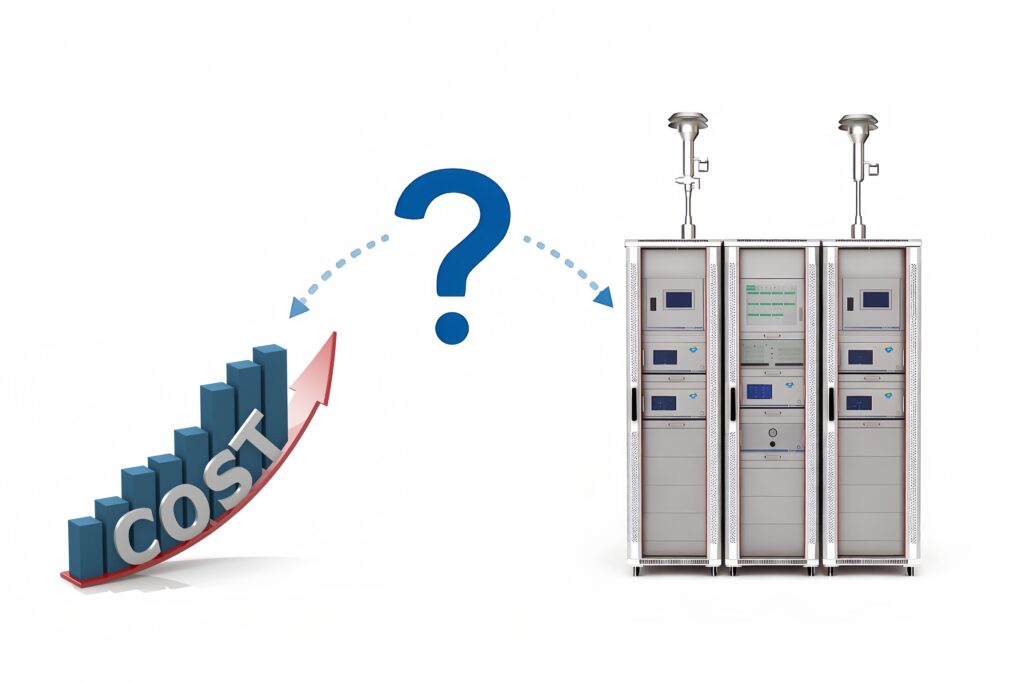
1. Core System Components (Main CAPEX Drivers)
A CAAQMS budget starts with its core equipment. These are the primary cost drivers and define system performance.
The system typically includes gas analyzers for SO₂, NOx, CO, and O₃. It also uses a multi-gas dynamic calibrator and a zero-gas generator to ensure measurement accuracy. Particulate monitors measure PM2.5 and PM10 in real time. Meteorological sensors track wind direction, wind speed, pressure, and temperature.
In addition, the station includes a data acquisition system and communication module. A climate-controlled shelter protects all instruments from environmental impact.
These elements work together as one system, not as separate devices. CAAQMS are fully integrated, multi-parameter monitoring platforms designed for continuous operation.
2. Supporting Infrastructure Costs
Beyond instruments, site infrastructure adds a significant portion to the budget.
You need civil works such as foundation construction and site preparation. Power supply must remain stable, often using grid or solar hybrid systems. Communication networks rely on 3G, 4G, or fiber connections for real-time data transfer.
Lightning protection and grounding systems are also critical. They protect sensitive analyzers and ensure system reliability in harsh environments.
These costs often stay hidden at the early stage, but they directly affect long-term stability.
3. Software and Data Platform Costs
A CAAQMS does not stop at data collection. It must also process, store, and present data clearly.
Most systems include cloud platforms or local data loggers. These tools store large datasets and enable remote access. AQI calculation modules convert raw data into actionable indicators. Visualization dashboards help users understand trends quickly. Regulatory reporting functions connect with platforms such as EPA or CPCB. This step ensures compliance and reduces manual reporting work.
Without a strong data platform, even the best hardware loses value.
4. Installation and Commissioning
Installation is the final step before operation, but it carries real cost.
Engineers must complete system integration, ensuring all components work together. Calibration and validation confirm measurement accuracy. Acceptance testing verifies compliance with project specifications. Poor commissioning often leads to unstable data and higher maintenance later. So this stage should never be rushed.
Now that you understand what goes into the system, the next question becomes clear. How much should you actually budget for each level of CAAQMS?
What Factors Drive the Cost of a Continuous Ambient Air Quality Monitoring System?
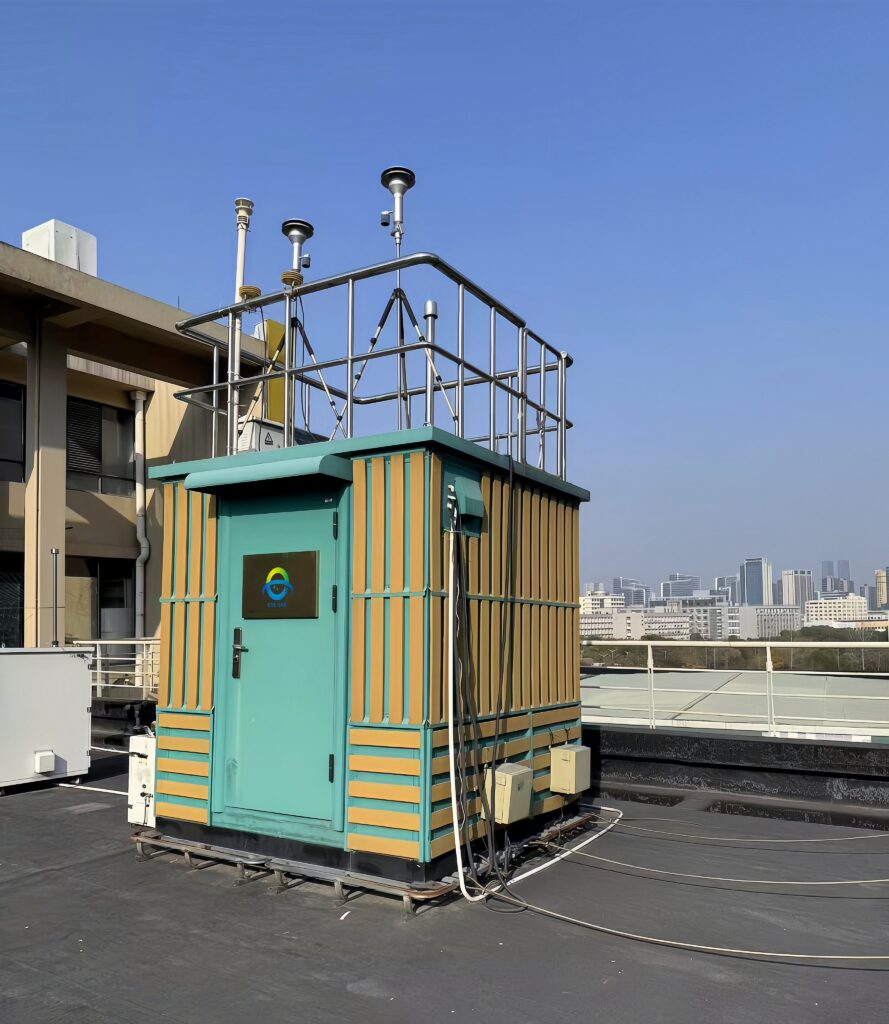
Understanding price requires more than looking at equipment lists. You need to see what actually drives cost changes. Below are eight key factors that directly impact your CAAQMS budget.
a. Monitoring Parameters & System Complexity
The number of pollutants is the first cost driver.
A basic system monitoring PM2.5 and PM10 may cost USD 20,000–50,000. Adding gases like SO₂, NOx, CO, and O₃ increases the cost to USD 80,000–150,000. A full regulatory station with multiple gases and particulates typically reaches USD 150,000–250,000.
Each added parameter requires its own analyzer and calibration routine. Costs rise quickly, not linearly.
b. Measurement Technology Selection
Technology choice strongly affects both CAPEX and OPEX.
NDIR analyzers usually cost USD 5,000–15,000 per unit. UV photometry systems range from USD 8,000–20,000. Chemiluminescence analyzers often reach USD 15,000–30,000. BAM particulate monitors can exceed USD 20,000–40,000. Higher-end technologies deliver better accuracy but require more maintenance. Lower-cost sensors reduce upfront cost but may drift over time.
So, technology selection is a trade-off between precision and long-term cost.
c. Regulatory Compliance Requirements
Compliance standards can significantly increase cost.
A non-compliant system may stay below USD 50,000. Once you require US EPA, EU, or CPCB certification, the price often rises to USD 150,000–250,000 per station.
Certification adds strict validation, approved methods, and documentation. This increases both equipment and engineering costs.
d. Environmental Conditions
Site conditions directly influence system design and cost.
In mild environments, standard setups may add USD 5,000–10,000. In harsh areas with high humidity or dust, costs can increase by USD 15,000–40,000. You may need heated sampling lines, anti-corrosion coatings, and advanced filtration. These upgrades protect data quality and extend equipment life.
e. Station Type (Fixed vs Mobile vs Compact)
Different station types come with different price levels.
Fixed reference stations typically cost USD 120,000–250,000. Mobile stations range from USD 80,000–180,000. Compact or sensor-based systems may cost USD 5,000–30,000. Fixed stations offer the highest accuracy. Compact systems provide flexibility but lower precision.
f. Data & Connectivity Requirements
Data handling also adds cost.
Basic data loggers and local storage may cost USD 2,000–5,000. Real-time cloud platforms and smart city integration can increase costs to USD 10,000–30,000. Advanced systems support remote access, alarms, and API integration. These features improve usability but require higher investment.
g. Maintenance Strategy
Maintenance design affects both upfront and long-term cost.
Manual calibration setups may cost USD 3,000–8,000. Automatic calibration systems with zero/span checks can reach USD 10,000–25,000.
Automated systems reduce labor but increase initial investment. However, they often lower lifecycle costs through better stability.
h. Supplier Capability & After-Sales Support
Vendor selection can change total cost significantly.
A component-only supplier may reduce initial cost by 10–20%. However, a turnkey provider may add USD 20,000–50,000 for integration and service. Turnkey solutions include installation, training, and long-term support. These services improve system reliability and reduce operational risk.
Each factor above shapes your final budget in a different way. The key is to balance performance, compliance, and cost.
What Common Budget Mistakes Happen When Planning a Continuous Ambient Air Quality Monitoring System?

Even experienced project teams make budgeting mistakes when planning a CAAQMS. These mistakes often lead to higher costs later. Understanding them early can save both money and project time.
Choosing the Lowest Upfront Price
Many buyers focus only on the initial quotation. A lower price may look attractive during procurement. However, low-cost systems often require more calibration and replacements over time. Professional monitoring instruments are complex and costly to maintain. Each analyzer may require regular servicing and calibration to keep data reliable.
In practice, a cheaper station can become expensive within a few years. A better approach is to compare lifecycle cost, not only purchase price.
Ignoring Maintenance Costs
Maintenance is one of the most underestimated expenses in CAAQMS projects. Sensors drift over time and require periodic calibration. Spare parts and field service also add recurring cost.
If maintenance planning starts too late, operators often face downtime or unstable data. That situation can affect regulatory reporting and system credibility.
So when building your budget, always include service contracts and calibration schedules from day one.
Over-Specifying Monitoring Parameters
Some projects try to monitor every possible pollutant. This approach sounds safe but often wastes budget. Each additional parameter requires its own analyzer, calibration setup, and maintenance routine.
CAAQMS stations are modular systems designed to monitor selected pollutants based on location and regulatory needs. A smarter strategy is to define monitoring objectives first. Then select parameters that directly support compliance or environmental assessment.
Underestimating Environmental Challenges
Site conditions can quietly increase project cost. Coastal areas, dusty regions, or humid climates require stronger system protection. Weather can also influence measurement stability and sensor performance. Without proper design, instruments may degrade faster or produce unreliable data. Engineers often need heated sampling lines, filtration, or corrosion-resistant enclosures. In short, the installation environment shapes the final system design.
Avoiding these mistakes makes your budget far more realistic. But cost planning should not stop here.
Conclusion
A Continuous Ambient Air Quality Monitoring System should not be treated as a simple purchase. It is long-term environmental infrastructure. It supports regulatory compliance, public reporting, and policy decisions over many years. Ambient monitoring plays a key role in assessing pollution levels and guiding air quality management strategies. This means your budget should focus on lifecycle value, not just upfront cost. Reliable data, system stability, and service support matter more than saving a small amount at the beginning. In real projects, poor system design often leads to higher costs later. So, it is better to invest wisely from the start.
If you are planning a project, do not rely on rough estimates alone. Every site has different requirements, environmental conditions, and compliance targets. It is worth consulting experienced suppliers who understand both technology and field conditions. For example, working with solution providers like ESEGAS can help you match system design with real project needs.
FAQs:
1. How much does a Continuous Ambient Air Quality Monitoring System typically cost?
The cost depends on system type and requirements. A low-cost sensor-based system may range from USD 5,000 to 30,000. Mid-range industrial systems typically fall between USD 50,000 and 120,000. A fully compliant reference-grade CAAQMS usually costs USD 150,000 to 250,000 per station. The final price depends on parameters, technology, and compliance standards.
2. What factors influence the cost of a CAAQMS the most?
Several variables shape the total investment. Key factors include the number of pollutants, measurement technology, and regulatory requirements. Site conditions, connectivity, and system type also affect pricing. Different combinations of parameters and configurations can significantly change system cost.
3. Why is a CAAQMS more expensive than a process gas analyzer?
A process gas analyzer is usually a single instrument. A CAAQMS is a fully integrated system with multiple analyzers, sensors, data platforms, and infrastructure. It monitors several pollutants continuously in real time. It also supports regulatory compliance and public reporting. That adds complexity and cost.
4. How much does maintenance cost for a CAAQMS?
Maintenance is a recurring expense and should not be ignored. Annual maintenance typically ranges from 5% to 15% of the initial system cost. This includes calibration gases, spare parts, and service visits. Regular calibration and servicing are essential to maintain data accuracy and compliance.
5. Can low-cost air quality monitoring systems replace reference-grade CAAQMS?
Low-cost systems offer flexibility and lower upfront cost. However, they often face issues such as sensor drift and lower accuracy in changing environments. They are suitable for indicative monitoring or dense networks. They are not ideal for regulatory compliance.
6. How long does a CAAQMS typically last?
A well-maintained system can operate for 5 to 10 years or more. However, key components like sensors and analyzers may require periodic replacement. Proper maintenance and calibration extend system lifespan. Lifecycle planning is essential for accurate budgeting.
7. What is the best way to get an accurate CAAQMS budget?
Start with a site-specific assessment. Define monitoring goals, environmental conditions, and compliance requirements. Then request a customized system design and quotation from experienced suppliers, such as ESEGAS. This approach gives a realistic budget and avoids hidden costs.