


In many industrial environments, everything may appear to be running normally while hidden gas composition changes are already creating serious problems. A slight shift in oxygen concentration, a trace contaminant in a process stream, or an undetected buildup of hazardous gas can quietly reduce product quality, damage equipment, interrupt production, and increase safety risks. By the time these issues become visible, the cost is often much higher than expected. That is why, at ESEGAS, we see process gas monitoring not as an optional safeguard, but as a fundamental part of stable and responsible industrial operation.
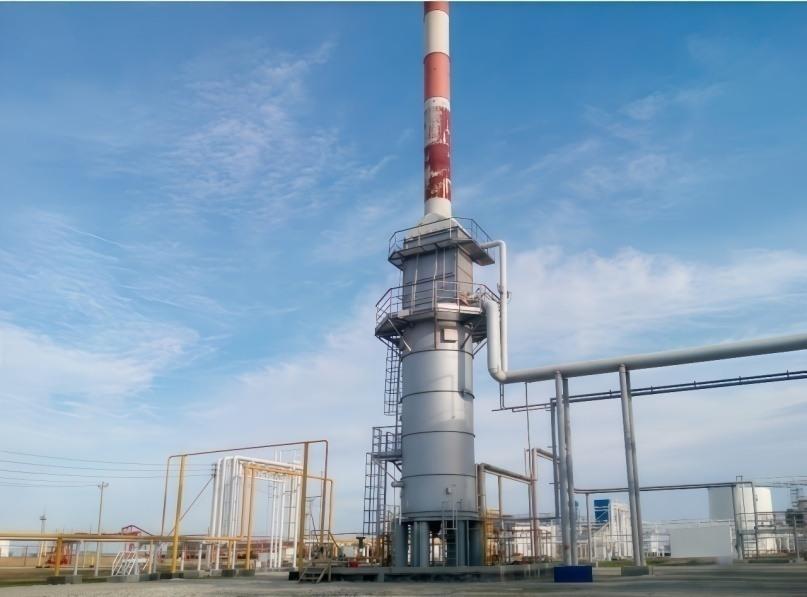
Process gas monitoring is the continuous or periodic measurement of gas composition and related parameters within an industrial process to ensure safety, optimize performance, maintain product quality, and support regulatory compliance. In industrial applications, effective process gas monitoring helps detect abnormal conditions early, reduce unplanned downtime, improve process control, and enable more reliable decision-making across the production cycle.
However, the real value of process gas monitoring goes far beyond simply detecting whether a gas is present. In our experience at ESEGAS, it directly affects how efficiently a system performs, how consistently a product is produced, and how confidently operators can manage complex operating conditions. To understand why it matters so much, it is useful to look more closely at how process gas monitoring works, what it measures, and what problems it helps solve in real industrial settings.
What Is Process Gas Monitoring and How Does It Work?
In many facilities, gas-related issues do not begin with a dramatic failure. They begin with a small deviation that goes unnoticed because the right measurement point, technology, or response system is missing. That is where process gas monitoring becomes critical. At ESEGAS, we help customers move from reactive troubleshooting to proactive control by making gas conditions visible in real time and turning invisible process variables into actionable data.
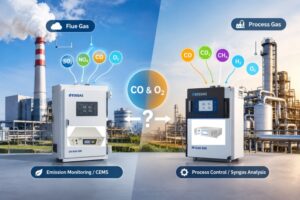
Process gas monitoring refers to the measurement of gases within industrial systems to evaluate process conditions, verify gas quality, and identify abnormal changes before they escalate. Depending on the application, process gas monitoring may focus on gases such as oxygen (O2), carbon monoxide (CO), carbon dioxide (CO2), methane (CH4), hydrogen sulfide (H2S), ammonia (NH3), hydrogen (H2), sulfur dioxide (SO2), or volatile organic compounds.
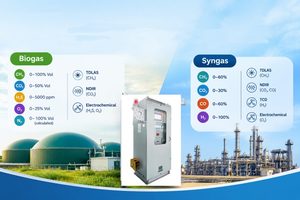
The working method depends on the process and the target gas. Common technologies include:
- NDIR analyzers for gases such as CO, CO2, CH4, and some hydrocarbons
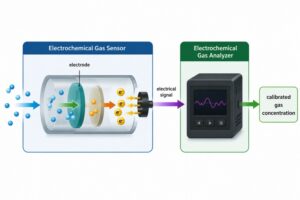
- Electrochemical sensors for toxic gases and oxygen measurement
- Paramagnetic analysis for precise oxygen monitoring
- Zirconia oxygen analyzers for combustion and high-temperature applications
- TDLAS technology for fast, selective, and stable gas measurement in demanding processes
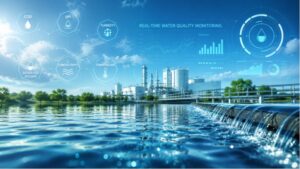
In practice, a process gas monitoring system may operate continuously online, giving operators live process data, or it may be configured for scheduled sampling and analysis. For most critical industrial operations, continuous monitoring provides stronger control because it reduces the delay between gas variation and corrective action.
Why Does Process Gas Monitoring Matter for Industrial Safety?
Industrial safety is often discussed in terms of procedures, training, and protective equipment, but gas risks can undermine all three if they are not measured properly. A leak, enrichment, depletion, or contamination event can develop before personnel have time to react. At ESEGAS, we believe one of the most important roles of process gas monitoring is to detect hazardous conditions early enough for operators to intervene before they become incidents.
Safety-related benefits of process gas monitoring include:
- Early detection of toxic gas releases that may threaten personnel health
- Monitoring of combustible gases to reduce fire and explosion risks
- Oxygen measurement to identify deficiency or enrichment conditions
- Faster response to abnormal process behavior before equipment damage or plant shutdown occurs
- Improved protection of enclosed or high-risk operating areas where gas accumulation may be difficult to detect manually
For example, in combustion systems, inaccurate oxygen levels can create unsafe operating conditions as well as poor fuel efficiency. In chemical processing, trace gas deviations may indicate leakage, incomplete reactions, or unwanted byproducts. In these situations, reliable process gas monitoring helps create a safer operating environment not because it replaces safety management, but because it strengthens it with precise and timely measurement.
How Can Process Gas Monitoring Improve Process Efficiency and Product Quality?
Many companies first invest in gas analysis because of safety concerns, but they soon realize that the operational value is equally important. Poor visibility into gas conditions often leads to unstable performance, wasted energy, and inconsistent product outcomes. At ESEGAS, we regularly see that better process gas monitoring leads directly to better process control.
Here is how process gas monitoring supports efficiency and quality:
- Stabilizes process conditions by providing real-time composition data
- Reduces raw material waste by identifying overuse, leakage, or incomplete conversion
- Improves energy efficiency by optimizing combustion and reaction control
- Supports consistent product quality by maintaining gas conditions within target ranges
- Minimizes off-spec production caused by unnoticed gas fluctuations
- Shortens troubleshooting time by helping operators identify the true source of variation
In industries where precision matters, even a small gas concentration shift can affect yield and repeatability. With the right process gas monitoring strategy, operators can adjust sooner, maintain tighter control, and avoid the chain reaction of inefficiency that follows poor measurement.
Which Parameters Should Be Monitored in Different Process Gas Applications?
A common mistake in industrial gas analysis is assuming that every application should be monitored in the same way. In reality, each process has its own priorities, risks, and control targets. At ESEGAS, we always recommend matching the process gas monitoring approach to the actual operating conditions rather than relying on a generic configuration.
The most commonly monitored parameters include:
- Gas concentration of key components
- Oxygen content for combustion, inerting, or oxidation control
- Moisture or humidity where gas dryness affects quality or equipment integrity
- Temperature because it can influence both process conditions and measurement accuracy
- Pressure for system stability and sampling reliability
- Flow rate for understanding gas delivery and process balance
- Impurity levels where trace contamination can damage products or systems
Below is a simplified overview:
| Application | Key Parameters | Main Monitoring Goal |
| Combustion processes | O2, CO, CO2, temperature | Improve combustion efficiency and safety |
| Chemical production | Target gas concentration, impurities, pressure | Maintain reaction control and product consistency |
| Semiconductor manufacturing | Trace contaminants, moisture, O2 | Protect product purity and process precision |
| Industrial furnaces | O2, combustible gases, temperature | Optimize thermal performance and reduce risk |
| Environmental treatment | VOCs, SO2, NOx, CO2 | Control emissions and support compliance |
The more accurately a plant identifies its critical parameters, the more valuable its process gas monitoringsystem becomes.
What Industries Benefit Most from Process Gas Monitoring?
Some industries cannot operate competitively without reliable gas analysis, while others are only beginning to recognize how much improvement is possible through better monitoring. From our perspective at ESEGAS, process gas monitoring is one of the most widely applicable tools for industrial optimization because gas conditions influence safety, quality, and compliance across many sectors.
Industries that benefit significantly from process gas monitoring include:
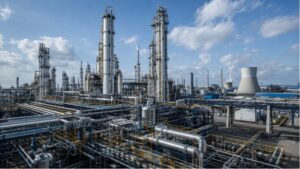
- Oil and gas, where gas composition affects safety, processing efficiency, and emission control
- Petrochemical and chemical manufacturing, where reaction conditions must remain tightly controlled
- Power generation, especially in combustion optimization and flue gas analysis
- Metallurgy and heat treatment, where furnace atmosphere directly affects product quality
- Semiconductor production, where even trace impurities can cause costly defects
- Pharmaceutical manufacturing, where purity and process consistency are critical
- Environmental and waste treatment operations, where emissions and byproducts must be monitored carefully
- Industrial gas production and distribution, where verifying gas purity is essential
Although each sector has different priorities, the underlying reason is the same: better process gas monitoring creates better process visibility, and better visibility leads to better decisions.
How Do We Choose the Right Process Gas Monitoring Solution?
Many industrial users know they need better gas measurement, but selecting the right solution can be difficult. The challenge is not just identifying the gas; it is choosing a system that matches the process, environment, maintenance capacity, and long-term performance goals. At ESEGAS, we approach process gas monitoringas a practical engineering decision, not just a product purchase.
When selecting a process gas monitoring solution, we recommend evaluating:
- Target gas species and measurement range
- Required accuracy, sensitivity, and response time
- Process temperature, pressure, dust load, and moisture conditions
- Installation type, such as in-situ, extractive, portable, or fixed online systems
- Calibration and maintenance requirements
- System integration needs with plant control systems
- Long-term stability and total operating cost
The right solution is not always the most complex one. In many cases, the best process gas monitoringsetup is the one that delivers reliable performance under actual field conditions with manageable maintenance demands. At ESEGAS, we focus on helping customers align analyzer technology with real industrial needs so they can invest with confidence and operate with fewer surprises.
What Common Challenges Can Process Gas Monitoring Help Solve?
In many plants, recurring production problems are treated as isolated events when they are actually symptoms of poor process visibility. Operators may face inconsistent output, unexplained alarms, excessive energy use, or repeated downtime without realizing that gas measurement gaps are part of the root cause. This is exactly where process gas monitoring creates measurable value.
Common challenges that process gas monitoring can help solve include:
- Delayed detection of abnormal conditions
- Difficulty identifying the cause of process instability
- Frequent off-spec product batches
- High fuel or raw material consumption
- Unexpected equipment stress or corrosion linked to gas composition
- False alarms or missed alarms due to poor measurement quality
- Compliance pressure related to emissions or workplace safety
- Unplanned shutdowns caused by avoidable gas-related disturbances
When gas conditions are measured accurately and continuously, operators gain a much clearer picture of what is happening inside the process. That clarity supports faster decisions, more stable performance, and more effective maintenance planning. In other words, process gas monitoring helps transform uncertainty into control.
Conclusion
Process conditions cannot be managed well when critical gas variables remain invisible. Across industrial applications, process gas monitoring plays a central role in protecting personnel, improving efficiency, maintaining product quality, and supporting compliance. It helps detect problems earlier, optimize operations more precisely, and reduce the costly consequences of delayed response.
At ESEGAS, we view process gas monitoring as more than a measurement task. It is a strategic capability that helps industrial operators build safer, smarter, and more reliable processes. By choosing the right monitoring approach for the right application, companies can strengthen daily operations and create a stronger foundation for long-term performance.