



Oxygen analyzers often appear first when engineers troubleshoot bitumen production issues. Many operators ask:
“Why is my product quality unstable?”
“Why does fuel consumption keep rising?”
“Why is oxidation hard to control?”
“Are my plant conditions truly safe?”
These questions point to one root cause—oxygen is not properly measured or controlled. Bitumen production, especially the air-blowing stage, is highly sensitive to oxygen levels. Oxygen reacts with hydrocarbons and changes viscosity, penetration, and softening point . Small deviations can shift the final product out of specification. At the same time, combustion systems depend on the right oxygen balance to maintain stable heat supply. Too little oxygen leads to incomplete combustion. Too much oxygen wastes energy. As a result, oxygen control sits at the center of both reaction chemistry and thermal efficiency.
This is where oxygen analyzers change the game. They convert invisible oxygen variations into clear, continuous data. Operators can move from guesswork to precise control. Instead of reacting to lab results, they can adjust conditions in real time. In short, oxygen analyzers shift bitumen production from experience-driven operation to data-driven optimization.
Where Does Oxygen Impact Bitumen Production Most?
1. Air-Blowing Stage – How Does Oxygen Control Bitumen Oxidation?
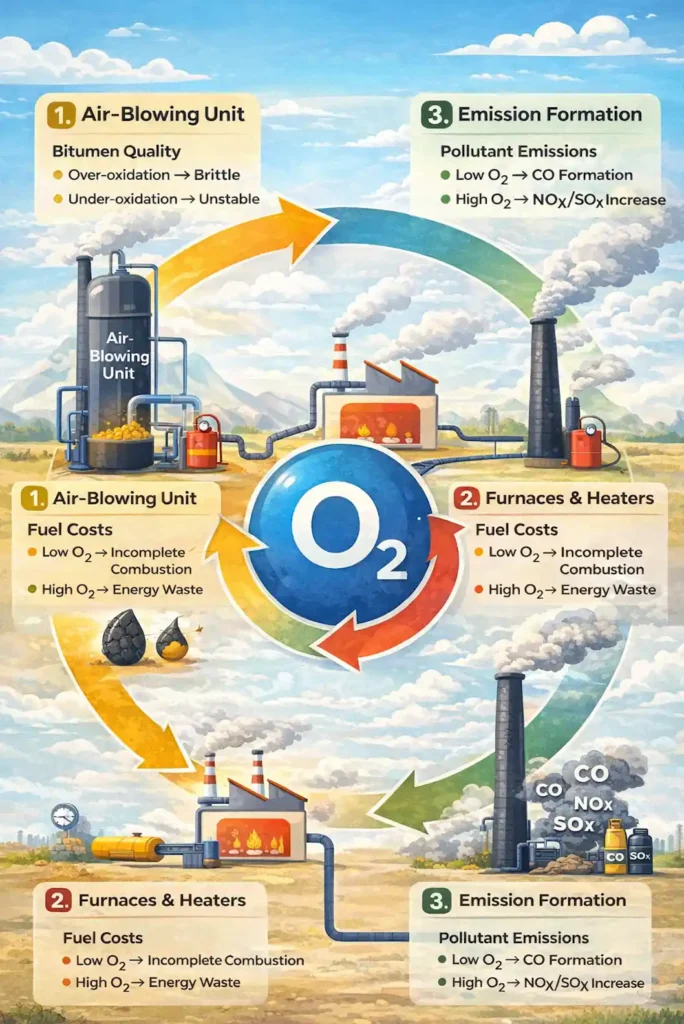
The air-blowing unit is the heart of bitumen production. Oxygen directly reacts with hydrocarbons and drives oxidation. This reaction defines key product properties, including viscosity, softening point, and long-term durability. As oxygen enters the system, it increases molecular polarity and stiffness. This is why oxidation determines final product performance .
However, this process is very sensitive. Too much oxygen causes over-oxidation, making the bitumen brittle and prone to cracking. Too little oxygen slows the reaction and leads to unstable quality. In practice, even small deviations can push the product off-spec. That is why precise oxygen control is critical, not optional.
In simple terms, bitumen quality is a direct result of how well you control oxygen during oxidation. Without real-time monitoring, operators can only guess the reaction progress. So next, let’s look at how oxygen affects the energy side of the process.
2. Combustion Systems – How Does Oxygen Improve Furnace Efficiency?
Furnaces and heaters provide the energy required for distillation and oxidation. Here, oxygen controls how efficiently fuel burns. A correct air-to-fuel ratio ensures stable flame temperature and consistent heat supply.
If oxygen is too low, combustion becomes incomplete. This produces carbon monoxide and reduces thermal efficiency . You lose energy and create safety risks. If oxygen is too high, excess air absorbs heat and carries it out of the system. This leads to unnecessary fuel consumption.
Oxygen concentration also affects flame temperature and reaction intensity. Higher oxygen levels can increase flame temperature but may also raise NOx emissions . So, balance is key.
In daily operation, many plants run with excess air to stay safe. But this approach wastes fuel. With an oxygen analyzer, operators can fine-tune combustion instead of overcompensating. Next, let’s move to emissions and environmental impact.
3. Emissions Control – How Does Oxygen Support Compliance?
Oxygen levels strongly influence emission formation during combustion. When oxygen is insufficient, incomplete combustion produces more CO. When oxygen and temperature rise, NOx formation can increase due to intensified reactions. This means oxygen sits at the center of emission control. It affects not only combustion efficiency but also pollutant generation. Stable oxygen control helps maintain consistent combustion conditions, which keeps emissions predictable and within limits.
Regulatory compliance depends on this stability. Fluctuating oxygen levels often lead to fluctuating emissions. That makes it harder to meet environmental standards and avoid penalties.
To sum up, oxygen connects quality, efficiency, and emissions into one control variable. So naturally, the next question is: how does an oxygen analyzer optimize these processes?
How Does an Oxygen Analyzer Solve Key Problems in Bitumen Production?
1. Real-Time Oxygen Measurement – How Does an Oxygen Analyzer Improve Process Visibility?
An oxygen analyzer gives operators a clear, real-time view of the process. It continuously measures O₂ levels in reactors and flue gas streams. This removes the need for delayed lab testing or manual checks. Instead of guessing, operators see exactly what is happening inside the system.
With continuous data, small process changes become visible immediately. Operators can respond before issues escalate. This is critical in air-blowing units, where reaction conditions shift quickly. Reliable oxygen measurement also supports tighter process control and faster decision-making .
Put simply, the analyzer turns an invisible process into a measurable one. Once visibility improves, precise control becomes possible—so let’s move to combustion optimization.
2. Combustion Optimization – How Does an Oxygen Analyzer Reduce Fuel Consumption?
Oxygen analyzers enable O₂ trim control, keeping the air-to-fuel ratio within the optimal range. The system adjusts airflow continuously based on real-time oxygen data. This avoids both excess air and oxygen deficiency.
Excess oxygen carries heat out of the system, reducing efficiency. Low oxygen leads to incomplete combustion and CO formation. Maintaining the right balance improves both efficiency and safety. In real operation, many plants use excess air as a safety margin. However, this approach increases fuel consumption. With an oxygen analyzer, operators can run closer to optimal conditions without added risk.
As a result, combustion becomes both efficient and stable. With energy under control, the next step is improving product quality.
3. Oxidation Control – How Does an Oxygen Analyzer Improve Bitumen Quality?
In the air-blowing process, oxygen directly controls the oxidation reaction rate. An oxygen analyzer allows operators to regulate oxygen input with precision. This creates stable and repeatable reaction conditions. With proper oxygen control, producers can achieve consistent viscosity and target softening points. The process becomes predictable rather than variable. This reduces off-spec production and improves yield.
Without real-time data, operators rely on delayed feedback and experience. That often leads to trial-and-error adjustments. With continuous monitoring, the process becomes controlled and repeatable.
In practice, this means turning variability into consistency. After quality, safety becomes the next priority.
4. Safety Assurance – How Does an Oxygen Analyzer Prevent Process Risks?
Safety risks often arise from poor combustion conditions. Low oxygen can cause incomplete combustion and CO buildup. High oxygen combined with fuel can increase explosion risk.
An oxygen analyzer continuously tracks these conditions. It alerts operators when oxygen levels move outside safe limits. This allows quick corrective action before conditions become dangerous.
Proper oxygen control also reduces soot formation and unstable flame behavior. Maintaining balanced combustion improves both equipment reliability and personnel safety. From a safety standpoint, oxygen monitoring acts as an early warning system. Beyond safety, it also supports environmental performance.
5. Emissions Control – How Does an Oxygen Analyzer Support Environmental Compliance?
Oxygen directly influences the formation of CO, NOx, and SOx during combustion. Stable oxygen control helps maintain complete combustion and reduces pollutant generation. An oxygen analyzer allows operators to fine-tune combustion conditions in real time. This keeps emissions within acceptable limits while maintaining efficiency. It also reduces the risk of regulatory penalties. Precise oxygen measurement supports consistent emission performance and long-term compliance .
Ultimately, oxygen becomes a single control variable linking efficiency, safety, and emissions.
Where Should an Oxygen Analyzer Be Installed in Bitumen Production for Maximum Impact?
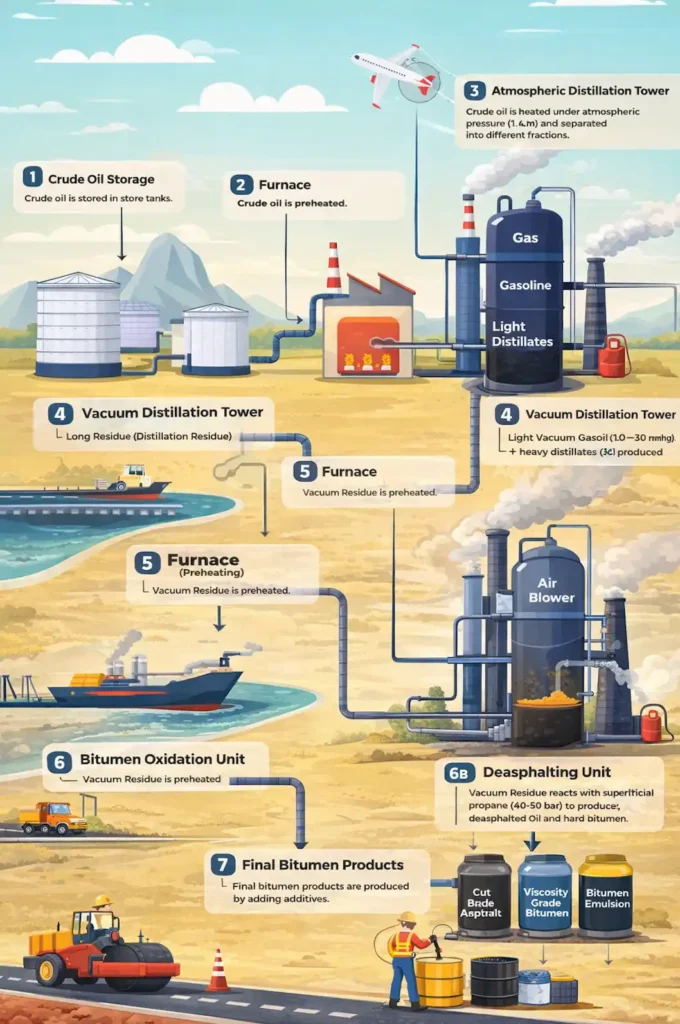
Choosing the right installation point matters as much as selecting the analyzer itself. A well-placed oxygen analyzer provides accurate data that truly reflects process conditions. A poor location can lead to misleading readings and wrong decisions.
1. Furnace / Heater Flue Gas
This is the most common and critical point. Measuring oxygen in flue gas shows how efficiently fuel burns. It directly reflects the air-to-fuel ratio and heat loss. Excess oxygen means wasted energy, while low oxygen signals incomplete combustion. In practice, this point supports combustion optimization and fuel savings.
2. Air-Blowing Reactor (Inlet / Outlet)
Installing analyzers at the reactor inlet and outlet helps track oxygen consumption during oxidation. The inlet shows how much oxygen enters the process. The outlet reveals how much reacts. This difference gives insight into reaction efficiency and stability. With this setup, operators can fine-tune oxidation instead of relying on delayed lab results. It creates a more controlled and repeatable process environment.
3. Stack / Emissions Monitoring Point
Stack measurement provides a final check on combustion performance and emissions. It reflects overall system behavior, including air leakage and process fluctuations. Stable oxygen levels at the stack indicate stable operation across the plant. Taken together, these points form a complete oxygen control loop—from reaction to combustion to emissions.
In-Situ vs Extractive – Which Oxygen Analyzer Installation Method Is Better?
Once you define the location, the next step is selecting the right measurement approach. The choice usually comes down to in-situ or extractive systems.
In-Situ Oxygen Analyzer
In-situ analyzers install directly in the process line or flue duct. They measure oxygen without gas sampling. This setup delivers fast response and real-time feedback. It also reduces maintenance because there is no sampling system involved. In fast-changing processes like combustion or air-blowing, this quick response is a major advantage. Operators can react immediately to process shifts.
Extractive Oxygen Analyzer
Extractive systems pull gas samples from the process and analyze them externally. They handle complex gas conditions better, especially when the gas contains dust, moisture, or corrosive components. Although they respond slower, they offer higher flexibility in harsh or contaminated environments. This makes them suitable for challenging process streams where direct installation is difficult. In real applications, the choice depends on process conditions, response time requirements, and maintenance strategy.
Conclusion
Bitumen production may look complex, but one variable links everything—oxygen. Combustion needs oxygen to release heat efficiently. Oxidation uses oxygen to define product properties. Emissions also depend on how oxygen behaves in the reaction system. When oxygen shifts, the entire process responds.
Reliable oxygen data makes the difference. ESEGAS oxygen analyzers provide continuous, accurate measurement in harsh industrial environments. They help you improve efficiency, stabilize product quality, and maintain safe operation.
FAQs:
1. Why is an oxygen analyzer important in bitumen production?
An oxygen analyzer provides real-time measurement of O₂ levels in combustion and oxidation processes. This allows operators to control reaction conditions accurately. Without it, plants rely on delayed data and experience. Accurate oxygen control improves product consistency, reduces fuel consumption, and enhances safety. It also helps maintain stable combustion and meet emission limits.
2. How does an oxygen analyzer improve bitumen quality?
In the air-blowing process, oxygen directly controls oxidation reactions. These reactions determine viscosity and softening point. An oxygen analyzer enables precise control of oxygen input. This keeps the reaction stable and repeatable. As a result, operators can consistently produce on-spec bitumen and reduce off-spec batches.
3. Can an oxygen analyzer reduce fuel consumption in asphalt plants?
Yes. An oxygen analyzer helps maintain the optimal air-to-fuel ratio in burners and heaters. Too much oxygen wastes energy by heating excess air. Too little oxygen causes incomplete combustion. Continuous O₂ monitoring allows operators to stay in the optimal range. This improves thermal efficiency and reduces fuel costs.
4. Where should an oxygen analyzer be installed in a bitumen plant?
Key installation points include: Furnace or heater flue gas, Air-blowing reactor inlet and outlet, ans Stack or emission outlet. These locations provide a complete view of combustion, reaction efficiency, and emissions. Proper placement ensures accurate data and better process control.
5. What is the difference between in-situ and extractive oxygen analyzers?
In-situ analyzers measure oxygen directly in the process. They offer fast response and low maintenance. Extractive analyzers take gas samples for analysis. They handle complex or dirty gas conditions better. The choice depends on process conditions, response time, and maintenance requirements.
6. Can oxygen analyzers help reduce emissions in bitumen plants?
Yes. Oxygen levels directly affect the formation of CO, NOx, and SO2. By maintaining optimal combustion conditions, oxygen analyzers reduce pollutant formation. This helps plants meet environmental regulations and avoid penalties.
7. What problems occur without oxygen monitoring in bitumen production?
Without proper oxygen measurement, plants often face: Inconsistent product quality, High fuel consumption, Unstable combustion, Increased safety risks, and Difficulty meeting emission standards. These issues often occur together, making them hard to solve without real-time oxygen data.