



In syngas applications, delayed data is often nearly as risky as no data at all. When gas composition shifts faster than operators can respond, combustion stability can suffer, gasification efficiency can drift, downstream equipment can face avoidable stress, and safety margins can narrow before the problem is even recognized. At ESEGAS, we see this challenge clearly in real industrial environments: quick monitoring is not only about speed on a specification sheet, but about getting dependable composition data soon enough to support real process decisions.
Quick and reliable syngas monitoring depends on continuous measurement of key components such as CO, CO2, CH4, H2, and O2 through an analyzer designed for demanding process conditions. In practice, effective quick monitoring requires more than a fast detector alone. It also depends on stable sensing, suitable sample handling, and an analyzer configuration that can keep pace with changing gasification or process-gas conditions. (Gas Analyzer Manufacturers)

That is why the real discussion goes beyond whether a system can measure syngas. The more important question is whether it can measure syngas quickly enough, consistently enough, and clearly enough to help operators act with confidence. From our perspective at ESEGAS, the value of fast monitoring comes from turning raw gas data into usable process insight.
Why is syngas for quick monitoring so important?
When syngas conditions begin to change, the consequences rarely stay isolated to a single reading. A small composition drift can quickly affect flame behavior, heating value, conversion efficiency, emissions behavior, and even the operating window of connected equipment. That is exactly why syngas for quick monitoring, supported by a dedicated syngas analyzer, matters in modern process control.
At ESEGAS, we approach syngas composition measurement as an operational tool rather than a passive measurement task. Quick monitoring helps operators respond earlier and manage the process more effectively in several ways:
- It supports faster process adjustments when CO, H2, CH4, or O2 levels move away from expected values.
- It improves combustion and gasification control by providing timely composition feedback.
- It helps reduce the risk of unstable operation in demanding industrial environments.
- It gives plants better visibility into gas quality before syngas is sent to downstream use points.
In other words, faster insight means more time to correct the process before inefficiency, instability, or safety issues grow into larger problems.
Which gas components matter most in rapid syngas monitoring?
A quick reading has limited value if it does not include the gas components that actually define syngas quality. In many applications, operators are not simply asking whether gas is present. They need to know whether the gas is usable, efficient, stable, and safe for the next stage of the process. That is why a capable syngas analyzer must focus on the components that carry the most operational meaning.
For most syngas applications, the key gases include:
| Component | Why it matters | Monitoring value |
| CO | Major combustible component | Helps assess gas quality, reaction condition, and process efficiency |
| H2 | Important energy-bearing gas | Supports control of gasification performance and downstream suitability |
| CO2 | Indicates dilution and reaction balance | Helps operators evaluate efficiency and composition shifts |
| CH4 | Contributes to heating value | Useful for understanding fuel characteristics and process behavior |
| O2 | Critical for control and safety | Helps identify leaks, air ingress, or undesirable operating conditions |
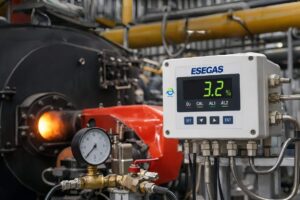
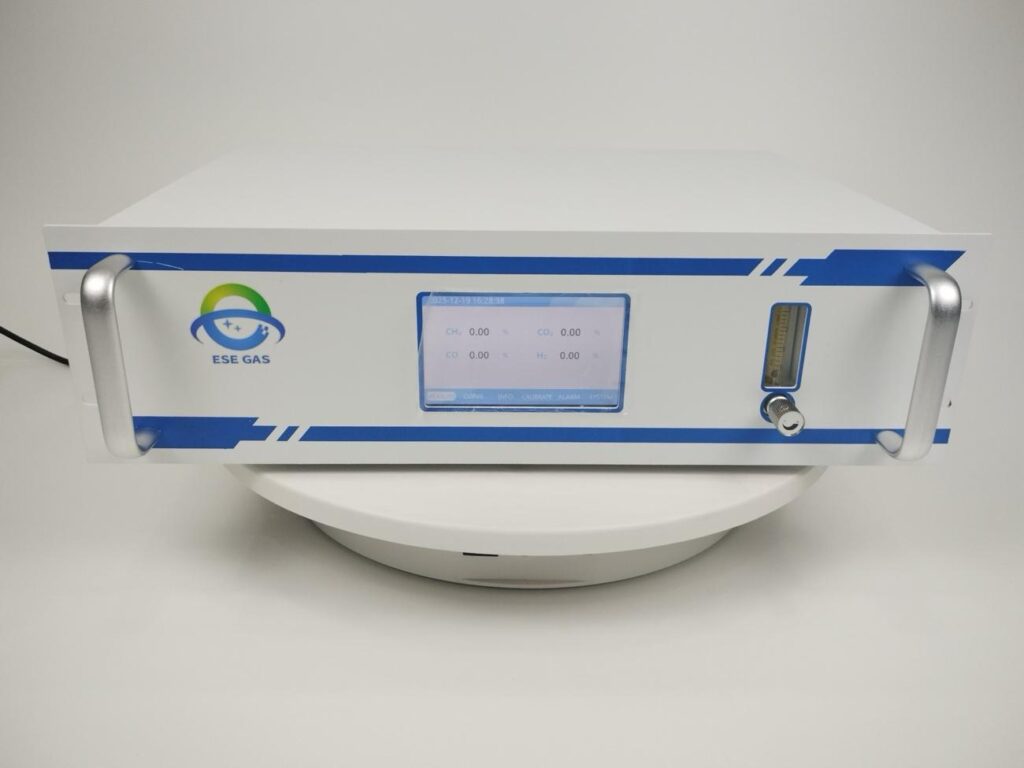
ESEGAS states that its Syngas Analyzer IR-GAS-600 is designed for simultaneous measurement of CO, CO2, and CH4, with H2 measurement through a compensated thermal conductivity cell and O2 measurement through an electrochemical or optional paramagnetic approach. The product page also describes online and portable versions for syngas applications. (Gas Analyzer Manufacturers)
What makes a syngas analyzer suitable for quick monitoring?
Many teams initially focus on detector speed alone, but real quick monitoring depends on the whole analysis chain. If the analyzer is stable but the sample path is poorly matched to the process, the result can still be slow or unreliable. If the instrument responds quickly but struggles with changing backgrounds or industrial interference, the numbers may arrive fast but remain difficult to trust.
From our perspective at ESEGAS, an effective quick-monitoring solution should combine several strengths:
- Continuous online analysis rather than delayed spot checks
- Multi-component capability for a more complete view of syngas behavior
- Stable performance under changing process conditions
- Compatibility with industrial sample systems and plant integration needs
- Practical sensor selection based on the gases that matter most
Our ESEGAS Syngas Analyzer IR-GAS-600 is presented as a continuous industrial syngas analyzer using NDIR measurement for CO, CO2, and CH4, thermal conductivity detection for H2, and O2 sensing through electrochemical or optional paramagnetic technology. The page also notes temperature-controlled or temperature-compensated sensors and identifies the analyzer for syngas and gasification atmospheres. (Gas Analyzer Manufacturers)
That combination matters because quick monitoring is not just about one fast gas channel. It is about obtaining a dependable, multi-gas process picture in time to guide control decisions.
What challenges make fast syngas composition measurement difficult in the field?
On paper, syngas monitoring can look straightforward. In the field, it rarely is. Industrial syngas streams can be dynamic, contaminated, or operationally demanding, and these realities can slow or distort measurement if the analyzer system is not properly designed for the application.
The most common challenges include:
- Rapid composition changes that require stable, responsive measurement
- Background gas effects that can interfere with accurate H2 reading
- Process conditions that demand strong long-term analytical stability
- The need to balance speed, durability, and maintenance practicality
ESEGAS highlights that its H2 reading is actively compensated for analytical interferences from CO, CO2, and CH4, and that the analyzer is intended for challenging syngas and gasification atmospheres. The company also lists applications including coal chemical processes, blast furnace and steelmaking-related processes, and syngas production from biomass and coal gasification. (Gas Analyzer Manufacturers)
This is one of the reasons we emphasize application fit so strongly. In quick monitoring, the best result does not come from the fastest isolated component. It comes from a system that keeps producing trustworthy readings under real process conditions.
How does ESEGAS support quicker and more practical syngas monitoring?
When plants invest in rapid syngas monitoring, they are usually trying to solve a practical problem: they want faster operational visibility without adding unnecessary complexity. We believe the answer is to align measurement performance with process reality, so operators receive data they can actually use.
At ESEGAS, we support this goal by focusing on analyzers built for industrial syngas use rather than generic gas measurement alone. Our product approach reflects several priorities:
- Continuous monitoring for ongoing process visibility
- Simultaneous multi-gas analysis in one unit
- Configurations suited to syngas and gasification applications
- Support for both online and portable deployment needs, depending on application goals
According to the ESEGAS product page, the Syngas Analyzer IR-GAS-600/600P is offered in online and portable forms, with “all measurement in one unit” for O2, CO, CO2, CH4, CnHm, and H2. (Gas Analyzer Manufacturers)
For customers, that means the discussion can shift from isolated gas values to more useful questions: Is the gasifier behaving as expected? Is the fuel gas quality changing? Is the process moving toward instability? Good quick monitoring should help answer those questions earlier.
What should buyers evaluate when selecting a syngas analyzer for quick monitoring?
Choosing the right analyzer is rarely about selecting the most complex option. It is about selecting the system that can deliver the right information at the right time for the actual process. A technically impressive analyzer that does not match the plant environment can still underperform where it matters most.
We recommend evaluating a solution against the following criteria:
- Which gas components are measured continuously
- Whether the analyzer is intended for online industrial use
- How well the system supports stable measurement under variable gas composition
- Whether H2 and O2 are included where the process requires them
- The practicality of integrating the analyzer into daily operations
- The relevance of the analyzer to syngas, gasification, steelmaking, or coal chemical applications
ESEGAS publishes measurement capability ranges for CO, CO2, CH4, H2, and O2 on the Syngas Analyzer IR-GAS-600 page and positions the product specifically for continuous industrial syngas analysis. (Gas Analyzer Manufacturers)
A strong purchasing decision should therefore focus on application suitability, measurement completeness, and long-term usefulness, not only on isolated instrument specifications.
Conclusion
Using syngas for quick monitoring is ultimately about making faster and better operating decisions. The goal is not simply to capture gas data quickly, but to obtain reliable composition insight that supports control, efficiency, and safety. A well-matched syngas analyzer makes that possible by turning syngas composition measurement into actionable process intelligence.
At ESEGAS, we view quick syngas monitoring as a complete industrial solution rather than a single measurement function. By combining multi-gas capability with application-focused design, we help customers build a more responsive and dependable approach to syngas analysis in demanding process environments. If a plant needs quicker visibility into changing gas conditions, the right analyzer is the one that delivers speed with stability, not speed alone.