



In sulfur recovery operations, oxygen is never just another measurement point. When oxygen concentration drifts too high or too low, the entire process can begin to lose balance: combustion stability weakens, sulfur conversion suffers, tail gas performance becomes harder to control, and operators face rising risks in both efficiency and safety. Many plants know this problem well, yet conventional measurement approaches can still struggle under hot, dusty, corrosive, and fast-changing process conditions. That is exactly why more sulfur recovery units are turning to more responsive and more reliable oxygen monitoring technologies.
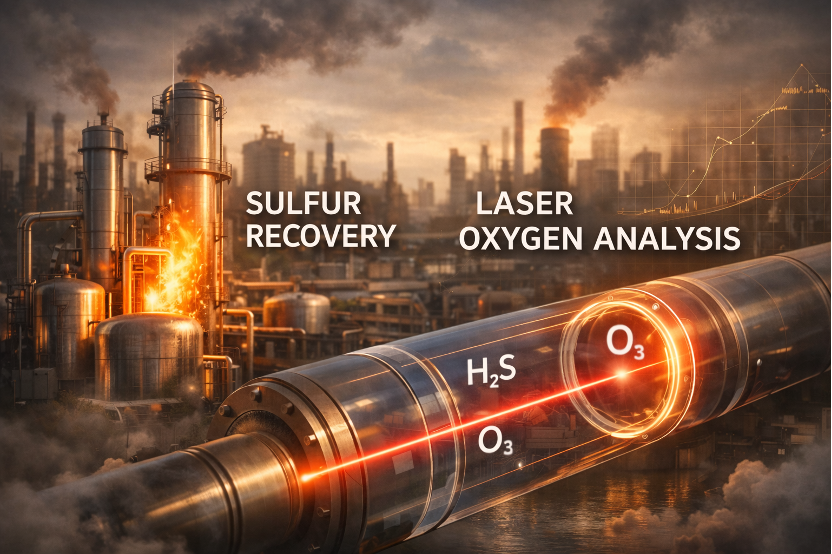
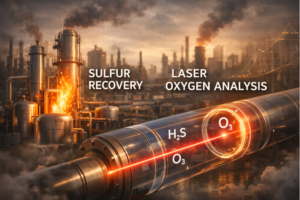
Oxygen monitoring with a laser oxygen analyzer is critical in the sulfur recovery process because it helps maintain stable combustion, supports accurate air-to-gas control, improves sulfur recovery efficiency, and reduces operational risk. In demanding SRU conditions, a laser-based oxygen measurement approach offers fast response, strong selectivity, and lower maintenance, making it well suited for continuous process optimization and safer operation.
That is the short answer, but in real sulfur recovery service, the deeper question is not simply whether oxygen should be monitored. It is how oxygen should be measured when process reliability, analyzer response, installation suitability, and long-term maintenance all directly affect plant performance. From our perspective at ESEGAS, this is where the right analyzer technology makes a practical difference.
Why is oxygen concentration control so important in sulfur recovery units?
When oxygen control is not precise, sulfur recovery performance rarely stays stable for long. Even small oxygen deviations can lead to larger process consequences, especially when operators are trying to keep reaction conditions balanced while protecting downstream equipment and maintaining compliance targets. What appears to be a small measurement issue can quickly become a process control problem.
In sulfur recovery units, especially in Claus-based systems, oxygen content is closely tied to combustion conditions in the reaction furnace. If oxygen is insufficient, combustion may become incomplete, reaction efficiency can decline, and the required process balance may be harder to maintain. If oxygen is excessive, unwanted oxidation effects, temperature shifts, and off-spec process conditions may reduce sulfur recovery effectiveness and complicate downstream treatment.
From our experience at ESEGAS, this is why a laser gas o2 analyzer is not simply an instrument choice. It is part of the control strategy. Reliable oxygen data helps operators:
- stabilize furnace combustion conditions
- improve air distribution and control accuracy
- reduce process fluctuations
- support sulfur conversion efficiency
- protect equipment and operating continuity
What challenges make oxygen measurement difficult in sulfur recovery processes?
Many oxygen measurement problems in SRU service do not come from the gas itself. They come from the environment around it. High temperatures, sulfur-bearing components, corrosive conditions, dust loading, and process variability can all interfere with stable measurement. When an analyzer cannot keep pace with these realities, the control room receives data too late or with too much uncertainty to act effectively.

Typical sulfur recovery applications can be challenging because they often involve:
- elevated process temperatures
- corrosive or reactive gas components
- particulate matter and sulfur deposition risk
- fluctuating flow and concentration conditions
- installation constraints in harsh industrial locations
These are exactly the situations where we see traditional sampling-heavy approaches become harder to maintain. Delayed response, sample line contamination, and frequent servicing can all weaken the value of the oxygen reading. In contrast, a properly selected laser gas o2 analyzer can help reduce those limitations by delivering faster and more direct measurement performance in demanding applications.
How does a laser oxygen analyzer work in sulfur recovery applications?
In sulfur recovery, speed and selectivity matter. Operators do not just need oxygen readings; they need oxygen readings they can trust under real process conditions. That is why laser-based analysis has become increasingly attractive for process control environments where response time and resistance to interference are both important.
A laser oxygen analyzer uses tunable diode laser absorption principles to target the gas of interest with high selectivity. On the ESEGAS oxygen analyzer product page, we describe TDLAS as an emerging technology with the advantage of being highly selective to a single target gas, and we also note that the laser O2 gas analyzer offers fast response, high accuracy, and minimal maintenance.(Gas Analyzer Manufacturers)
For sulfur recovery service, these features translate into practical advantages:
- rapid oxygen feedback for tighter process adjustment
- selective measurement in complex gas backgrounds
- reduced dependence on complicated sample conditioning
- better suitability for continuous online monitoring
- lower routine maintenance burden compared with systems prone to clogging or contamination
This is why, when customers ask us which oxygen measurement approach best supports harsh process gas applications, we often recommend evaluating a laser gas o2 analyzer wherever fast and stable oxygen control is essential.
What are the key advantages of using an ESEGAS laser oxygen analyzer in SRU operations?
In sulfur recovery, the value of an analyzer is measured by more than its specification sheet. Plants need instruments that support uptime, improve controllability, and remain practical to operate over the long term. If an analyzer is accurate in theory but difficult to maintain in reality, it creates as many problems as it solves.
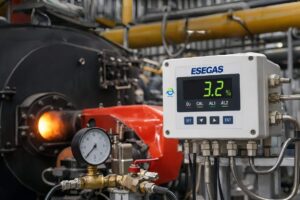
At ESEGAS, we approach oxygen analysis with that operational reality in mind. Our oxygen analyzer portfolio includes multiple technologies, and our product page highlights options such as electrochemical, paramagnetic, zirconia, and TDL oxygen analyzers so customers can match the technology to the process condition. For users who need strong selectivity, fast response, and low maintenance, our laser-based oxygen solution is a particularly compelling option.(Gas Analyzer Manufacturers)
In SRU-related service, the advantages of choosing an ESEGAS laser gas o2 analyzer can include:
- Faster control response: quicker oxygen feedback supports more effective combustion adjustment.
- Higher measurement confidence: selective laser measurement helps improve reliability in demanding gas environments.
- Reduced maintenance workload: fewer sampling-related issues can mean less downtime and less manual intervention.
- Better process stability: stable oxygen control contributes to steadier furnace operation and sulfur recovery performance.
- Improved operational efficiency: tighter control can help reduce unnecessary process deviation and associated losses.
From our perspective, the goal is not just to supply an analyzer. It is to help our customers build a more dependable oxygen monitoring strategy for sulfur recovery performance.
Where should a laser oxygen analyzer be installed in the sulfur recovery process?
Even the best analyzer can underperform if the measurement point is poorly selected. In SRU service, installation strategy matters because oxygen concentration must be measured where it can provide actionable process information rather than just a nominal reading. A good location improves both control value and analyzer longevity.
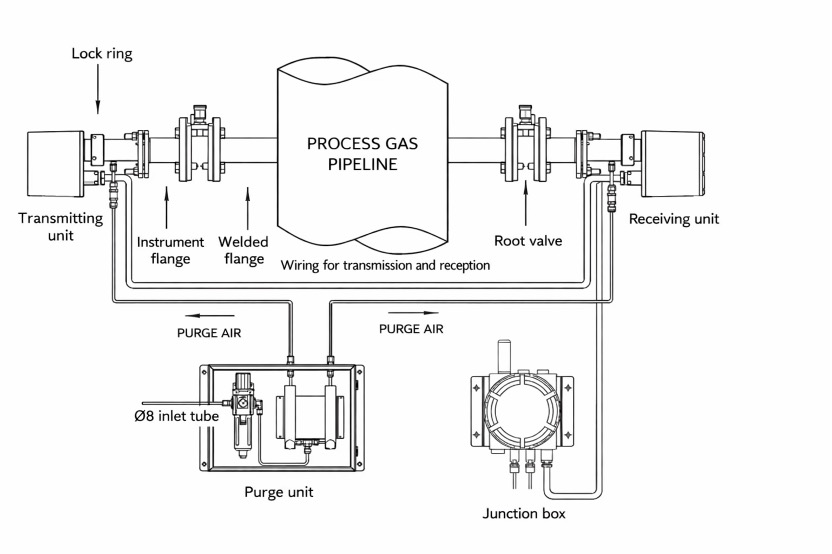
At ESEGAS, we usually recommend evaluating the measurement point based on process objective, gas condition, and maintenance access. The most appropriate location can vary by unit design, but the following logic is commonly useful:
| Possible Monitoring Location | Main Purpose | Key Consideration |
| Combustion air or air feed line | Verify oxygen-related air control conditions | Useful for air management but may not reflect full process behavior |
| Reaction zone-related process stream | Support combustion balance and control tuning | Requires careful suitability review for harsh conditions |
| Downstream process section | Track process stability and oxygen trend behavior | Good for optimization and verification |
| Tail gas-related position | Support overall process efficiency assessment | Must consider gas composition and installation environment |
A laser gas o2 analyzer is especially attractive where users need continuous online measurement with minimal lag. In sulfur recovery applications, we always recommend aligning installation location with the actual control target: combustion optimization, efficiency verification, safety monitoring, or overall process stabilization.
How does real-time oxygen monitoring improve process control and sulfur recovery efficiency?
Without real-time oxygen feedback, operators often end up reacting after the process has already shifted. By then, instability may already be affecting conversion efficiency, furnace behavior, or downstream cleanup performance. Faster measurement creates better control timing, and better timing improves results.
Real-time oxygen monitoring helps sulfur recovery operations by enabling:
- faster correction of combustion air deviations
- improved consistency in process conditions
- reduced oxygen-related upset potential
- tighter alignment between operating targets and actual gas conditions
- better support for sulfur recovery efficiency and unit stability
This is one of the main reasons we see growing interest in the laser gas o2 analyzer category. In practical terms, faster oxygen readings can help operators make better control decisions before deviations grow into larger production or maintenance issues. At ESEGAS, we see this as a direct link between analyzer performance and plant performance.
What should users consider when selecting a laser oxygen analyzer for sulfur recovery service?
Not every oxygen analyzer that works in a general industrial application will perform equally well in sulfur recovery service. Plants that choose based only on price or nominal range may later discover that installation suitability, process compatibility, and long-term support matter much more than expected.
When evaluating a laser gas o2 analyzer for sulfur recovery, we recommend focusing on the following factors:
- Process compatibility
The analyzer should match the actual gas conditions, temperature profile, and installation environment. - Response time
Faster oxygen feedback is valuable when combustion control must react quickly to process changes. - Measurement stability
Long-term reliability is essential for continuous operation and meaningful trend analysis. - Maintenance requirements
Lower maintenance design can reduce lifecycle cost and improve analyzer availability. - Installation method
The analyzer should fit the plant’s process layout, access conditions, and control architecture. - Supplier support
Strong application understanding is important, especially in demanding gas analysis environments.
On our oxygen analyzer page, we present multiple oxygen measurement technologies because different plants face different operating conditions. That flexibility allows us at ESEGAS to support users who need anything from conventional oxygen measurement to more advanced laser-based solutions for demanding process control service.(Gas Analyzer Manufacturers)
Conclusion
In sulfur recovery, oxygen measurement directly influences process control quality, operating stability, and overall efficiency. When oxygen data is delayed, inconsistent, or difficult to maintain, the entire unit becomes harder to optimize. That is why oxygen monitoring should be treated as a core process requirement rather than a secondary instrumentation task.
At ESEGAS, we believe a well-matched laser gas o2 analyzer can deliver the speed, selectivity, and reliability needed for modern sulfur recovery applications. By combining the right oxygen analyzer technology with the right installation and control strategy, we help customers move toward more stable combustion, better sulfur recovery performance, and more confident long-term operation.