



In many factories, routine inspection still depends too heavily on visual checks, operator experience, and corrective action after a problem is already affecting production. That approach becomes risky when dust is involved. Dust can build up quietly around transfer points, material handling zones, exhaust ducts, and process equipment long before it becomes visible as a serious hazard. Once it is ignored, the consequences can extend from worker exposure and equipment fouling to unstable process conditions, compliance pressure, and in some industries even fire or explosion risk. At ESEGAS, we see dust monitoring not as an optional add-on, but as a practical way to make factory inspection more proactive, measurable, and reliable.
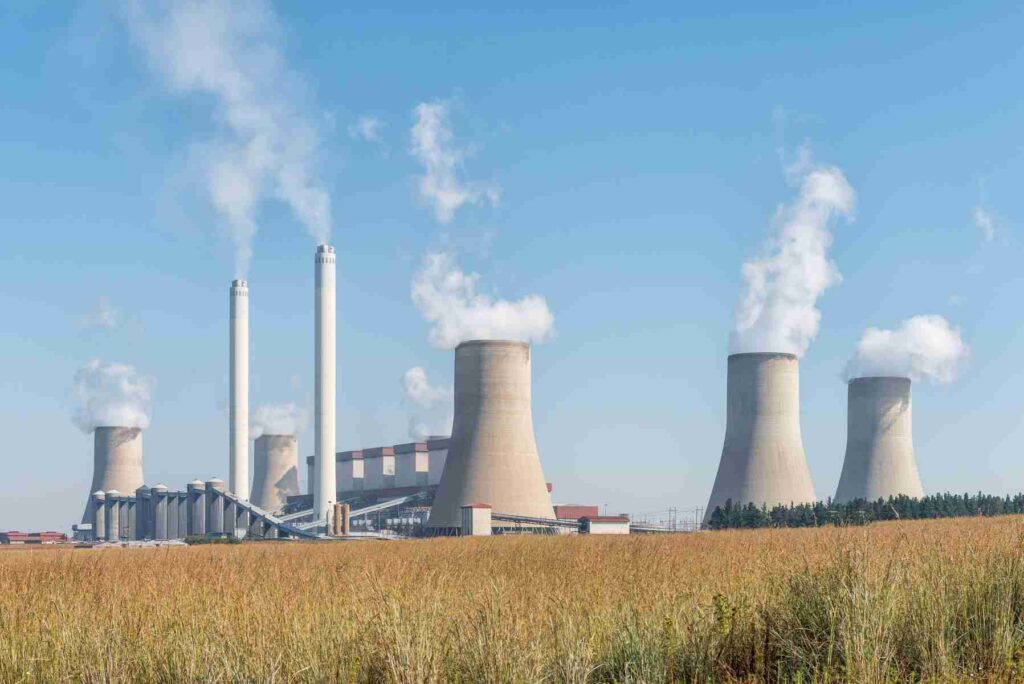
Dust monitoring equipment improves factory inspection by giving teams real-time visibility into particulate concentration changes across critical process areas. During patrols, it helps identify abnormal dust loading faster, supports earlier safety intervention, strengthens compliance records, and provides data that can guide maintenance and process optimization. In industrial environments with continuous emissions, transfer operations, or combustion-related exhaust, this makes inspection more efficient and far more actionable.
That direct answer matters, but it is only the starting point. To use dust monitoring equipment effectively in factory inspections, we need to look beyond the idea of “measuring dust” and focus on where it creates value in real patrol routines, what risks it helps uncover, and how the right monitoring strategy can support safer and more efficient plant operation.
Why Is Dust Monitoring So Important During Factory Inspections?
Factory inspection often fails not because teams are careless, but because dust behavior is dynamic, localized, and easy to underestimate. A patrol may confirm that a work area looks acceptable at one moment, while particulate levels near a duct, outlet, stack, or transfer section may already be trending in the wrong direction. That gap between what appears normal and what is actually happening is exactly where operational risk grows.
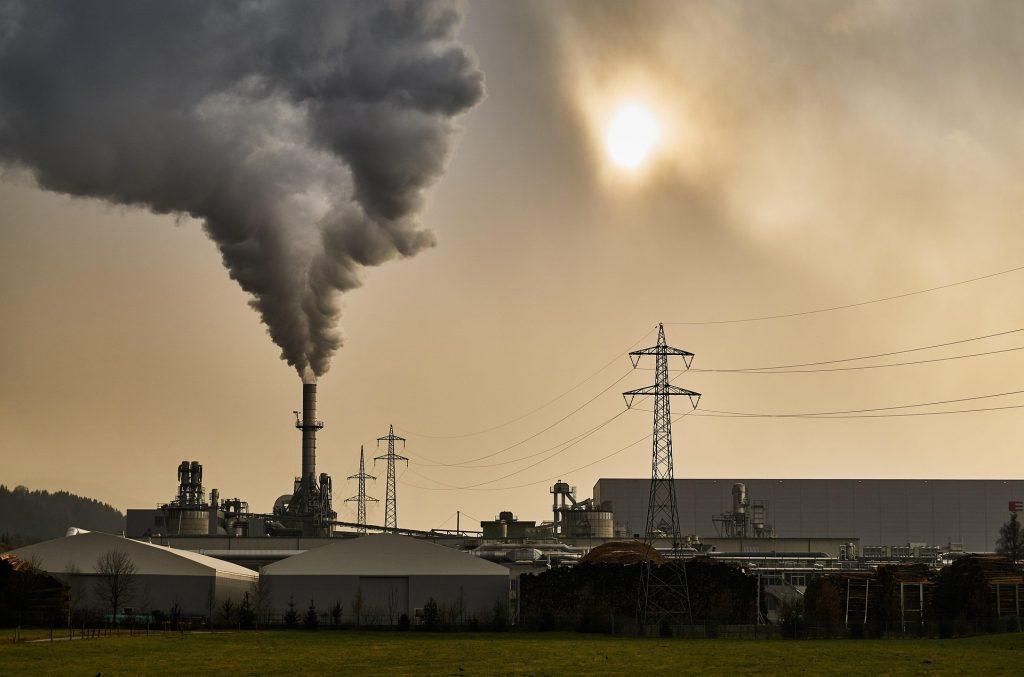
From our perspective at ESEGAS, dust monitoring equipment is important because dust is not just a housekeeping issue. It is an operational indicator. During inspections, abnormal particulate loading can point to filter performance decline, sealing problems, unstable combustion conditions, inefficient collection systems, or process leakage. In sectors such as cement, thermal power, iron and steel, metallurgy, refinery, aluminum, and petrochemical processing, this information is highly relevant to both safety and performance. Our ESE-DUST-2004 is designed as a laser-based backscatter particulate monitor for measuring dust loading in combustion exhaust gas streams and for use in emission gas monitoring systems, which makes this kind of inspection data much more practical to obtain. (Gas Analyzer Manufacturers)
Where Can Dust Monitoring Equipment Be Used in Routine Factory Patrols?
A common inspection problem is not the lack of effort, but the lack of focus. Teams may walk through large production areas without a clear sense of which dust points deserve the closest attention. That is why we recommend treating dust monitoring equipment as a way to prioritize inspection by risk rather than by habit.
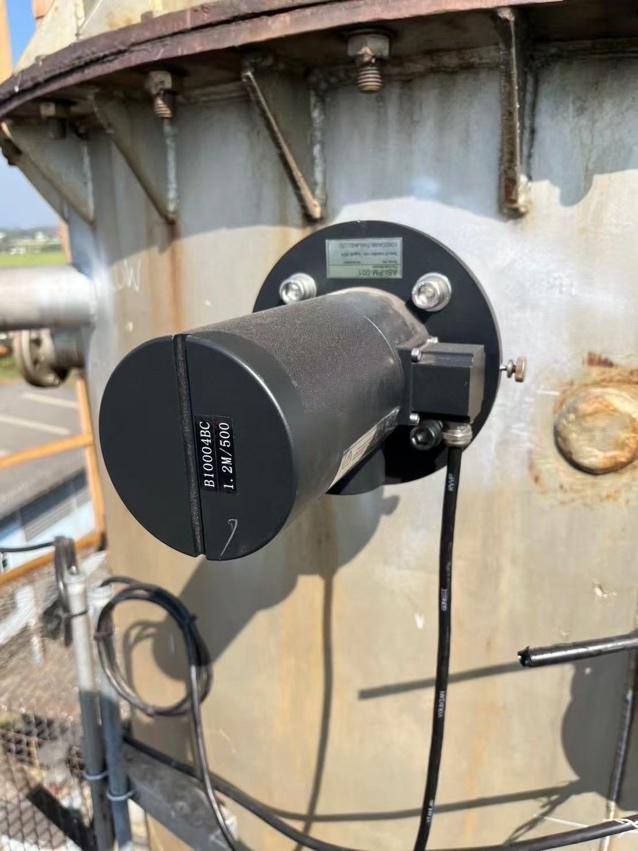
In routine patrols, we see the greatest value when dust monitoring equipment is applied around raw material feeding points, conveyor transfer zones, crushers and mills, hoppers and silos, packaging sections, dust collector outlets, exhaust ducts, and combustion-related emission lines. These are the places where dust loading changes often reveal process issues earlier than manual observation can. For stack and exhaust applications, our ESE-DUST-2004 uses optical backscatter from a red laser and converts the scattered light into an electrical output proportional to the particles in the gas stream. It offers selectable ranges from 0–100 up to 0–10000 mg/m3, a response time of no more than 10 seconds, and outputs including 4–20 mA and RS485, which supports integration into broader monitoring and inspection workflows. (Gas Analyzer Manufacturers)
How Does Dust Monitoring Equipment Improve Inspection Efficiency?
Traditional inspection is often reactive. A team follows the same route, checks the same assets, and may only discover a dust problem after visible buildup, equipment malfunction, or an emission deviation has already occurred. That consumes time while still leaving blind spots. We believe the real advantage of dust monitoring equipment is that it gives inspections direction.
With data from dust monitoring equipment, patrols become more targeted. Instead of asking whether an area “looks dusty,” inspectors can focus on whether dust loading is stable, rising, or already outside expected conditions. That helps maintenance teams identify the most urgent points first, reduce wasted inspection time, and link site observations to measurable process behavior. Because the ESE-DUST-2004 provides repeatability of ±2% FS, zero drift of ±2% FS/24 hr, and span drift of ±2% FS/24 hr, it supports more stable trend tracking in ongoing industrial use. Its IP66 protection rating and compact optical head also make it suitable for demanding plant environments where inspection reliability matters. (Gas Analyzer Manufacturers)
How Does Dust Monitoring Equipment Support Worker Safety and Compliance?
Many facilities only realize the weakness of their dust control strategy when they are already responding to an incident, an audit finding, or an unexplained performance issue. In our experience, safer inspection starts with better evidence. When plant teams can see dust loading changes earlier, they can intervene earlier.
This is where dust monitoring equipment becomes valuable beyond maintenance alone. During factory inspections, it helps identify whether particulate levels are indicating abnormal emissions, degraded collection efficiency, or poor process containment. That supports worker protection, strengthens inspection records, and improves readiness for internal audits and regulatory review. At ESEGAS, we do not view monitoring as just another reading on a screen. We view it as decision support. Since our ESE-DUST-2004 is specifically designed for measuring dust loading in combustion exhaust gas streams and is intended for emission gas monitoring system use, it fits well into plants that need stronger traceability between inspection activity and environmental performance. (Gas Analyzer Manufacturers)
What Features Should You Look for When Choosing Dust Monitoring Equipment for Inspections?
Choosing the wrong instrument can turn a good inspection program into a frustrating one. A monitor may be technically capable on paper, but if it responds too slowly, lacks output flexibility, or cannot handle the environment where it is installed, it will add little value to real patrol work. We always recommend matching the monitoring method to the inspection objective.
For factory inspection use, dust monitoring equipment should offer fast response, stable repeatability, practical output signals, suitable measuring range, and durability in industrial conditions. It should also be compatible with the plant’s control or data collection framework. On our product side, the ESE-DUST-2004 combines a laser diode source at 650 ±20 nm and 10 mW with selectable measuring ranges, DC 9–24 V power requirements, 4–20 mA analog output, RS485 digital output, and an operating ambient condition of -20ºC to +50ºC. It is also specified for a measuring length of 0.5–20 m and weighs 2 kg, which supports practical deployment in industrial monitoring points. (Gas Analyzer Manufacturers)
How Can Factories Build a More Effective Inspection Strategy with Dust Monitoring Equipment?
Even the best device will not improve inspection results if it is treated as a stand-alone product rather than part of a defined strategy. We encourage factories to move away from simple periodic checks and toward a data-informed inspection model where monitoring results influence patrol routes, maintenance response, and process review.
At ESEGAS, we recommend building that strategy in four steps. First, identify the highest-risk dust zones, especially where emissions, transfer operations, or exhaust performance are critical. Second, define normal operating baselines so patrol teams know what counts as an early warning rather than a late-stage failure. Third, connect dust monitoring equipment data with inspection records and maintenance actions, so findings can be traced and repeated issues can be analyzed. Fourth, review trends regularly and refine both monitoring points and patrol frequency. In this approach, our dust monitoring equipment is not just measuring particles; it is helping create a more disciplined and predictive inspection system. Because the ESE-DUST-2004 is intended for industrial sectors including cement, thermal power, iron and steel, metallurgy, refinery, aluminum, and petrochemical applications, we see it as a practical fit for plants that need inspection data tied closely to emission and process control priorities. (Gas Analyzer Manufacturers)
Conclusion
Factory inspection is no longer effective when it relies only on experience, routine, and visual confirmation. Dust-related risks develop too unevenly and too quickly for that. By integrating dust monitoring equipment into patrol workflows, factories can improve inspection efficiency, detect abnormal conditions earlier, strengthen safety management, and build more credible compliance records. At ESEGAS, we believe the real value of monitoring lies in turning inspection from a passive task into an active management tool. That is exactly why we position solutions such as our ESE-DUST-2004 within a broader industrial strategy: helping plants achieve safer operations, clearer data, and more dependable environmental control.