

Introduction
Accurate CO Measurement from ppm to % Levels for Combustion Control, Syngas Analysis and Industrial Emission Monitoring.
Technology: NDIR | TDLAS.
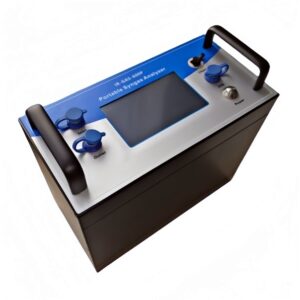
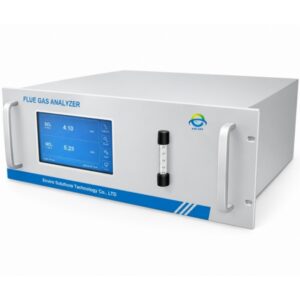
Configurations: Online | Portable .
Applications: Combustion optimization, gasification, process gas monitoring and industrial gas composition analysis.
| NDIR DETECTOR | |||||
|---|---|---|---|---|---|
| GAS | Lowest Range | Highest Range | LR resolution | HR resolution | Accuracy FS |
| CO | 0-5% | 0-100% | 0.001% | 0.01% | ≤±2% |
| Note: Measurement range can be customized by the requirement. | |||||
| Response Time (TD+T90) | <15s (NDIR) | ||||
| Warm-up time | 15min | ||||
| I/O port | RS485 & 4-20mA | ||||
| Working temperature | 0~50℃ | ||||
| Relative humidity | 5-85%RH | ||||
| Ambient air pressure | 86~108kPa | ||||
| Power supply | AC 220±10%V 50Hz±1Hz | ||||
| Weight | About 15kg | ||||
Two types of CO analyzers: NDIR-based and TDLAS-based, allowing users to select a suitable technology according to concentration range, sensitivity and process conditions.
Health and Safety : Carbon monoxide (CO) is a highly toxic gas that is odorless, colorless, and tasteless. It is produced by incomplete combustion of fossil fuels, such as gas, oil, coal, or wood. Breathing in high levels of CO can lead to carbon monoxide poisoning, which can cause serious health effects and even be fatal. A CO gas analyzer helps in monitoring and detecting the presence of CO in the environment, allowing for early warning and prevention of potential health hazards.
Indoor Air Quality : CO can accumulate in enclosed spaces, such as homes, offices, and industrial facilities, where combustion appliances or heating systems are present. Monitoring the CO levels indoors is crucial to ensure a safe and healthy environment for occupants. A CO gas The analyzer provides continuous monitoring and alerts when CO concentrations exceed safe levels, enabling prompt action to prevent exposure and improve indoor air quality.
Combustion Process Optimization : In industrial settings, CO gas analysis is vital for optimizing combustion processes. Monitoring the CO levels in combustion flue gases allows for adjustments in fuel-to-air ratios, combustion efficiency, and emissions control. By maintaining optimal CO levels, energy efficiency can be improved, fuel consumption can be optimized, and harmful emissions can be minimized.
Industrial Safety: CO is a potential hazard in various industries, including chemical plants, refineries, steel mills, and manufacturing facilities. Monitoring CO levels in these environments helps ensure the safety of workers and prevents occupational exposure to toxic concentrations. real-time monitoring and triggering alarms or shutdowns in manufacturing facilities. Monitoring CO levels in these environments helps ensure the safety of workers and prevents occupational exposure to toxic concentrations.
Compliance and Regulation : Many industries are subject to regulations and safety standards regarding CO emissions and exposure limits. A CO gas analyzer assists in meeting these regulatory requirements by providing accurate and reliable measurements of CO concentrations. Compliance with regulations not only ensures the well-being of workers and the public but also helps avoid legal and financial penalties.
Emergency Response : CO incidents, such as leaks from faulty appliances or accidents, can occur unexpectedly. Rapid response and detection of CO are crucial in emergency situations to prevent further exposure, evacuate affected areas, and provide timely medical assistance. CO gas analyzers are essential tools for emergency responders, enabling them to assess the situation and take appropriate actions promptly.
Overall, a CO gas analyzer is highly important for safeguarding human health, ensuring workplace safety, optimizing combustion processes, and complying with regulations. It provides continuous monitoring, early warning, and accurate measurement of CO levels, helping to prevent CO-related accidents, injuries, and fatalities.
Non-Dispersive Infrared (NDIR) Measurement
The CO analyzer uses NDIR technology to continuously measure carbon monoxide concentration in industrial process gases. CO molecules absorb infrared radiation at characteristic wavelengths. Inside the analyzer, an infrared light source directs radiation through a gas measurement cell. As the sample gas passes through the cell, CO molecules absorb part of the infrared energy. The detector measures the transmitted light intensity, and the analyzer calculates the CO concentration based on the measured absorption and its calibration.
Tunable Diode Laser Absorption Spectroscopy (TDLAS)
For applications requiring selective CO measurement, the CO analyzer uses TDLAS technology. A tunable diode laser emits light at a wavelength corresponding to a characteristic CO absorption line. As the laser passes through the sample gas, CO molecules absorb part of the light. The analyzer processes the absorption signal to determine the CO concentration. The narrow spectral characteristics of laser absorption enable selective measurement of the target gas, making TDLAS suitable for applications requiring enhanced sensitivity, fast response and continuous industrial monitoring.
The appropriate technology depends on the CO concentration range, background gas composition, installation conditions and required measurement performance.
| NDIR DETECTOR | |||||
|---|---|---|---|---|---|
| GAS | Lowest Range | Highest Range | LR resolution | HR resolution | Accuracy FS |
| CO | 0-5% | 0-100% | 0.001% | 0.01% | ≤±2% |
| Note: Measurement range can be customized by the requirement. | |||||
| Response Time (TD+T90) | <15s (NDIR) | ||||
| Warm-up time | 15min | ||||
| I/O port | RS485 & 4-20mA | ||||
| Working temperature | 0~50℃ | ||||
| Relative humidity | 5-85%RH | ||||
| Ambient air pressure | 86~108kPa | ||||
| Power supply | AC 220±10%V 50Hz±1Hz | ||||
| Weight | About 15kg | ||||
We will contact you within 1 working day, please pay attention to the email with the suffix “[email protected]” .